
What Tirzepatide for Weight Loss Actually Does to Your Body
Tirzepatide for weight loss works by mimicking two gut hormones at once — GLP-1 and GIP. Most injectable weight loss medications only target one. Tirzepatide hits both receptors simultaneously, which is why clinical results have been significantly higher than older options like semaglutide alone.
In the SURMOUNT-1 trial, participants lost an average of 22.5% of their body weight over 72 weeks on the highest dose. That’s not a typo. For someone weighing 250 pounds, that’s roughly 56 pounds gone. These numbers came from a randomized, double-blind, placebo-controlled study published in the New England Journal of Medicine — the gold standard of medical research.
The drug was originally developed by Eli Lilly for type 2 diabetes under the brand name Mounjaro. The FDA approved it specifically for chronic weight management in November 2023 under the brand name Zepbound. Since then, demand has outpaced supply multiple times.
Get GLP-1 Online
Check which trusted sites and pharmacies in our database allow you to get GLP in your state.
Enter your ZIP code to check availability of GLP in your area:
🔒 Your information is kept 100% secure and will never be shared with anyone.
✓ GLP Treatment Found!
GREAT NEWS - We found available stock nearby.
Enter your details below to register to the limited GLP-1 waiting list
Don't want to wait? You can also go directly to this GLP-1 provider while stock is still available.
🔒 We respect your privacy. You will never receive spam and your information will never be shared. It is kept 100% secure.
✓ Confirmed - You Can Get GLP Near You - But Check Your Eligibility Below!
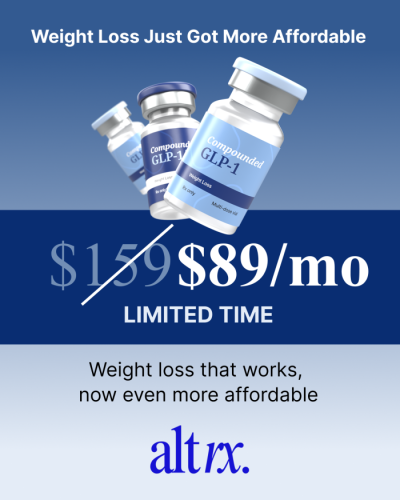
Your ZIP offers a massive saving of $89/mo instead of $159/mo.
Check Stock (Limited) →Support by Alt RX - a American Weight Loss service. Results are not a substitute for physician care.
How Tirzepatide Differs from Semaglutide
People mix these up constantly. Semaglutide (Ozempic, Wegovy) targets only GLP-1 receptors. Tirzepatide targets both GLP-1 and GIP receptors. That dual mechanism produces measurably greater weight loss in head-to-head data.
In direct comparison trials, tirzepatide patients lost roughly 5–7% more total body weight than semaglutide patients over the same period. The difference isn’t marginal — it’s clinically meaningful for someone dealing with obesity-related conditions like sleep apnea, joint pain, or elevated A1C levels.
Both drugs reduce appetite by slowing gastric emptying and signaling fullness to the brain. But tirzepatide’s GIP activity appears to improve insulin sensitivity in ways that GLP-1 alone doesn’t fully achieve. For people with insulin resistance — which is most people carrying significant visceral fat — that matters.
Who Qualifies for Tirzepatide
The FDA indication is straightforward. You qualify if you have a BMI of 30 or higher. Or a BMI of 27 or higher with at least one weight-related condition — hypertension, type 2 diabetes, dyslipidemia, obstructive sleep apnea.
Most telehealth providers follow these same criteria. Some are stricter. Some evaluate on a case-by-case basis, factoring in previous weight loss attempts and metabolic bloodwork.
One thing worth knowing: you don’t need to have “tried everything” first. That’s an outdated gatekeeping approach. Current clinical guidelines from the American Association of Clinical Endocrinology recommend pharmacotherapy as a first-line option alongside lifestyle modification for eligible patients.
What Disqualifies You
Personal or family history of medullary thyroid carcinoma. That’s a hard no — tirzepatide carries a boxed warning about thyroid C-cell tumors observed in rodent studies. History of multiple endocrine neoplasia syndrome type 2 also disqualifies you. A history of pancreatitis is a relative contraindication that most prescribers will flag.
Pregnancy is an absolute contraindication. If you’re planning to conceive, most providers recommend stopping tirzepatide at least two months before attempting pregnancy due to the drug’s long half-life and potential nutrient absorption issues.
Tirzepatide Costs in 2026: What You’ll Actually Pay
Let’s talk about tirzepatide costs because this is where things get complicated. The list price for Zepbound is approximately $1,059 per month without insurance. Mounjaro (same molecule, diabetes indication) runs about the same.
With commercial insurance that covers it, copays range from $25 to $150 per month depending on your plan’s formulary tier. Some plans cover Zepbound but not Mounjaro for weight loss, or vice versa. Employer-sponsored plans vary wildly — roughly 40% of large employers now include GLP-1 coverage for obesity as of early 2026, up from about 25% in 2024.
Medicare does not cover tirzepatide for weight loss as of this writing. There’s pending legislation (the Treat and Reduce Obesity Act) that could change this, but it hasn’t passed yet.
Compounded Tirzepatide: Lower Cost, More Questions
Compounding pharmacies have been producing tirzepatide at significantly lower prices — often $300 to $500 per month. This was possible under FDA shortage provisions. However, Eli Lilly has actively challenged compounders, and the legal landscape shifts frequently. As of early 2026, some compounded versions remain available through telehealth platforms, but availability depends on current FDA shortage designations.
If you go the compounded route, verify the pharmacy is licensed, operates under state board oversight, and uses third-party potency testing. Not all compounders maintain the same quality standards. Ask for certificates of analysis.
Savings Programs and Manufacturer Coupons
Eli Lilly offers a savings card for commercially insured patients that can reduce out-of-pocket costs to as low as $25 per month for qualifying fills. The program excludes government insurance (Medicare, Medicaid, Tricare). Eligibility resets annually. Check LillyDirect or the Zepbound website for current terms.
Getting Tirzepatide Online Through Telehealth
Getting tirzepatide online has become one of the most common pathways to access. The process typically works like this: you complete a health questionnaire, upload relevant labs or medical history, and a licensed provider reviews your case. If you qualify, they prescribe the medication and it ships to your door — or they send the prescription to a pharmacy of your choice.
Telehealth consultations for tirzepatide usually cost between $50 and $150 for the initial visit, with follow-ups ranging from free to $75 monthly depending on the platform. Some platforms bundle the medication cost with the consultation. Others separate them.
What to Look for in a Telehealth Provider
Legitimate platforms will require actual medical evaluation — not just a checkbox form. They should ask about your medication history, allergies, and contraindications. They should request or order bloodwork (metabolic panel, A1C, lipids at minimum). They should have a licensed physician or nurse practitioner review your case individually.
Red flags: platforms that guarantee approval before evaluation, platforms that don’t ask about thyroid history, platforms that don’t offer follow-up care or dosage titration support.
Dosage titration is important. Tirzepatide starts at 2.5mg weekly for four weeks, then increases to 5mg, then optionally to 7.5mg, 10mg, 12.5mg, and 15mg — each step lasting at least four weeks. A good provider monitors your tolerance, side effects, and weight trajectory at each step rather than auto-escalating.
Side Effects: What Actually Happens
Nausea is the most common side effect. In clinical trials, about 25–30% of patients experienced nausea, mostly during dose escalation phases. For most people it’s mild to moderate and resolves within a few weeks at each new dose.
Other GI effects: diarrhea (roughly 17%), constipation (about 12%), vomiting (about 10%), and decreased appetite (which is sort of the point but also technically a side effect). Injection site reactions — redness, itching, minor swelling — occur in about 5% of users.
Managing Nausea and GI Issues
Eat smaller meals. This isn’t optional advice — it’s mechanical. Tirzepatide slows your stomach emptying by 30–50%. If you eat a large meal, food sits there longer. That’s what triggers the nausea.
Avoid high-fat, greasy foods during the first two weeks of each new dose. Stay hydrated — dehydration worsens nausea significantly. Some providers prescribe ondansetron (Zofran) as needed for the transition periods. Ginger supplements (250mg capsules) have modest evidence for GLP-1-related nausea specifically.
If nausea persists beyond three weeks at the same dose or becomes severe enough that you can’t eat at all, contact your prescriber. They may hold you at the current dose longer or reduce temporarily.
Serious but Rare Side Effects
Pancreatitis has been reported in post-marketing surveillance, though the incidence is very low (less than 0.3%). Symptoms include severe abdominal pain radiating to the back, persistent vomiting, and elevated lipase levels. Seek emergency care if this occurs.
Gallbladder events — gallstones and cholecystitis — occur at higher rates during rapid weight loss regardless of how the weight is lost. Tirzepatide users should be aware that losing more than 1.5% of body weight per week may increase gallstone risk. Adequate fiber and fat intake (don’t go zero-fat) helps maintain gallbladder motility.
Real Results: What People Are Seeing
Clinical trial averages tell one story. Individual results vary. Here’s what the data actually breaks down to:
At 2.5mg (starting dose, weeks 1–4): Most people lose 2–5 pounds. Some lose nothing. Appetite reduction is subtle at this stage for many.
At 5mg (weeks 5–8): Appetite suppression becomes more noticeable. Average loss is another 4–8 pounds over this period. Food noise — that constant background thought about eating — starts to quiet.
At 10mg (weeks 13–16 if titrated normally): This is where many people hit their stride. Monthly losses of 8–12 pounds are common. Clothing sizes start changing noticeably.
At 15mg (maximum dose): Cumulative losses of 20–25% of starting body weight are realistic over 12–18 months for adherent patients. Not everyone needs or tolerates 15mg. Some people reach goal weight at 7.5mg or 10mg.
A Patient’s Timeline
Sarah, a 42-year-old teacher from Ohio, started tirzepatide in March 2025 at 237 pounds. She’d tried calorie counting, keto, and phentermine previously — each time losing 15–20 pounds before regaining. Her A1C was 5.9 (prediabetic range), and her fasting insulin was elevated at 22 mIU/L.
By month three on tirzepatide (dose: 7.5mg), she was down 28 pounds. Her food noise had decreased substantially. She described it as “the volume turned way down on cravings.” By month eight at 10mg, she weighed 182 pounds — a total loss of 55 pounds. Her A1C normalized to 5.2. Her prescriber held her at 10mg rather than increasing further since she was tolerating it well and still losing.
Her experience isn’t universal, but it’s representative of what adherent patients in that BMI range typically see.
What Happens When You Stop
This is the part nobody wants to hear. The SURMOUNT-4 trial showed that patients who discontinued tirzepatide after 36 weeks regained approximately two-thirds of lost weight within one year of stopping. Patients who continued maintained their loss.
This doesn’t mean tirzepatide “doesn’t work” — it means obesity is a chronic condition requiring ongoing treatment, the same way hypertension requires ongoing blood pressure medication. The biological mechanisms that drive weight regain (increased ghrelin, decreased leptin sensitivity, metabolic adaptation) reassert themselves when the pharmacological intervention stops.
Some patients successfully transition to lower maintenance doses. Others find that lifestyle modifications developed during treatment help them retain more of the loss. But the data is clear: for most people, some form of continued treatment produces better long-term outcomes than complete discontinuation.
Exercise and Nutrition While on Tirzepatide
Resistance training isn’t optional if you’re on tirzepatide. Approximately 25–40% of weight lost on GLP-1 medications is lean mass (muscle) unless you actively work to preserve it. That’s a significant concern for long-term metabolic health and functional strength.
Minimum recommendations: resistance training 2–3 times per week targeting major muscle groups. Protein intake of 1.0–1.2 grams per kilogram of goal body weight daily. Some providers recommend even higher — up to 1.6g/kg — especially for patients losing rapidly.
Getting adequate protein on tirzepatide is genuinely difficult because appetite is suppressed. Prioritize protein at every meal. Protein shakes become practical necessities for many patients, not luxury supplements. Greek yogurt, eggs, lean meats, cottage cheese — front-load these before filling up on lower-priority foods.
Calorie Floors
Don’t eat below 1,200 calories (women) or 1,500 calories (men) consistently. Tirzepatide can suppress appetite to the point where people unintentionally undereat. Chronic undereating accelerates muscle loss, causes hair thinning (telogen effluvium), and can trigger gallstone formation. Track intake for at least the first few months to ensure you’re hitting minimums.
Tirzepatide vs. Surgery: When Each Makes Sense
Bariatric surgery (gastric sleeve, gastric bypass) produces average weight loss of 25–35% of total body weight. Tirzepatide at maximum dose produces 20–25%. The gap has narrowed significantly compared to older medications.
Surgery carries operative risks, requires permanent dietary modifications, and has a small but non-zero mortality rate (0.03–0.2% depending on procedure type and patient factors). It also typically produces faster results — most surgical weight loss occurs within 12–18 months.
Tirzepatide requires ongoing injections and ongoing cost. But it’s reversible, non-invasive, and adjustable. For patients with BMI 30–40 who haven’t tried pharmacotherapy, current guidelines increasingly favor medication as first-line before considering surgical options.
For patients with BMI above 50 or severe obesity-related complications requiring rapid resolution, surgery may still offer advantages that medication alone can’t match in the same timeframe.
Common Questions About Tirzepatide for Weight Loss
How long does it take to see results?
Most patients notice reduced appetite within the first 1–2 weeks. Measurable weight loss (5+ pounds beyond water fluctuation) typically appears by weeks 4–6. Clinically significant loss (5% of body weight) occurs by weeks 8–12 for the majority of responders.
Can I drink alcohol on tirzepatide?
Alcohol isn’t contraindicated, but tolerance changes. Many patients report feeling intoxicated faster on fewer drinks. Alcohol also slows gastric emptying further, potentially worsening nausea. Additionally, alcohol provides empty calories that compete with your reduced capacity for nutrient-dense food. Most providers recommend limiting to 1–2 drinks per occasion and observing your response carefully.
Does tirzepatide affect fertility?
Weight loss itself improves fertility in overweight individuals, particularly those with PCOS. However, tirzepatide may reduce oral contraceptive effectiveness due to delayed gastric absorption — the FDA label specifically warns about this. Use backup contraception or switch to non-oral methods while on tirzepatide if pregnancy prevention is needed.
What if I miss a dose?
If fewer than 4 days have passed since the missed dose, take it as soon as you remember. If more than 4 days have passed, skip that dose and resume your regular schedule. Don’t double up. Missing one dose rarely causes significant issues, but frequent misses reduce efficacy and may worsen side effects when you restart due to lost tolerance.
Is tirzepatide covered by insurance for weight loss?
Coverage varies enormously. As of 2026, more commercial plans cover Zepbound (the weight loss indication) than in previous years, but it’s far from universal. Prior authorization is almost always required. Documentation of BMI, comorbidities, and sometimes failed prior weight loss attempts may be needed. Your prescribing provider typically handles the PA process.
Tired of diets that don't work?
GLP-1 medication prescribed online by U.S.-licensed doctors — delivered free to your door. No office visits. No insurance required. No hidden fees.
Start Free EvaluationGetting Started With Tirzepatide: Your Next Step
If tirzepatide for weight loss sounds like something that could work for your situation, the fastest path forward is through a personalized matching service. You enter your ZIP code, answer a few medical screening questions, and get connected with a licensed telehealth provider in your area who prescribes GLP-1 medications — including tirzepatide.
The provider evaluates your health history, orders necessary labs if you don’t have recent ones, and determines whether tirzepatide is appropriate for your specific metabolic profile. If you qualify, they manage your prescription, handle dose titration, and monitor your progress remotely.
This approach eliminates the weeks-long wait for primary care appointments and the uncertainty of whether your doctor is even familiar with current obesity pharmacotherapy protocols. Tirzepatide costs through these platforms are transparent upfront, and many offer both brand-name and compounded options depending on availability and your budget. Getting tirzepatide online through a vetted telehealth funnel takes the guesswork out of the process — you get matched with a provider who already specializes in this exact medication class.
NEW tool for our readersGet GLP-1 Online
Check which trusted sites and pharmacies in our database allow you to get GLP in your state.
Enter your ZIP code to check availability of GLP in your area:
🔒 Your information is kept 100% secure and will never be shared with anyone.
✓ GLP Treatment Found!
GREAT NEWS - We found available stock nearby.
Enter your details below to register to the limited GLP-1 waiting list
Don't want to wait? You can also go directly to this GLP-1 provider while stock is still available.
🔒 We respect your privacy. You will never receive spam and your information will never be shared. It is kept 100% secure.
✓ Confirmed - You Can Get GLP Near You - But Check Your Eligibility Below!
Your ZIP offers a massive saving of $89/mo instead of $159/mo.
Check Stock (Limited) →Support by Alt RX - a American Weight Loss service. Results are not a substitute for physician care.
Enter your ZIP code above to see which providers are available in your area and what pricing looks like for your specific situation.