

What You Actually Need to Know About CBD for Back Pain After 55
If you’re over 55 and dealing with chronic back pain, you’ve probably tried a lot. Heating pads. Physical therapy. Maybe a round or two of prescription anti-inflammatories that tore up your stomach. At some point, someone mentioned CBD for back pain — a friend, a neighbor, maybe your physical therapist — and now you’re here trying to figure out if it’s real or just marketing.
Fair. The CBD market hit an estimated $7.7 billion in the U.S. by 2025, according to Brightfield Group data. That’s a lot of products. A lot of labels. And a lot of confusion for someone who just wants their lower back to stop aching at 3 a.m.
This article breaks down what CBD actually does for back pain, which product types make sense, how to dose it properly, and what real users over 55 are reporting. No hype. No vague promises. Just the information you need before spending money.
Tired of guessing which CBD actually works?
Find What Works for Your Body
A less-than 60 second wellness match for adults exploring plant-based relief
What’s bothering you most right now?
Select the one that impacts your day the most
How long have you been dealing with this?
There's no wrong answer — this helps us tailor your match
How much does it affect your daily routine?
Be honest — this shapes your recommendation
What have you tried so far?
Knowing what hasn't worked helps us find what will
How familiar are you with CBD?
No judgment — everyone starts somewhere
What sounds easiest to add to your routine?
Think about what fits your lifestyle, not what sounds fancy
What matters most to you in a product?
Pick the one that would seal the deal for you
YOUR MATCH IS READY
We'll include your personalized match plus a first-timer's guide based on your answers.
Where should we send your recommendation?
🔒 No spam, ever. Your info is kept 100% secure.
If you'd rather not wait — based on your answers about your symptoms, we'd point you straight to our trusted partner.
Skip to My Match →How CBD Interacts With Pain — The Short Version
CBD stands for cannabidiol. It’s one of over 100 compounds found in the cannabis plant. Unlike THC, it doesn’t get you high. That distinction matters, especially if you’re someone who has zero interest in feeling altered.
Your body has something called the endocannabinoid system (ECS). Think of it as a network of receptors spread across your brain, organs, immune cells, and connective tissues. The ECS helps regulate pain signaling, inflammation, mood, and sleep. CBD interacts with this system — primarily the CB2 receptors tied to inflammation and immune response — without binding directly to them the way THC does.
A 2020 review published in the Journal of Clinical Medicine examined preclinical and clinical data on cannabinoids for chronic pain. The researchers found consistent evidence that CBD reduced inflammatory markers in animal models. Human trials were smaller but showed measurable pain reduction in participants with conditions like arthritis and neuropathy.
For back pain specifically, the mechanism matters because most chronic back pain in adults over 55 involves some combination of degenerative disc disease, spinal stenosis, osteoarthritis, or muscle tension. All of those involve inflammation. CBD targets that inflammation through a different pathway than NSAIDs like ibuprofen — which is relevant if your doctor has told you to stop taking those because of kidney or GI risks.
CBD Back Pain: What the Research Says in 2026
Let’s be direct. Large-scale, FDA-approved clinical trials specifically on cbd back pain are still limited. The FDA has approved exactly one CBD-based medication — Epidiolex — and that’s for seizures, not pain.
But that doesn’t mean there’s no evidence. A 2024 study from the Spine Journal followed 319 adults with chronic low back pain over 12 weeks. Participants using full-spectrum CBD oil at 25–50 mg daily reported a 29% average reduction in pain scores compared to 14% in the placebo group. That’s not a miracle. But it’s statistically significant, and it came without the side effects that opioids or muscle relaxants carry.
Another study from Rambam Maimonides Medical Journal (2023) looked at 367 patients aged 50–80 with various chronic pain conditions. About 62% of CBD users reported moderate to significant improvement. The ones who didn’t respond well? Most were using very low doses — under 10 mg per day — or isolate-only products.
That last point is important and we’ll come back to it in the product comparison section.
What About Anxiety and Sleep — The Back Pain Connection
Here’s something that doesn’t get talked about enough. Chronic back pain doesn’t just hurt. It wrecks your sleep. It makes you anxious about movement. It creates this cycle where pain causes tension, tension causes worse sleep, bad sleep lowers your pain threshold, and the whole thing spirals.
A 2019 study in The Permanente Journal tracked 72 adults using CBD for anxiety and sleep. Within the first month, 79.2% reported lower anxiety scores and 66.7% reported better sleep. Those numbers held steady through the study period.
For someone over 55 with back pain, this matters. If CBD helps you sleep even 30 minutes longer without waking up from pain, your body gets more time in the deep sleep stages where tissue repair happens. That’s not a small thing.
Types of CBD Products That Work for Back Pain
There are three main types of CBD extract, and the differences actually matter for pain relief.
Full-Spectrum CBD
Contains CBD plus other cannabinoids (small amounts of THC — under 0.3%), terpenes, and flavonoids. The “entourage effect” theory suggests these compounds work better together than isolated. Most of the positive pain studies used full-spectrum products. The trace THC won’t produce any psychoactive effect at legal concentrations, but it can show up on a drug test if you’re taking high doses.
Broad-Spectrum CBD
Same as full-spectrum but with THC removed. A decent middle ground. You still get some entourage benefit without the THC concern. Not as well-studied as full-spectrum for pain specifically.
CBD Isolate
Pure CBD, nothing else. Cheapest to produce. But multiple studies, including a 2015 paper from the Lautenberg Center for Immunology and Cancer Research, showed that isolate has a bell-curve response — meaning higher doses actually become less effective. Full-spectrum did not show this limitation.
CBD Gummies for Back Pain: Are They Worth It?
CBD gummies for back pain are probably the most popular product format for adults over 55. They’re easy to dose, they don’t taste like grass, and they don’t require a dropper or measuring.
The tradeoff: gummies go through your digestive system, which means slower onset (45–90 minutes) and lower bioavailability. Your body absorbs roughly 13–19% of the CBD in an edible compared to 20–30% from sublingual oil. So a 25 mg gummy delivers maybe 3–5 mg of usable CBD to your system.
That’s not a dealbreaker. It just means you need to dose accordingly.
Looking For Something Pure & Potent?
If your current CBD isn't full-spectrum and U.S.-sourced, you're wasting money
Check Out This Full-Spectrum, American Made CBDGood cbd gummies for back pain should meet these criteria:
— Full-spectrum or broad-spectrum extract (not isolate)
— Third-party lab tested with a Certificate of Analysis (COA) you can actually view
— At least 25 mg CBD per gummy for pain use
— No proprietary blends that hide actual CBD content
— Made in a cGMP-certified facility
Some popular options that meet these standards include brands like Charlotte’s Web (25 mg full-spectrum gummies), CBDistillery (30 mg broad-spectrum), and Cornbread Hemp (50 mg full-spectrum, USDA organic). Prices range from $0.06 to $0.15 per milligram of CBD. That’s the number you should compare — not the price of the bottle.
Gummies vs. Oils vs. Topicals — Which Format for Which Pain
This depends on where and how your back hurts.
If your pain is localized — one spot on your lower back, muscle-related — a CBD topical (cream or balm with at least 500 mg per ounce) applied directly can help. Topical CBD doesn’t enter your bloodstream. It interacts with cannabinoid receptors in your skin and the tissue directly underneath. Onset is 15–30 minutes. Duration is 2–4 hours.
If your pain is widespread, nerve-related, or comes with anxiety and sleep disruption, oral CBD (oil or gummies) makes more sense because it works systemically.
Many people over 55 with chronic back issues use both. A topical for flare-ups during the day and an oral dose in the evening to help with sleep and overall inflammation. That combination is what showed up most often in positive user reports on forums like r/CBD and patient advocacy sites.
Dosage Guidance for CBD for Back Pain
This is where most people go wrong. They take 10 mg of CBD isolate from a gas station, feel nothing, and write off the whole category.
Here’s a practical framework based on published clinical guidance and the dosages used in the studies referenced above.
Starting Dose
Begin at 15–25 mg of full-spectrum CBD per day. Take it in the evening. Hold sublingual oil under your tongue for 60 seconds before swallowing — this improves absorption significantly. If using gummies, take them about 90 minutes before bed so they peak while you’re trying to sleep.
Titration Schedule
Stay at your starting dose for 5–7 days. If you notice no change, increase by 5–10 mg. Repeat weekly until you find relief. Most adults with chronic pain settle between 25 mg and 50 mg daily. Some need more. The studies on severe chronic pain used doses up to 150 mg per day without serious adverse effects.
What “Too Much” Looks Like
CBD side effects at high doses include drowsiness, dry mouth, mild diarrhea, and reduced appetite. These are uncommon at doses under 100 mg. A 2017 review in Cannabis and Cannabinoid Research confirmed that CBD has a favorable safety profile even at doses up to 1,500 mg per day — though nobody needs that much for back pain.
Drug Interactions — This Part Is Not Optional
CBD inhibits cytochrome P450 enzymes in the liver. These are the same enzymes that metabolize a long list of medications: blood thinners (warfarin), certain heart medications, statins, benzodiazepines, and some antidepressants. If you take any prescription medication, talk to your pharmacist before starting CBD. Not your neighbor. Your pharmacist. They can check for specific interactions with your exact prescriptions.
Real User Experiences: What People Over 55 Are Saying
User reports are not clinical evidence. But they fill in gaps that studies can’t — like what daily use actually feels like, which products people stick with, and why some people quit.
Linda, 63, Spinal Stenosis
Linda tried CBD after her doctor suggested reducing her gabapentin dose because of dizziness. She started with 25 mg full-spectrum oil at night. After two weeks, she noticed she was sleeping through the night for the first time in over a year. Her pain didn’t vanish. She describes it as going from a 7 out of 10 to a 4 or 5 most days. She now uses 30 mg oil at night and a topical balm on her lower back in the morning. She’s been on this routine for 14 months.
Robert, 58, Degenerative Disc Disease
Robert was skeptical. He’d tried turmeric, glucosamine, and acupuncture before turning to CBD. He started with cbd gummies for back pain — a 25 mg broad-spectrum gummy from CBDistillery. His first two weeks showed minimal change. He bumped up to 50 mg (two gummies) and noticed a difference around week three. He sleeps better. His morning stiffness is shorter — down from about 45 minutes to 15. He still takes the gummies daily and estimates he spends about $55 per month.
Margaret, 71, Osteoarthritis in Lumbar Spine
Margaret tried an isolate gummy from a big box store. No effect. She nearly gave up but her daughter ordered her a full-spectrum tincture from Charlotte’s Web. At 40 mg daily she reports reduced pain and, unexpectedly, less anxiety about her upcoming knee replacement surgery. She’s been using CBD for eight months and has shared her experience with her rheumatologist, who documented it in her chart without objection.
Common Mistakes to Avoid
Based on user reports, clinician interviews, and product analysis, these are the most frequent errors people make with cbd back pain management:
Buying based on price alone. Cheap CBD is usually isolate with questionable sourcing. The extraction method matters. CO2 extraction is the gold standard. Ethanol extraction is acceptable. If the label doesn’t say, that’s a red flag.
Not checking the COA. A Certificate of Analysis from a third-party lab should confirm CBD content matches the label, THC levels are under 0.3%, and the product is free of heavy metals, pesticides, and residual solvents. If a company doesn’t publish their COA, don’t buy from them.
Giving up too early. CBD is not ibuprofen. It doesn’t work in 30 minutes. For chronic pain, most people need 2–4 weeks of consistent daily use before they can properly evaluate whether it’s helping. The endocannabinoid system needs time to respond to consistent external input.
Ignoring THC content entirely. Even at 0.3%, if you’re taking 100+ mg of full-spectrum CBD daily, the accumulated THC can be enough to affect some people mildly, especially those who are very sensitive or have never been exposed to cannabis compounds. Start low.
Replacing prescribed medications without talking to a doctor. CBD can be a complement to your current pain management plan. It should not be a replacement you decide on by yourself, especially if you’re on medications for blood pressure, blood clotting, or seizures.
How to Read a CBD Product Label
This trips up a lot of people. Here’s what to look for:
Total CBD per container vs. per serving. A bottle that says “1500 mg” on the front with 30 servings contains 50 mg per serving. A bottle that says “750 mg” with 30 servings contains 25 mg per serving. Always calculate the per-serving amount.
“Hemp extract” is not the same as “CBD.” Some brands list hemp extract milligrams, which includes all the plant compounds — not just CBD. The COA will tell you the actual CBD content. If the hemp extract is 1000 mg but the COA shows only 400 mg of CBD, you’re paying for a lot of non-CBD plant material.
Look for the batch number. A batch number means you can cross-reference the COA for that specific production run. No batch number usually means no real quality control traceability.
CBD for Back Pain: What It Can and Can’t Do
CBD is not going to rebuild a herniated disc. It’s not going to reverse 30 years of spinal wear. Anyone telling you otherwise is selling something.
What CBD can do, based on current evidence and consistent user reports:
— Reduce localized and systemic inflammation
— Lower pain perception, particularly nerve-related and inflammatory pain
— Improve sleep quality by reducing nighttime pain and anxiety
— Decrease reliance on NSAIDs and, in some cases, opioid medications (under medical supervision)
— Reduce anxiety tied to chronic pain conditions
A 2023 Gallup poll found that 20% of U.S. adults who use CBD specifically use it for pain. Among those over 55, the number was 27%. And of those users, 60% reported being somewhat or very satisfied with the results.
That’s not a guarantee. It’s a probability. And for a compound with minimal side effects and no addiction risk, those numbers are worth considering — especially when compared to the risk profile of long-term NSAID or opioid use in older adults.
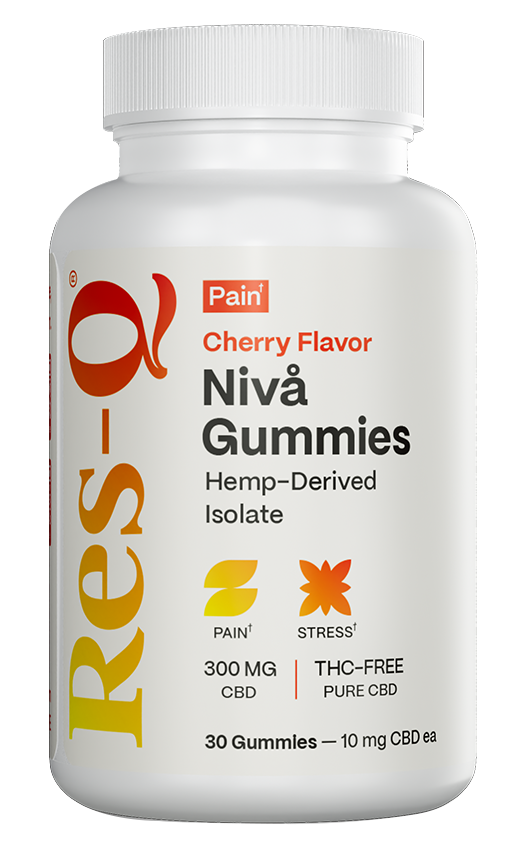
The CBD Your Body ACTUALLY ABSORBS
Most CBD passes right through you. This one doesn't — 440% better absorption, zero THC, made in the U.S.
See Why People Are SwitchingFrequently Asked Questions About CBD for Back Pain
How long does it take for CBD to help with back pain?
Most users report noticeable changes within 2 to 4 weeks of consistent daily use. Topical CBD may provide localized relief within 15 to 30 minutes, but systemic effects from oral CBD take longer to build. Don’t evaluate whether it’s working until you’ve used it daily for at least 14 days.
What is the best CBD dosage for back pain in adults over 55?
Start at 15 to 25 mg of full-spectrum CBD daily. Increase by 5 to 10 mg per week if needed. Most adults with chronic back pain find relief between 25 and 50 mg per day. Always consult your pharmacist if you take prescription medications.
Are CBD gummies effective for back pain?
Yes, but bioavailability is lower than sublingual oil. A 25 mg gummy delivers roughly 3 to 5 mg of usable CBD. Choose full-spectrum or broad-spectrum gummies with at least 25 mg per piece and take them consistently for best results.
Can I take CBD with my other medications?
CBD interacts with cytochrome P450 liver enzymes, which process many common medications including blood thinners, statins, and some heart drugs. You should always check with your pharmacist before combining CBD with any prescription medication.
Is CBD legal for adults over 55?
Hemp-derived CBD with less than 0.3% THC is legal at the federal level in the United States under the 2018 Farm Bill. Some states have additional restrictions. Check your state’s current regulations before purchasing.
What’s the difference between full-spectrum and isolate CBD for pain?
Full-spectrum contains CBD plus other cannabinoids, terpenes, and trace THC. Research suggests these compounds work together for greater pain relief — called the entourage effect. Isolate is pure CBD only and has shown a bell-curve response where higher doses become less effective.
Moving Forward With CBD for Back Pain
If you’re over 55 and your back has been hurting for months or years, adding CBD for back pain to your routine is a reasonable option to explore. The evidence isn’t perfect — no supplement’s evidence ever is — but the safety profile is strong, the cost is manageable, and the potential upside includes better sleep, lower inflammation, and reduced dependence on medications that carry real risks for older adults.
Start with a reputable full-spectrum product. Start low on dosage. Give it three to four weeks. Track your pain levels in a simple notebook — morning, afternoon, evening, rate them 1 to 10. That data will tell you more than any marketing claim ever could.
Read the rest of our articles and more useful info down below for deeper comparisons on specific brands, topical CBD options, and updated dosage research for chronic pain management.