

What Is GLP 1 Treatment and Why Does It Matter Right Now
GLP 1 treatment refers to a class of medications that mimic a hormone your gut naturally produces called glucagon-like peptide-1. That hormone does a few things — it tells your pancreas to release insulin after you eat, it slows down how fast your stomach empties, and it signals your brain that you’re full. The medications copy that process, but at a much stronger and longer-lasting level than your body manages on its own.
These drugs were originally developed for type 2 diabetes. Doctors noticed patients were losing significant weight as a side effect. That observation kicked off years of clinical trials specifically targeting obesity. Now, several GLP 1 receptor agonists are GLP approved for weight loss as a primary indication — not just a bonus.
The numbers back it up. In the STEP 1 clinical trial published in the New England Journal of Medicine, participants on semaglutide 2.4 mg lost an average of 14.9% of their body weight over 68 weeks. A control group on placebo lost 2.4%. That gap is not subtle. It changed how the medical community thinks about pharmacological weight management.
NEW tool for our readersGet GLP-1 Online
Check which trusted sites and pharmacies in our database allow you to get GLP in your state.
Enter your ZIP code to check availability of GLP in your area:
🔒 Your information is kept 100% secure and will never be shared with anyone.
✓ GLP Treatment Found!
GREAT NEWS - We found available stock nearby.
Enter your details below to register to the limited GLP-1 waiting list
Don't want to wait? You can also go directly to this GLP-1 provider while stock is still available.
🔒 We respect your privacy. You will never receive spam and your information will never be shared. It is kept 100% secure.
✓ Confirmed - You Can Get GLP Near You - But Check Your Eligibility Below!
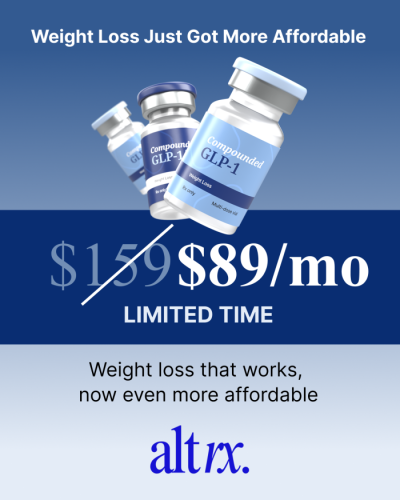
Your ZIP offers a massive saving of $89/mo instead of $159/mo.
Check Stock (Limited) →Support by Alt RX - a American Weight Loss service. Results are not a substitute for physician care.
How GLP Treatment Actually Works Inside Your Body
Your small intestine releases natural GLP-1 after you eat. It has a half-life of about two minutes. Your body breaks it down almost immediately through an enzyme called DPP-4. So the natural version barely has time to do much.
GLP treatment medications are engineered to resist that breakdown. Semaglutide, for example, has a half-life of approximately seven days. That means a single weekly injection keeps the drug active in your system continuously. It binds to GLP-1 receptors in your pancreas, your stomach lining, and specific areas of your brain — particularly the hypothalamus and brainstem, which regulate appetite and satiety.
Three things happen simultaneously:
First, gastric emptying slows down. Food sits in your stomach longer. You physically feel full faster and stay full longer after smaller meals. Second, your brain receives stronger and more sustained “I’m satisfied” signals, which reduces cravings and the mental fixation on food that so many people struggle with. Third, insulin response improves, which helps stabilize blood sugar and reduces the energy crashes that trigger overeating.
This is not a willpower drug. It changes the biological inputs your brain uses to make hunger decisions. People on GLP 1 treatment consistently report that food just stops occupying so much mental space. That shift is what drives the weight loss — not some metabolic trick.
Which Medications Are GLP Approved for Weight Loss
As of early 2026, there are several GLP-1 receptor agonists that have received FDA approval specifically for chronic weight management. The distinctions between them matter because they differ in dosing, delivery, side effect profiles, and how much weight loss clinical data supports.
Semaglutide (Wegovy)
Semaglutide at the 2.4 mg weekly dose, sold under the brand name Wegovy, received FDA approval for weight management in June 2021. It is indicated for adults with a BMI of 30 or greater, or a BMI of 27 or greater with at least one weight-related comorbidity such as hypertension, type 2 diabetes, or high cholesterol.
The STEP trial program — which included over 4,500 participants across multiple studies — showed average weight loss between 12% and 15% of total body weight. Some participants lost more than 20%. The drug is administered as a subcutaneous injection once per week, with a gradual dose escalation over 16 to 20 weeks to minimize gastrointestinal side effects.
Liraglutide (Saxenda)
Liraglutide was the first GLP-1 receptor agonist approved for weight loss, under the brand name Saxenda, back in 2014. It requires daily injections and produces more modest results — average weight loss of about 5% to 8% of body weight in clinical trials. It still works. But semaglutide has largely overtaken it in prescriptions because weekly dosing is easier and outcomes are generally better.
Tirzepatide (Zepbound)
Tirzepatide is a dual GIP/GLP-1 receptor agonist. It activates two incretin pathways instead of one. The FDA approved it for weight management under the brand name Zepbound in November 2023. The SURMOUNT-1 trial showed participants losing an average of 22.5% of their body weight on the highest dose over 72 weeks. Those numbers were unprecedented in obesity pharmacology.
Tirzepatide is also a weekly subcutaneous injection. Its dual mechanism appears to produce stronger satiety signals and potentially better metabolic outcomes, though long-term comparative data between tirzepatide and semaglutide is still being collected.
Emerging Options
Several next-generation compounds are in late-stage clinical trials. Survodutide, retatrutide, and orforglipron represent a pipeline of drugs targeting two or even three incretin receptors simultaneously. Orforglipron is particularly notable because it is an oral pill rather than an injection. Phase 3 trial data published in 2025 showed weight loss results competitive with injectable options. If approved, it would remove the injection barrier entirely for many patients.
What Real Results Look Like — Not Just Trial Averages
Clinical trial averages are useful but they flatten the actual experience. Here is what GLP 1 treatment tends to look like in practice, based on real-world prescribing data and patient-reported outcomes.
Most people notice appetite changes within the first two to four weeks, even at the lowest starting doses. The common description is not that hunger disappears completely — it is that the volume of it drops. A person who used to think about lunch starting at 10 a.m. might not think about it until 1 p.m. Someone who ate past fullness every dinner finds themselves pushing their plate away with food still on it. These shifts happen before significant weight shows up on a scale.
Weight loss typically begins in earnest around weeks four through eight and accelerates through months three to six. The curve then gradually flattens. Most patients reach a plateau somewhere between months nine and fifteen. Where that plateau lands varies enormously — some people lose 8% of their starting weight, others lose 25% or more.
A 2024 retrospective study published in JAMA Network Open analyzed electronic health records of over 175,000 patients prescribed semaglutide in clinical practice. The median weight loss at 12 months was 10.9%. That is lower than the 14.9% seen in the controlled STEP trials. The gap is expected — real-world adherence, dosing inconsistencies, and varied follow-up all reduce average outcomes compared to tightly monitored trials.
One patient, a 42-year-old woman from Ohio profiled in a Cleveland Clinic case series, started semaglutide at 243 pounds. Over 14 months she lost 61 pounds. She reported that the most meaningful change was not the number — it was that she stopped binge eating for the first time in her adult life. Her endocrinologist noted that her HbA1c dropped from 6.3% to 5.4%, moving her out of the prediabetic range entirely.
Another case from the same series involved a 55-year-old man with a BMI of 38 and obstructive sleep apnea. After 10 months on tirzepatide, he lost 52 pounds. His CPAP pressure requirements dropped, and a follow-up sleep study showed his apnea-hypopnea index had improved from 34 events per hour to 11. His pulmonologist reduced his CPAP settings twice.
These are not outliers. They represent what happens when the medication works as intended and the patient stays on it consistently.
Side Effects You Should Actually Know About
GLP 1 treatment is not side-effect-free. The most common issues are gastrointestinal. Nausea affects roughly 40% to 50% of patients during the dose escalation phase. It tends to peak when the dose increases and then fade over one to three weeks at each new level. For most people it is manageable — described as a low-grade queasiness, not the kind that puts you in bed.
Constipation or diarrhea affects about 20% to 30% of patients. Vomiting occurs in roughly 15% to 25%, depending on the specific drug and dose. Eating smaller meals, avoiding high-fat foods, and staying hydrated reduces these symptoms significantly. Doctors who specialize in obesity medicine often tell patients to eat until they are 70% full and stop — the medication will handle the rest.
Less Common but Serious Risks
Pancreatitis has been reported in a small number of patients on GLP-1 receptor agonists. The absolute risk is low — roughly 0.1% to 0.3% in clinical trials — but it is real. Symptoms include severe abdominal pain radiating to the back, nausea, and vomiting. Any patient with a history of pancreatitis should discuss this risk thoroughly with their prescriber before starting treatment.
Gallbladder problems, including gallstones and cholecystitis, occur at higher rates during rapid weight loss regardless of the method. GLP-1 medications add a slight additional risk because they slow gallbladder motility. The STEP trials reported gallbladder-related events in approximately 2.6% of semaglutide patients versus 1.2% on placebo.
There is a boxed warning on all GLP-1 receptor agonists regarding medullary thyroid carcinoma. This is based on animal studies in rodents — specifically rats — where the drugs caused thyroid C-cell tumors at high doses. This has not been observed in humans, and the relevance to human physiology is debated. However, these medications are contraindicated in patients with a personal or family history of medullary thyroid carcinoma or Multiple Endocrine Neoplasia syndrome type 2.
Muscle Loss Concerns
Rapid weight loss from any cause tends to include some lean mass. A sub-analysis of the STEP 1 trial found that approximately 39% of total weight lost was lean mass, with 61% being fat mass. That ratio concerned some researchers. Resistance training and adequate protein intake — at least 1.0 to 1.2 grams of protein per kilogram of body weight daily — are strongly recommended to mitigate muscle loss during GLP treatment.
A 2025 study from the University of Alabama at Birmingham specifically looked at GLP-1 patients who followed a structured resistance training program three times per week. Their lean mass preservation was significantly better — only 18% of weight lost was lean mass. Exercise is not optional on these drugs if you want good body composition outcomes.
What Happens When You Stop Taking GLP 1 Treatment
This is the part most people do not want to hear. Weight regain after discontinuation is common and well-documented. The STEP 1 extension trial followed participants for one year after they stopped semaglutide. On average, they regained two-thirds of the weight they had lost. Cardiometabolic improvements — blood pressure, cholesterol, blood sugar — also partially reversed.
This does not mean the treatment failed. Obesity is a chronic condition driven by biological mechanisms. When you remove the drug that was modifying those mechanisms, the body reverts toward its previous set point. This is the same reason blood pressure returns when you stop taking blood pressure medication. Nobody calls that a failure of the drug.
The emerging clinical consensus is that GLP 1 treatment for most patients will be long-term or indefinite, similar to other chronic disease medications. Some patients may be able to reduce their dose over time. Some may cycle off and back on. But the idea that you take it for a year, lose the weight, stop, and keep it off permanently — that is not what the data shows for the majority of people.
Insurance coverage and cost become critical factors here. At list price, semaglutide (Wegovy) runs approximately $1,300 to $1,400 per month. Tirzepatide (Zepbound) is in a similar range. Some insurance plans cover these medications, particularly when prescribed for patients with a BMI over 30 or those with weight-related comorbidities. Coverage is expanding but still inconsistent across payers and states.
Common Mistakes People Make With GLP Treatment
Prescribers and patients both make errors that reduce the effectiveness of these drugs. Understanding them helps you get better outcomes.
Escalating the Dose Too Fast
The dose titration schedule exists for a reason. Jumping to higher doses before your body adjusts dramatically increases nausea and vomiting. Some patients pressure their doctors to move faster because they want faster weight loss. This usually backfires — severe nausea leads to skipped doses, dehydration, and sometimes discontinuation. Slow and steady dose escalation produces better adherence and ultimately more weight loss.
Not Eating Enough Protein
When your appetite drops, the easiest foods to skip are the ones that require the most effort to eat — which tends to be protein. People on GLP 1 treatment often default to small amounts of carbohydrates and fats because those are easier to get down when you are not hungry. That accelerates muscle loss. A registered dietitian who works with GLP-1 patients is worth the investment.
Skipping Resistance Training
As mentioned above, lean mass loss is a real concern. Walking is great for general health but does almost nothing to preserve muscle. Structured resistance training — actual weights, machines, or bodyweight exercises with progressive overload — is necessary. Even two sessions per week produces measurable differences in body composition.
Expecting the Drug to Do Everything
GLP treatment works best as part of a comprehensive approach. That includes dietary changes, physical activity, adequate sleep, and behavioral strategies. The medication makes all of those things dramatically easier by removing the constant hunger signal. But it does not build habits for you. Patients who use the reduced appetite as an opportunity to learn new eating patterns do better long-term than those who simply eat less of the same foods.
Who Should Consider GLP 1 Treatment
FDA guidelines are clear on the clinical criteria. These medications are indicated for adults with a BMI of 30 or higher. They are also indicated for adults with a BMI of 27 or higher who have at least one weight-related comorbidity — type 2 diabetes, hypertension, dyslipidemia, or obstructive sleep apnea.
Beyond the clinical criteria, good candidates are people who have attempted lifestyle modifications — diet and exercise — and have not achieved sufficient weight loss. The American Association of Clinical Endocrinology guidelines from 2025 specifically state that pharmacotherapy should be considered earlier in the treatment algorithm, not as a last resort after years of failed dieting.
People who should not take these medications include anyone with a personal or family history of medullary thyroid carcinoma, anyone with MEN2 syndrome, anyone with a history of severe pancreatitis, and pregnant or breastfeeding women. Patients with a history of gastroparesis should use caution because the slowed gastric emptying effect can worsen symptoms.
There is also a growing conversation about GLP-1 medications for patients with lower BMIs who have metabolically unhealthy body composition — sometimes called “normal weight obesity” or TOFI (thin outside, fat inside). This is not yet a standard indication, but research is ongoing.
The Broader Health Benefits Beyond the Scale
Weight loss is the headline, but GLP 1 treatment produces health improvements that go beyond body weight.
The SELECT trial — a landmark cardiovascular outcomes study published in 2023 — showed that semaglutide reduced the risk of major adverse cardiovascular events (heart attack, stroke, or cardiovascular death) by 20% in overweight or obese adults with established cardiovascular disease. This was the first time an anti-obesity medication demonstrated cardiovascular risk reduction in a randomized controlled trial. The FDA subsequently added a cardiovascular indication to the Wegovy label.
Kidney outcomes are also promising. The FLOW trial demonstrated that semaglutide reduced the risk of kidney disease progression in patients with type 2 diabetes and chronic kidney disease by 24%. Liver health data from the ongoing ESSENCE trial suggests semaglutide may help resolve metabolic dysfunction-associated steatohepatitis (MASH), formerly known as NASH.
Sleep apnea severity decreases significantly. Joint pain from osteoarthritis improves as mechanical load on joints drops. Markers of systemic inflammation — C-reactive protein, interleukin-6 — decline. Fertility improves in women with PCOS-related anovulation.
These are not theoretical benefits. They are documented in peer-reviewed clinical trials with large sample sizes. The medications are doing more than helping people lose weight. They are reducing disease burden across multiple organ systems.
Alternative GLP-1s

- Summer Discounts Applied! $150 OFF Semaglutide | $200 OFF Tirzepatide
- Prescription & Telemed Visits Included. No Insurance Required
- Free Shipping. Get it in 1-2 working days
- Same price for each dose. No hidden fees.

- New Customer Offer: $150 Off Every Month for Life!
- Tirzepatide & Semaglutide GLP-1 Plans Available
- Messaging with U.S Licensed Clinicians
- Free and Discreet Shipping

- Limited Time: $140 Off All Weight Loss Plans
- Injections and Oral Treatment Available
- HSA/FSA Eligible
- No hidden fees

- Medically supervised, doctor-prescribed GLP-1
- 100% online doctor visits and prescriptions
- HSA/FSA Eligible
- No hidden fees - available in all 50 states

- Personalized GLP-1's Shipped right to your door
- They run new patient special offers
- No insurance required
- FDA-Regulated Pharmacies
Getting Started and What to Expect From Your Doctor
If you are considering GLP treatment, the process typically starts with your primary care physician or an endocrinologist. Some obesity medicine specialists and telehealth platforms also prescribe these medications. The initial appointment should include a full metabolic panel, thyroid function tests, lipid panel, HbA1c, and a review of your weight history and previous weight loss attempts.
Your doctor will determine which medication fits your profile. They will start you on the lowest dose and schedule follow-up appointments — usually every four to six weeks during dose escalation, then every three months once you reach the maintenance dose. Monitoring for side effects, nutritional adequacy, and mental health is part of responsible prescribing.
You will need to learn to administer a subcutaneous injection, which sounds worse than it is. The pen devices are pre-loaded and use a very short, thin needle. Most patients describe the injection as a brief pinch. Common injection sites are the abdomen, thigh, or upper arm. You rotate sites each week to avoid localized skin reactions.
Results take time. Expect gradual, steady progress over months — not dramatic drops week to week. The patients who do best are the ones who set realistic expectations, stay consistent with their doses, and build sustainable habits alongside the medication.
Final Thoughts on GLP 1 Treatment in 2026
GLP 1 treatment has fundamentally changed the landscape of weight management. For the first time, there are medications that produce weight loss results previously only achievable through bariatric surgery — without the surgical risk, the permanent anatomical changes, or the lengthy recovery. The science is strong. The clinical data is extensive. The real-world results, while slightly below trial averages, are still meaningful and life-changing for millions of people.
This is not a fad. The underlying biology is well understood, the FDA approval process was rigorous, and the pipeline of next-generation compounds suggests this category will only get more effective and more accessible over time.
If you are carrying excess weight that is affecting your health, your mobility, or your quality of life — and you have struggled with diet and exercise alone — GLP treatment is worth a serious conversation with your doctor. The data supports it. The outcomes support it. And the patients living it will tell you the same thing.
Read the rest of our articles and more useful info down below for everything you need to make an informed decision about your health.