

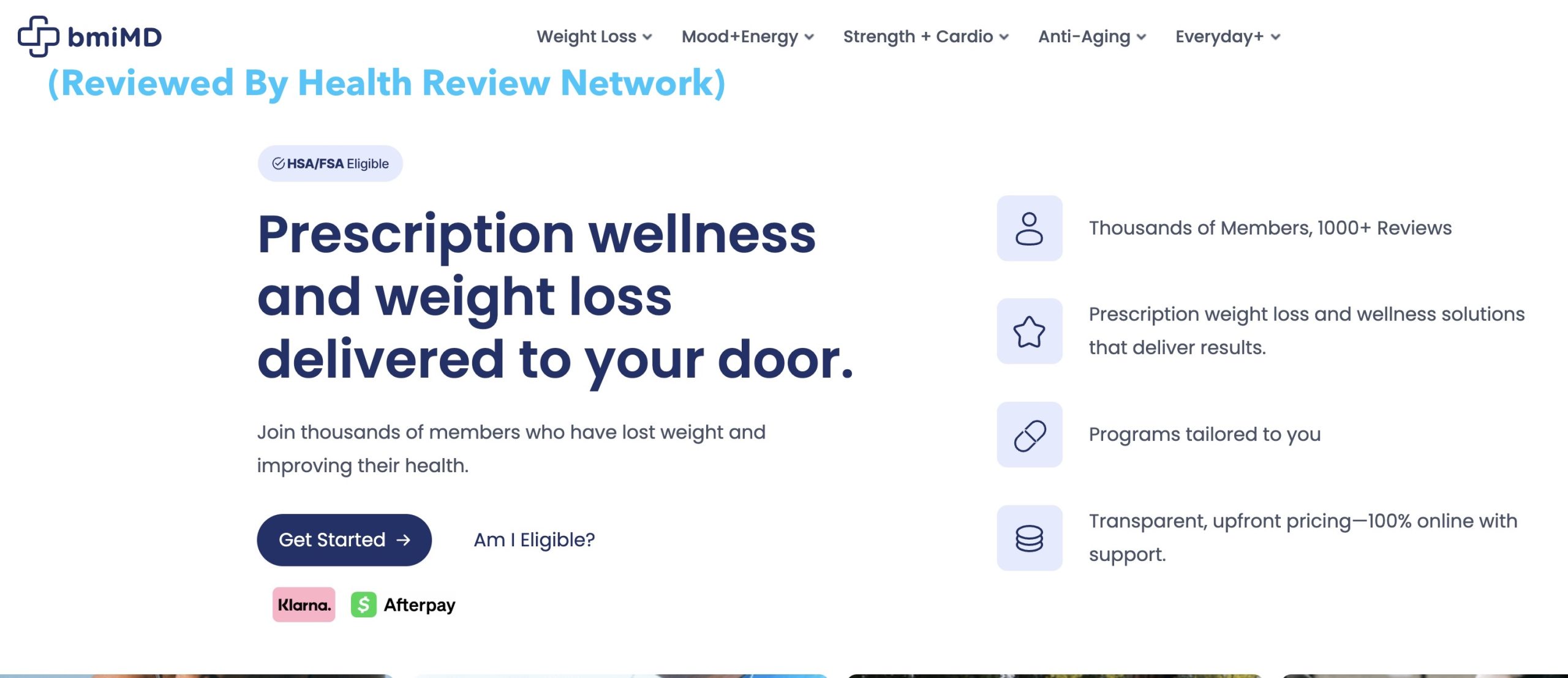
BMI MD Review: What This GLP-1 Telehealth Platform Actually Offers
If you’ve been looking into GLP-1 medications like semaglutide or tirzepatide for weight loss, you’ve probably come across bmiMD. This BMI MD review breaks down how the platform works, what it costs, who it’s for, and whether it delivers on its promises. No filler. Just the details you need before signing up.
bmiMD is a telehealth company that connects patients with licensed physicians who can prescribe GLP-1 receptor agonist medications. These are the same class of drugs behind brand names like Ozempic, Wegovy, Mounjaro, and Zepbound. The platform operates entirely online — consultations, prescriptions, and follow-ups all happen remotely.
The GLP-1 telehealth space has grown fast. In 2023, the U.S. telehealth market for weight management was valued at roughly $1.8 billion. By 2026, that number has climbed significantly. bmiMD sits in this growing space alongside competitors like Calibrate, Found, and Ro. But the model differs in some important ways, which we’ll get into below.
What is bmiMD?
bmiMD is an online telehealth platform built specifically for GLP-1 weight loss treatment. It connects patients with licensed medical providers who can evaluate, prescribe, and monitor GLP-1 receptor agonist medications — all without an in-person office visit.
The company focuses almost entirely on compounded semaglutide and compounded tirzepatide. That narrow focus is intentional. Unlike some telehealth weight loss services that offer a menu of different drug classes, bmiMD centers its model on GLP-1 medications and the medical oversight needed to use them safely.
Everything happens through their website. You complete a health questionnaire, get matched with a provider, and if approved, your medication ships to your home from an FDA-regulated 503B pharmacy. Monthly follow-ups are included so the prescribing provider can track your progress and adjust your dose as needed.
bmiMD operates on a direct-pay model. No insurance claims. No prior authorizations. You pay a monthly fee that covers the consultation, the prescription, and the medication itself. For many people, that simplicity is the draw — especially when their insurance won’t cover GLP-1 drugs for weight loss, which is still common in 2026.
The company serves patients across most U.S. states, though availability depends on telehealth prescribing laws in each state. It’s not a weight loss coaching program or a wellness app. It’s a medical service. Providers evaluate whether GLP-1 treatment is appropriate for you, prescribe it if it is, and manage your care month to month.
How bmiMD Works: Step by Step
The process is straightforward. You start by filling out a medical intake form on the bmiMD website. This includes your health history, current medications, height, weight, and your weight loss goals. A licensed provider reviews your information — typically within 24 to 48 hours.
If you qualify, the provider prescribes a GLP-1 medication. bmiMD works with compound pharmacies and, in some cases, brand-name options depending on availability and insurance. The medication ships directly to your door.
Follow-up appointments happen monthly or as needed through the platform. Providers monitor your progress, adjust dosing, and check for side effects. This is important because GLP-1 medications require titration — meaning you start at a low dose and gradually increase over several weeks.
What Medications Does bmiMD Prescribe?
bmiMD primarily prescribes compounded semaglutide and compounded tirzepatide. Compounded versions are created by FDA-regulated 503B pharmacies. These are not the exact same as brand-name Wegovy or Mounjaro, but they contain the same active ingredient.
The FDA has allowed compounded versions of these drugs during shortage periods. As of early 2026, tirzepatide was removed from the FDA shortage list in late 2024, which has created some complexity around compounded tirzepatide availability. Semaglutide compounded options remain more widely accessible through telehealth platforms like bmiMD.
It’s worth understanding the difference. Brand-name GLP-1 drugs go through full FDA approval with extensive clinical trials. Compounded versions use the same molecule but are mixed by pharmacies under different regulatory oversight. Both can be effective, but the distinction matters.
Why Choose bmiMD?
There are a lot of telehealth weight loss platforms out there. So why choose bmiMD over the others? A few things stand out.
First, the onboarding speed. Many users report getting matched with a provider and receiving a prescription within 2 to 3 days. Some competitors take a week or longer, especially those that require lab work before prescribing.
Second, bmiMD keeps pricing relatively transparent. Monthly costs for compounded semaglutide through bmiMD typically range from $199 to $399 depending on dosage tier. That’s competitive within the telehealth GLP-1 market, where monthly plans can run anywhere from $150 to $600+.
Third, the platform includes ongoing provider access. You’re not just getting a prescription and being left alone. Monthly check-ins are part of the program. Providers track your weight, review side effects, and adjust treatment plans accordingly.
Provider Credentials
bmiMD states that all prescribing providers are board-certified physicians or nurse practitioners licensed in the patient’s state. This is a baseline requirement for any legitimate telehealth service, but it’s worth confirming. Some platforms use providers with minimal obesity medicine training. bmiMD claims to prioritize providers with experience in metabolic health and weight management.
One thing to note — because this is telehealth, you may not always see the same provider at every visit. That’s standard across the industry, but it can feel impersonal to some people.
Is bmiMD a Legitimate GLP-1 Telehealth Company?
This is one of the most common questions people ask. And it’s a fair one. The GLP-1 telehealth space has attracted both credible companies and questionable ones. Some platforms have been flagged for prescribing without adequate medical oversight or sourcing medications from unverified pharmacies.
Based on available information, bmiMD operates within legal frameworks for telehealth prescribing. They partner with licensed pharmacies. They require medical intake forms. Providers hold active licenses. These are the minimum standards, but bmiMD does appear to meet them.
The Better Business Bureau, Trustpilot, and Google Reviews can give you a snapshot of real customer experiences. As with any telehealth service, experiences vary. Some patients report smooth onboarding and effective treatment. Others mention delays in shipping or difficulty reaching support.
A few things to watch for with any GLP-1 telehealth company:
— Does the platform require a medical history review before prescribing? bmiMD does.
— Are the pharmacies they use FDA-regulated? bmiMD claims to use 503B-compliant pharmacies.
— Do they provide ongoing medical supervision? bmiMD includes monthly check-ins.
— Is pricing clearly stated upfront? bmiMD lists pricing on their site.
None of this guarantees a perfect experience. But these are the markers of a legitimate operation.
What is bmiMD?
bmiMD is an online telehealth platform built specifically for GLP-1 weight loss treatment. It connects patients with licensed medical providers who can evaluate, prescribe, and monitor GLP-1 receptor agonist medications — all without an in-person office visit.
The company focuses almost entirely on compounded semaglutide and compounded tirzepatide. That narrow focus is intentional. Unlike some telehealth weight loss services that offer a menu of different drug classes, bmiMD centers its model on GLP-1 medications and the medical oversight needed to use them safely.
Everything happens through their website. You complete a health questionnaire, get matched with a provider, and if approved, your medication ships to your home from an FDA-regulated 503B pharmacy. Monthly follow-ups are included so the prescribing provider can track your progress and adjust your dose as needed.
bmiMD operates on a direct-pay model. No insurance claims. No prior authorizations. You pay a monthly fee that covers the consultation, the prescription, and the medication itself. For many people, that simplicity is the draw — especially when their insurance won’t cover GLP-1 drugs for weight loss, which is still common in 2026.
The company serves patients across most U.S. states, though availability depends on telehealth prescribing laws in each state. It’s not a weight loss coaching program or a wellness app. It’s a medical service. Providers evaluate whether GLP-1 treatment is appropriate for you, prescribe it if it is, and manage your care month to month.
What Real Users Say About bmiMD
Online reviews for bmiMD are mixed, which is typical for telehealth platforms in this space. Positive reviews frequently mention fast delivery, helpful providers, and noticeable weight loss within the first 8 to 12 weeks.
One recurring theme in positive feedback — users appreciate that bmiMD doesn’t require insurance. For people without coverage for GLP-1 medications (and many insurance plans still don’t cover them for weight loss), a cash-pay model removes a major barrier.
On the negative side, some users mention inconsistent communication. A few report delays between prescription approval and medication arrival. Others note that customer service response times could be faster. These issues aren’t unique to bmiMD — they’re common across the GLP-1 telehealth industry as demand continues to outpace supply chains.
Weight Loss Results
GLP-1 medications as a class have strong clinical data behind them. The STEP trials for semaglutide showed average weight loss of around 15% of body weight over 68 weeks. The SURMOUNT trials for tirzepatide showed up to 22.5% in some groups.
Individual results through bmiMD will vary based on starting weight, dosage, adherence, diet, and activity level. The medication works by reducing appetite and slowing gastric emptying. It’s not a passive solution — patients who combine GLP-1 treatment with lifestyle changes tend to see better and more sustained results.
bmiMD doesn’t publish its own clinical outcomes data, which is something to keep in mind. Most telehealth platforms in this space don’t. The results you see in testimonials are self-reported and not independently verified.
Insurance Coverage & Payment Options
One of the first things people ask about bmiMD is whether insurance will cover it. The short answer — no. bmiMD runs on a cash-pay model. You pay the monthly subscription fee directly, and that covers your provider consultation, prescription, and medication.
This is a deliberate choice by bmiMD, and it’s worth understanding why.
Most private insurance plans in the U.S. still do not cover GLP-1 medications when prescribed specifically for weight loss. Drugs like Wegovy and Zepbound have FDA approval for chronic weight management, but coverage depends on your specific plan. Some employer-sponsored plans cover them. Many don’t. Medicare currently does not cover anti-obesity medications, though proposed legislation (the Treat and Reduce Obesity Act) could change that. As of mid-2026, it hasn’t passed.
Even when insurance does cover GLP-1 drugs, prior authorization is almost always required. That process can take days to weeks. Denials are common. Appeals add more time. For patients who want to start treatment quickly, the insurance route can be frustrating.
bmiMD sidesteps all of that. No prior authorization. No insurance claim forms. No denial letters. You pay the listed price and get the medication. It’s simpler — but it also means the full cost sits with you.
Can You Use HSA or FSA Funds?
In many cases, yes. GLP-1 medications prescribed by a licensed provider for a medical condition generally qualify as eligible expenses under Health Savings Accounts (HSA) and Flexible Spending Accounts (FSA). Since bmiMD provides a legitimate medical consultation and prescription, patients may be able to use their HSA or FSA debit card for payment.
Check with your specific HSA or FSA administrator to confirm. Rules can vary depending on the plan. Some administrators want a letter of medical necessity. Others accept the prescription receipt on its own.
Payment Plans and Financing
bmiMD operates on a month-to-month subscription. There’s no annual contract and no large upfront payment. That monthly structure makes it easier to budget compared to paying $1,300+ for a brand-name GLP-1 prescription out of pocket.
Some patients use third-party medical financing services like CareCredit or Prosper Healthcare Lending to manage the cost. bmiMD doesn’t appear to offer its own internal financing as of 2026, but the month-to-month pricing — typically $199 to $499 depending on the medication and dosage — keeps the barrier lower than many alternatives.
bmiMD Pricing Breakdown
Cost is one of the biggest factors when choosing a GLP-1 telehealth provider. Here’s what bmiMD’s pricing looks like as of 2026:
— Initial consultation: Often included in the first month’s cost or offered at a reduced rate.
— Monthly medication (compounded semaglutide): Approximately $199–$399/month depending on dose.
— Monthly medication (compounded tirzepatide): Pricing varies and may be higher, typically $349–$499/month where available.
— Follow-up visits: Generally included in the monthly subscription.
Compare that to brand-name costs. Wegovy without insurance can run $1,300+ per month. Mounjaro without insurance is similar. Even with manufacturer coupons, you’re often looking at $500+ out of pocket. Compounded options through platforms like bmiMD bring that cost down substantially.
There’s a tradeoff. Compounded medications don’t come with the same manufacturer-backed clinical trial data as brand-name versions. The active ingredient is the same, but formulation, sterility standards, and dosing precision can differ between compound pharmacies. For many patients, the cost savings outweigh these concerns. But it’s a decision worth making with full information.
Side Effects to Know About
GLP-1 medications have well-documented side effects. The most common ones include nausea, vomiting, diarrhea, constipation, and stomach pain. These tend to be most pronounced during the early weeks and during dose increases.
Most patients find that side effects lessen as their body adjusts. Starting at a low dose and titrating slowly — which bmiMD’s providers should be managing — helps minimize discomfort.
More serious but rare side effects include pancreatitis, gallbladder issues, and potential thyroid concerns. GLP-1 drugs carry a boxed warning about thyroid C-cell tumors based on animal studies, though this hasn’t been confirmed in humans. Anyone with a personal or family history of medullary thyroid carcinoma or Multiple Endocrine Neoplasia syndrome type 2 should not take these medications.
bmiMD’s intake process should screen for these contraindications. If it doesn’t, that would be a red flag. Based on what’s publicly available, their intake form does ask about thyroid history, pancreatitis history, and other relevant conditions.
Patient Support Quality
Getting a prescription is only part of the equation with any GLP-1 telehealth platform. What happens after — when you have questions about side effects at 10 PM, or your shipment is delayed, or you need a dose adjustment between scheduled visits — is where patient support matters.
bmiMD includes monthly provider check-ins as part of its subscription. During these visits, you can discuss side effects, weight progress, dosing changes, and any health concerns that have come up. Providers are licensed physicians or nurse practitioners, and the visits happen through the platform’s telehealth system.
Outside of scheduled visits, reaching the bmiMD support team has been a mixed experience based on user feedback. Positive reviews mention responsive email support and quick answers to prescription-related questions. Negative reviews — and these come up consistently across review sites — mention slow response times, especially for non-urgent inquiries. A few patients have reported waiting 48 to 72 hours for a reply to customer service tickets.
bmiMD does not currently offer live chat or a phone hotline based on publicly available information. Communication happens primarily through their portal and email. For patients used to calling a doctor’s office directly, this can feel limited.
It’s fair to say that bmiMD’s clinical support — the actual medical side — generally receives better marks than its customer service infrastructure. The providers get good feedback. The admin side (shipping updates, billing questions, cancellation requests) is where friction shows up most.
This is a pattern across GLP-1 telehealth. Demand has grown faster than many companies have been able to scale their support teams. It doesn’t excuse the issue, but it does contextualize it. If responsive, fast customer service is a top priority for you, check recent reviews on Trustpilot or Google before committing to any platform — bmiMD included.
Pros & Cons of bmiMD
Pros
Fast onboarding. Most users get matched with a provider and receive a prescription within 2 to 3 days. Some competitors take a week or more, especially those requiring bloodwork upfront.
No insurance required. The cash-pay model eliminates prior authorizations, claim denials, and the bureaucratic delays that come with insurance-based weight loss programs.
Competitive monthly pricing. Compounded semaglutide at $199 to $399 per month is significantly cheaper than brand-name Wegovy or Mounjaro without insurance, which can exceed $1,300 monthly.
Monthly provider check-ins included. Follow-up visits are built into the subscription. Providers monitor progress, manage side effects, and handle dose adjustments — not just an initial prescription and nothing after.
Licensed, credentialed providers. bmiMD states all prescribers are board-certified physicians or nurse practitioners with experience in metabolic health.
Medication shipped to your door. No pharmacy visits. No waiting in line. Medications arrive directly from the compound pharmacy.
Cons
No structured lifestyle coaching. bmiMD is medication-focused. You won’t get a nutrition plan, exercise programming, or behavioral health support as part of the base subscription. Platforms like Calibrate and Found include more of this.
Customer service response times. Multiple reviews mention slow replies to non-clinical questions — billing inquiries, shipping updates, cancellation requests. No live chat or phone support is prominently offered.
Provider consistency varies. Because it’s telehealth, you may not see the same provider every month. For some patients, rebuilding context each visit feels inefficient.
No published outcomes data. bmiMD doesn’t share aggregated patient results. Testimonials are self-reported and unverified. This is an industry-wide issue, but it still limits transparency.
Compounded medications aren’t brand-name. The active ingredients are the same, but compounded formulations differ in manufacturing oversight. Some patients prefer the assurance of FDA-approved brand-name products, even at higher cost.
Compounded tirzepatide availability is uncertain. Since tirzepatide was removed from the FDA shortage list in late 2024, the legal landscape for compounded versions has shifted. Availability through bmiMD may be limited or subject to change.
bmiMD vs. Competitors
bmiMD vs. Calibrate
Calibrate positions itself as a metabolic health company. Their program includes GLP-1 medication plus coaching on food, sleep, exercise, and emotional health. It’s a more comprehensive (and more expensive) approach — annual membership runs around $1,600+ plus medication costs. bmiMD is more streamlined. You get the medication and medical oversight, but less structured lifestyle coaching.
bmiMD vs. Ro (Body Program)
Ro’s Body program offers compounded and brand-name GLP-1 options. Pricing is competitive with bmiMD. Ro has a larger brand presence and more established infrastructure. However, some users find Ro’s process slower, particularly for initial prescription approval.
bmiMD vs. Found
Found takes a broader approach, prescribing multiple types of weight loss medications — not just GLP-1s. They may prescribe metformin, bupropion/naltrexone, or other options depending on patient profile. If GLP-1s are specifically what you’re after, bmiMD is more focused on that category.
The right choice depends on what you prioritize. If you want GLP-1 access at a competitive price with minimal friction, bmiMD is a reasonable option. If you want more hand-holding and structured coaching, Calibrate or Found might be better fits.
Common Questions About bmiMD
Do I Need Insurance to Use bmiMD?
No. bmiMD operates on a cash-pay model. You don’t need insurance to get started. This is one reason it appeals to people whose insurance doesn’t cover GLP-1 medications for weight loss — which is still the case for many plans in 2026.
How Fast Does bmiMD Ship Medication?
Most users report receiving medication within 5 to 10 business days after prescription approval. Shipping times depend on pharmacy location and carrier. Some patients in remote areas have reported longer wait times.
Can I Cancel My bmiMD Subscription?
bmiMD operates on a month-to-month basis according to their website. Cancellation policies should be reviewed in their terms of service before signing up. Some users have noted that cancellation was straightforward, while a small number mentioned having to follow up to confirm.
Is bmiMD Available in Every State?
Telehealth prescribing laws vary by state. bmiMD is available in most U.S. states, but not all. Check their website for current availability in your state before beginning the intake process.
What Happens If I Stop Taking GLP-1 Medication?
Clinical data shows that many patients regain weight after discontinuing GLP-1 medications. A study published in Diabetes, Obesity and Metabolism found that participants regained roughly two-thirds of lost weight within a year of stopping semaglutide. This is an important consideration — GLP-1 treatment for weight loss is often long-term, not a short course.
Things bmiMD Could Improve
No platform is perfect. Based on user feedback and industry comparison, here are areas where bmiMD has room to grow:
— More structured lifestyle support. Medication alone produces results, but long-term success improves with nutrition and exercise guidance. bmiMD could add optional coaching tiers.
— Faster customer service response times. This is a common complaint and one that could be addressed with better staffing or a live chat feature.
— Published outcomes data. Sharing anonymized, aggregated patient results would build trust and differentiate bmiMD from competitors who also don’t publish this data.
— Clearer communication around compounded vs. brand-name medication differences. Many patients don’t fully understand what compounded means, and better education upfront would help.
Final Thoughts on This BMI MD Review
This BMI MD review covered the platform’s process, pricing, medications, provider quality, user feedback, and how it stacks up against competitors. bmiMD fills a real gap for people who want affordable GLP-1 access without navigating insurance hurdles or in-person appointments.
It’s not the most feature-rich platform out there. You won’t get intensive coaching or a full metabolic health program. But if your main goal is getting a GLP-1 prescription from a licensed provider at a reasonable monthly cost with ongoing medical oversight, bmiMD delivers on that core promise.
Do your own due diligence. Check current reviews. Read the terms of service. Confirm pharmacy sourcing. And talk to the prescribing provider about your specific health situation during your consultation.
Read the rest of our articles and more useful info down below!