

CBD Oil for Pain — What You Actually Need to Know Before Spending a Dollar
If you are over 55 and dealing with chronic pain, you have probably already tried a lot. Prescription anti-inflammatories. Over-the-counter options that upset your stomach. Maybe even steroid injections. And at some point, someone — a friend, a neighbor, a physical therapist — mentioned CBD oil for pain. You looked it up. And then you got overwhelmed by thousands of products, conflicting dosage advice, and marketing copy that reads like it was written by someone who has never had a bad knee in their life.
This article is built for you. We are going to cover how CBD oil actually works in the body, how to use CBD oil for pain based on the type of pain you are dealing with, how much CBD oil should I take for pain (the real answer, not the vague one), and what actual users over 55 report after months of consistent use. We are also going to compare product types honestly so you can stop guessing and start making decisions based on facts.
Tired of guessing which CBD actually works?
Find What Works for Your Body
A less-than 60 second wellness match for adults exploring plant-based relief
What’s bothering you most right now?
Select the one that impacts your day the most
How long have you been dealing with this?
There's no wrong answer — this helps us tailor your match
How much does it affect your daily routine?
Be honest — this shapes your recommendation
What have you tried so far?
Knowing what hasn't worked helps us find what will
How familiar are you with CBD?
No judgment — everyone starts somewhere
What sounds easiest to add to your routine?
Think about what fits your lifestyle, not what sounds fancy
What matters most to you in a product?
Pick the one that would seal the deal for you
YOUR MATCH IS READY
We'll include your personalized match plus a first-timer's guide based on your answers.
Where should we send your recommendation?
🔒 No spam, ever. Your info is kept 100% secure.
If you'd rather not wait — based on your answers about your symptoms, we'd point you straight to our trusted partner.
Skip to My Match →What CBD Oil Actually Does Inside Your Body
CBD stands for cannabidiol. It is one of over 100 cannabinoids found in the Cannabis sativa plant. Unlike THC, it does not get you high. That distinction matters, especially if you have concerns about impairment or drug testing.
Your body has something called the endocannabinoid system, or ECS. The ECS was discovered in the early 1990s by researchers studying how THC affects the brain. What they found is that your body produces its own cannabinoid-like compounds — called endocannabinoids — that bind to receptors throughout your nervous system, immune system, and organs.
There are two main receptor types. CB1 receptors are mostly in the brain and spinal cord. CB2 receptors are concentrated in the immune system and peripheral tissues. CBD does not bind directly to either one the way THC does. Instead, it modulates how those receptors respond to signals. It also inhibits the enzyme FAAH, which breaks down anandamide — one of your body’s natural pain-regulating endocannabinoids. The result is that anandamide stays active longer.
In practical terms, this means CBD may reduce the intensity of pain signaling without blocking it entirely. A 2020 review published in the Journal of Clinical Medicine found that CBD showed anti-inflammatory and analgesic properties across multiple preclinical studies. The World Health Organization’s 2017 report on cannabidiol stated that it is “generally well tolerated with a good safety profile.”
Why This Matters for Chronic Pain in Older Adults
Chronic pain conditions like osteoarthritis, neuropathy, and degenerative disc disease are extremely common in adults over 55. The CDC estimates that about 50 million U.S. adults have significant chronic pain. Among those, adults 65 and older report the highest rates. Many of these people take NSAIDs daily, which raises the risk of gastrointestinal bleeding, kidney damage, and cardiovascular events over time.
CBD oil for pain offers a different mechanism. It is not an NSAID. It does not thin the blood the same way aspirin does. It is not an opioid. For many older adults, it represents a way to manage discomfort without stacking additional pharmaceutical risks on top of an already complex medication list.
How to Use CBD Oil for Pain — The Methods That Matter
Not all delivery methods work the same way. How you use CBD oil for pain changes how fast it works, how long the effects last, and which type of pain it addresses best. Here is what you need to understand.
Sublingual Drops (Under the Tongue)
This is the most common method. You place drops of CBD oil under your tongue using a dropper. Hold it there for 60 to 90 seconds. The mucous membranes under the tongue absorb CBD directly into the bloodstream, bypassing the digestive system.
Bioavailability for sublingual CBD ranges from about 13% to 35%, according to a 2019 study in Molecules. That is significantly higher than swallowing a capsule, which typically has a bioavailability of 6% to 19%. Onset time is usually 15 to 45 minutes. Effects tend to last 4 to 6 hours.
This method works well for widespread or systemic pain — things like fibromyalgia, general inflammation, or pain that moves around. It also tends to help with sleep and anxiety, which often accompany chronic pain in older adults.
Topical Application
CBD topicals — creams, balms, salves — are applied directly to the skin over the painful area. They do not enter the bloodstream in significant amounts. Instead, they interact with CB2 receptors in the skin and underlying tissue.
Topicals are useful for localized pain. A sore knee. A stiff shoulder. Arthritis in the hands. A 2016 study in the European Journal of Pain used a transdermal CBD gel on rats with arthritis and found reduced joint swelling and pain behaviors without systemic side effects.
The downside is that topicals will not help much with sleep, anxiety, or pain that is deeper in the body. They are best used as a complement to sublingual or oral CBD, not a replacement.
Capsules and Edibles
Some people prefer capsules because the dosage is pre-measured. You swallow it like any other supplement. The CBD passes through the digestive system and liver before entering the bloodstream. This first-pass metabolism reduces how much CBD actually reaches your system.
Onset is slower — usually 45 minutes to 2 hours. But the effects can last longer, sometimes 6 to 8 hours. This can be useful for overnight pain relief or all-day management when combined with a morning dose.
How Much CBD Oil Should I Take for Pain
This is the question that stops most people from even starting. Dosing CBD is not straightforward because there is no single FDA-approved dose for pain (Epidiolex, the only FDA-approved CBD product, is for epilepsy at a different dosage range). But we have clinical data and a large body of practitioner experience to guide us.
The Low-and-Slow Starting Point
Most clinicians and CBD-focused health practitioners recommend starting at 10 to 15 mg of CBD per day. Take it at the same time each day for at least one full week before making any changes. The reason is simple — CBD builds up in your system. Fat-soluble compounds like cannabidiol accumulate in adipose tissue and reach a more stable baseline over days, not hours.
After the first week, if you notice some benefit but want more relief, increase by 5 mg. Continue this pattern weekly. Many adults over 55 find their effective dose for chronic pain falls between 25 mg and 50 mg per day. Some go higher. A 2020 study in the Journal of Pain Research found that participants using 15 mg to 60 mg daily reported meaningful pain reduction over an 8-week period.
Adjusting Based on Body Weight
A commonly referenced guideline uses 1 to 6 mg of CBD per 10 pounds of body weight. So a 180-pound person might start at 18 mg and work up to as high as 108 mg, depending on pain severity and individual response. This is a wide range, and that is the point — everyone metabolizes CBD differently. Age, liver function, body composition, and other medications all affect how your body processes it.
Do not assume that more is better. Some research, including a 2019 study from the University of São Paulo, found that CBD’s anxiety-reducing effects followed an inverted U-shaped curve. That means moderate doses worked, but very high doses were less effective. Pain may follow a similar pattern for some individuals.
Tracking What Works
Write it down. Keep a simple log — date, dose, time taken, pain level before and after (on a 1 to 10 scale), and any side effects. After four weeks, you will have enough data to see a real pattern. This is not optional if you want to find the right dose efficiently. Guessing wastes time and money.
Looking For Something Pure & Potent?
If your current CBD isn't full-spectrum and U.S.-sourced, you're wasting money
Check Out This Full-Spectrum, American Made CBDReal User Experiences From Adults Over 55
Clinical data matters. But so do the voices of people who are actually using this stuff daily while managing the same kinds of pain you are dealing with.
Margaret, 62 — Osteoarthritis in Both Knees
Margaret spent three years cycling through prescription anti-inflammatories. Meloxicam worked but gave her stomach problems. Celebrex was better on the gut but raised concerns about her blood pressure. She started using a full-spectrum CBD oil at 20 mg per day, taken sublingually in the morning. After two weeks, she increased to 30 mg. Within a month, she reported her daily knee pain dropped from a consistent 7 out of 10 to about a 4. She still has bad days, especially in cold weather. But she has not refilled her Celebrex prescription in over 14 months.
David, 71 — Diabetic Neuropathy
David has type 2 diabetes and developed peripheral neuropathy in his feet about six years ago. The burning and tingling kept him awake at night. His neurologist had him on gabapentin, which helped but left him foggy during the day. He added 25 mg of broad-spectrum CBD oil in the evening, about an hour before bed. He did not stop gabapentin — he discussed the addition with his doctor first. After about six weeks, he was able to reduce his gabapentin dose by half with his doctor’s supervision. Sleep improved. Daytime clarity came back. He describes the CBD as “not a miracle, but a real tool.”
Linda, 58 — Lower Back Pain and Anxiety
Linda’s chronic lower back pain started after a car accident in her late 40s. Physical therapy helped with mobility but did not eliminate the aching. She also developed anxiety around driving, which her doctor attributed partly to the ongoing pain cycle. She started with a CBD isolate at 15 mg twice daily. She switched to full-spectrum after a month because she had read about the entourage effect — the idea that cannabinoids and terpenes work better together than in isolation. After the switch, she noticed more consistent relief. Her anxiety did not vanish, but she described it as “turned down from a 6 to a 3 most days.”
Comparing CBD Oil Products — What Actually Separates Good From Bad
The CBD market is still poorly regulated. A 2017 study in JAMA found that nearly 70% of CBD products sold online were mislabeled — some had more CBD than advertised, some had less, and some contained detectable THC when they claimed to have none. This has improved somewhat as the industry has matured, but it remains a real problem in 2026.
Full-Spectrum vs. Broad-Spectrum vs. Isolate
Full-spectrum CBD oil contains all the cannabinoids found in the hemp plant, including trace amounts of THC (legally, less than 0.3% by dry weight under the 2018 Farm Bill). It also contains terpenes, flavonoids, and other plant compounds. The entourage effect theory suggests these compounds amplify each other’s effects. There is some clinical support for this — a 2015 study at the Hebrew University of Jerusalem found that full-spectrum extracts produced stronger anti-inflammatory responses than pure CBD isolate at the same dose.
Broad-spectrum removes the THC but keeps the other cannabinoids and terpenes. This is a good middle ground for people who are concerned about THC showing up on a drug test or who are sensitive to even trace amounts.
CBD isolate is 99%+ pure cannabidiol. No THC. No other cannabinoids. It is the most predictable option, but some users report it is less effective for pain compared to full-spectrum at the same milligram dose.
Third-Party Testing and Certificates of Analysis
This is non-negotiable. Any reputable CBD company will have a current Certificate of Analysis (COA) from an independent, ISO-accredited lab. The COA should verify the cannabinoid content matches what is on the label, confirm THC levels are at or below the legal limit, and screen for contaminants — heavy metals, pesticides, residual solvents, and microbial impurities.
If a company does not make COAs available on their website or at least by request, do not buy from them. Period.
Price Per Milligram
CBD oil is not cheap. But price varies wildly. A 30 mL bottle could contain 300 mg of CBD or 3,000 mg. Comparing by bottle price alone is meaningless. You need to calculate the cost per milligram.
Divide the total price by the total milligrams. In 2026, a reasonable price for high-quality, third-party tested, full-spectrum CBD oil falls between $0.05 and $0.15 per milligram. If you are paying more than $0.20 per milligram, you are overpaying — unless the product has a very specific formulation (like nanoemulsion technology for faster absorption).
At a dose of 30 mg per day and a cost of $0.08 per milligram, you are spending about $2.40 per day. That is roughly $72 per month. Compare that to the copays and out-of-pocket costs for prescription pain medications, and it starts to look reasonable for many people.
Common Mistakes People Make With CBD Oil for Pain
Getting this wrong is easy. Here are the most frequent missteps we see from first-time CBD users, especially adults over 55.
Mistake 1: Starting too high. Someone reads a forum post about a person taking 100 mg per day and jumps straight to that dose. They feel drowsy, groggy, or get an upset stomach. Then they quit and decide CBD does not work. It probably would have worked fine at 20 mg. Start at 10 to 15 mg.
Mistake 2: Not giving it enough time. CBD is not ibuprofen. It does not kick in fully after a single dose. Most users need two to four weeks of consistent daily use before noticing a meaningful change. If you quit after three days, you did not give it a fair trial.
Mistake 3: Buying based on brand recognition alone. Some of the most heavily advertised CBD brands have had the worst mislabeling track records. Check the COA. Check independent reviews from sites that actually test products, not just affiliate marketing blogs.
Mistake 4: Ignoring drug interactions. CBD inhibits certain cytochrome P450 enzymes in the liver. These enzymes metabolize a long list of common medications, including warfarin, certain statins, some blood pressure medications, and some antidepressants. If you are on prescription drugs — especially blood thinners — talk to your doctor or pharmacist before adding CBD.
Mistake 5: Assuming all products are the same. A 1,000 mg bottle from one company is not the same as a 1,000 mg bottle from another if the extraction methods, carrier oils, and hemp sourcing are different. The ingredient list and the COA tell the real story.
Does CBD Oil Interact With Medications?
Yes. And this is the section that matters most if you are over 55 and managing multiple health conditions.
CBD is processed by the liver through the CYP450 enzyme system — specifically CYP3A4 and CYP2C19. Many common medications use the same pathway. When CBD competes for those enzymes, it can raise or lower the blood levels of other drugs.
The most well-documented interaction is with warfarin (Coumadin). Case reports published in the journal Epilepsy and Behavior Cases in 2017 documented increased INR levels (a measure of blood clotting time) in patients who started CBD while on warfarin. Higher INR means increased bleeding risk.
Other drugs that may interact include certain benzodiazepines (like diazepam), some calcium channel blockers used for blood pressure, and SSRIs like fluoxetine. A pharmacist can often run an interaction check faster than your doctor’s office. Ask specifically about CYP450 interactions.
This does not mean you cannot use CBD oil for pain while on medications. Many people do, safely, with proper medical guidance. But skipping that step is a risk you should not take.
CBD Oil for Sleep and Anxiety — The Overlap With Pain
Chronic pain, poor sleep, and anxiety tend to travel together. A 2019 large case series published in The Permanente Journal followed 72 adults who used CBD for anxiety and poor sleep. Within the first month, 79.2% reported lower anxiety scores and 66.7% reported improved sleep scores. While this was not a randomized controlled trial, the numbers were consistent over the study period.
If you are losing sleep because of pain, and the sleep loss is making the pain worse — which is a well-documented cycle — addressing both with a single compound has obvious appeal. Many users over 55 take their CBD dose in the evening, about an hour before bed. This timing targets both nighttime pain and sleep onset.
For anxiety specifically, doses in the 25 mg to 75 mg range appear most effective based on available human studies. The same 2019 University of São Paulo study mentioned earlier used a 300 mg dose for acute anxiety testing, but daily maintenance doses tend to be much lower.
Frequently Asked Questions About CBD Oil for Pain
Is CBD oil legal in all 50 states?
Hemp-derived CBD oil with less than 0.3% THC is federally legal under the 2018 Farm Bill. However, some states have additional restrictions on CBD sales, labeling, or the types of products allowed. Check your state’s specific regulations before purchasing.
Will CBD oil make me fail a drug test?
Full-spectrum CBD oil contains trace amounts of THC (up to 0.3%). In most cases, this is not enough to trigger a positive result on a standard drug test. However, it is not impossible, especially at higher doses or with long-term daily use. If drug testing is a concern, use broad-spectrum or isolate products with verified zero-THC COAs.
How long does it take for CBD oil to work for pain?
Sublingual CBD oil typically begins working within 15 to 45 minutes. Capsules and edibles can take 45 minutes to 2 hours. However, the full pain-relieving effect often builds over days to weeks of consistent use. Most users report a noticeable difference after 2 to 4 weeks of daily use.
Can I use CBD oil with my arthritis medication?
Possibly, but you should consult your doctor or pharmacist first. CBD can interact with several common medications through the CYP450 liver enzyme system. This includes some anti-inflammatories, blood thinners, and blood pressure medications. A healthcare provider can help you evaluate the risk for your specific medication list.
What is the best type of CBD oil for pain?
For most adults dealing with chronic pain, full-spectrum CBD oil tends to produce the most consistent results. The additional cannabinoids and terpenes may enhance the pain-relieving effects through the entourage effect. If you are sensitive to THC or subject to drug testing, broad-spectrum is the next best option.
Are there side effects of CBD oil?
The most commonly reported side effects include drowsiness, dry mouth, mild nausea, and changes in appetite. These are typically mild and dose-dependent — meaning they occur more often at higher doses. The World Health Organization’s 2017 review found no evidence of public health-related problems associated with the use of pure CBD.
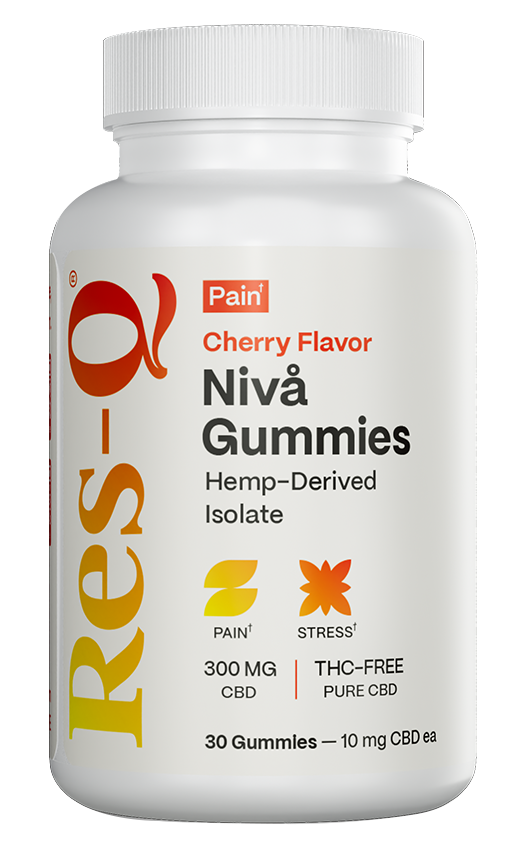
The CBD Your Body ACTUALLY ABSORBS
Most CBD passes right through you. This one doesn't — 440% better absorption, zero THC, made in the U.S.
See Why People Are SwitchingMoving Forward With CBD Oil for Pain — Practical Next Steps
If you have made it this far, you now have more practical knowledge about CBD oil for pain than most people who have already been buying it for months. You understand the delivery methods and their trade-offs. You have a dosing framework that is grounded in clinical data, not marketing hype. You know what to look for in a product and what red flags should make you walk away.
The gap between thinking about trying CBD and actually finding the right product at the right dose for your body is smaller than it looks. Start with a reputable full-spectrum oil. Begin at 10 to 15 mg daily. Track your results for four weeks. Talk to your pharmacist about potential interactions with anything else you take. Adjust based on what your log tells you, not what a random internet comment suggests.
You deserve honest information and products that actually do what they claim. That is what this resource exists to provide.
Read the rest of our articles and more useful info down below for deeper comparisons, brand-specific reviews, and updated dosage research as new studies are published throughout 2026.