

Why More People Are Learning How to Make CBD Gummies at Home
If you deal with chronic pain, anxiety, or sleep problems, you’ve probably looked at the CBD aisle and felt overwhelmed. Dozens of brands. Wildly different prices. Labels that don’t always match what’s inside. That’s exactly why so many adults between 25 and 55 are now searching for how to make CBD gummies themselves. You control the ingredients. You control the dose. And you skip the 300% markup that most retail brands tack on.
A 2023 study published in the Journal of Cannabis Research found that nearly 62% of CBD users take it specifically for chronic pain, anxiety, or insomnia. Yet a separate FDA analysis of commercial CBD products found that roughly 26% of products tested contained less CBD than their labels claimed. When you make your own, you remove that uncertainty. You know exactly what goes into each gummy, down to the milligram.
Tired of guessing which CBD actually works?
Find What Works for Your Body
A less-than 60 second wellness match for adults exploring plant-based relief
What’s bothering you most right now?
Select the one that impacts your day the most
How long have you been dealing with this?
There's no wrong answer — this helps us tailor your match
How much does it affect your daily routine?
Be honest — this shapes your recommendation
What have you tried so far?
Knowing what hasn't worked helps us find what will
How familiar are you with CBD?
No judgment — everyone starts somewhere
What sounds easiest to add to your routine?
Think about what fits your lifestyle, not what sounds fancy
What matters most to you in a product?
Pick the one that would seal the deal for you
YOUR MATCH IS READY
We'll include your personalized match plus a first-timer's guide based on your answers.
Where should we send your recommendation?
🔒 No spam, ever. Your info is kept 100% secure.
If you'd rather not wait — based on your answers about your symptoms, we'd point you straight to our trusted partner.
Skip to My Match →What You Need Before You Start
Before we get into the actual recipe, there’s some groundwork. This isn’t complicated, but skipping steps here leads to uneven dosing or gummies that taste terrible. Neither of those outcomes is useful when you’re trying to manage real symptoms.
Choosing Your CBD Extract
You have three main options: full-spectrum CBD oil, broad-spectrum CBD oil, and CBD isolate. Each one behaves differently in a gummy recipe.
Full-spectrum contains all the cannabinoids from the hemp plant, including up to 0.3% THC. This is legal under the 2018 Farm Bill at the federal level. Many chronic pain users prefer full-spectrum because of what researchers call the “entourage effect” — the idea that cannabinoids work better together than alone. A 2019 study in Frontiers in Plant Science supported this, showing enhanced anti-inflammatory effects when multiple cannabinoids were present.
Broad-spectrum removes the THC but keeps other cannabinoids and terpenes. Good option if you get drug tested at work.
CBD isolate is pure cannabidiol — usually 99%+ purity. It’s a white crystalline powder. Easiest to dose accurately. No plant taste. But you lose the entourage effect.
For most homemade gummy recipes, CBD isolate or a high-quality CBD oil tincture works best. Isolate dissolves cleanly. Tinctures are pre-measured, which helps with dosing math.
Other Ingredients and Equipment
Here’s the full list of what you’ll need:
— Unflavored gelatin (Knox brand works, about 2 tablespoons per batch of 30 gummies)
— 1/2 cup of fruit juice (tart cherry juice is popular among sleep-focused users — it contains natural melatonin precursors)
— 1 tablespoon of a sweetener like honey or agave
— Your CBD extract (we’ll calculate the exact amount below)
— 1 teaspoon of sunflower lecithin (this is an emulsifier — it helps the CBD bind evenly into the liquid so each gummy has a consistent dose)
— Silicone gummy molds (typically hold about 2 ml per cavity)
— A small saucepan
— A whisk or fork
— Dropper or syringe for filling molds
If you want vegan gummies, swap the gelatin for agar-agar powder. Use about 1 tablespoon of agar-agar for every 2 tablespoons of gelatin. The texture will be slightly firmer and less chewy, but it sets well.
How to Make CBD Gummies: Step-by-Step Recipe
This is the core process. It takes about 20 minutes of active work and roughly 2 hours of setting time in the fridge.
Step 1: Calculate Your Dose Per Gummy
This is where most people mess up. And it matters — especially if you’re using CBD for pain management or sleep, where consistent dosing actually affects outcomes.
Decide how many milligrams of CBD you want per gummy. Common ranges based on published clinical guidance and user reports:
— Mild anxiety or general wellness: 10–15 mg per gummy
— Moderate chronic pain: 20–30 mg per gummy
— Sleep support: 25–50 mg per gummy (often taken 30–60 minutes before bed)
— Severe chronic pain: 30–50 mg per gummy
A 2020 clinical review in the Journal of Clinical Medicine found that CBD doses between 25 mg and 75 mg per day improved sleep scores in 66.7% of participants within the first month. Most users in online communities like r/CBD report settling somewhere between 25 and 50 mg for sleep after a few weeks of experimentation.
Now the math. If your mold makes 30 gummies and you want 25 mg each, you need 750 mg of CBD total for the batch. If you’re using a 1,000 mg CBD tincture that comes in a 30 ml bottle, each ml contains about 33.3 mg. You’d need roughly 22.5 ml of that tincture for 750 mg.
If you’re using isolate powder, just weigh 750 mg on a small kitchen scale. Digital scales accurate to 0.01g cost about $10–$15 and are worth owning for this.
Step 2: Heat the Juice
Pour your 1/2 cup of fruit juice into the saucepan over low heat. You want it warm, not boiling. Around 150°F is the target. Boiling can degrade some cannabinoids — a 2016 analysis in Chemistry & Biodiversity noted that CBD begins to degrade around 320°F, so low heat is safe, but there’s no reason to push it.
If you’re using tart cherry juice for sleep, the natural tartness also helps mask the earthy flavor of full-spectrum CBD oil. Apple juice works too. Avoid citrus juices with high acidity — they can interfere with gelatin setting properly.
Step 3: Add the Gelatin
Sprinkle the gelatin over the warm juice. Whisk it in slowly. You want zero lumps. Let it sit for about 2 minutes so the gelatin “blooms” — meaning it absorbs the liquid and swells. Then whisk again until completely smooth.
If you’re using agar-agar instead, you need to bring the mixture to a brief simmer. Agar-agar won’t set unless it reaches at least 185°F. Stir continuously for about 3–4 minutes at that temp.
Step 4: Add the Lecithin and Sweetener
Stir in your sunflower lecithin and honey (or agave). The lecithin is important. CBD is fat-soluble. Juice is water-based. Without an emulsifier, the CBD will separate and float to the top. That means the first few gummies you pour will be super strong and the last ones will be basically empty. Sunflower lecithin prevents this. Soy lecithin works too, but many people avoid soy for allergy or preference reasons.
Step 5: Add the CBD
Remove the saucepan from heat. Let it cool for about 60 seconds — you still want it liquid, just not actively hot. Add your CBD isolate or tincture. Stir thoroughly for at least 2 full minutes. This ensures even distribution throughout the mixture.
If you’re using a full-spectrum oil, expect the mixture to turn a light amber or greenish color. Normal. If you’re using isolate, it should remain mostly clear depending on your juice choice.
Step 6: Fill the Molds
Use a dropper or small syringe to fill each cavity of your silicone mold. This gives you more control than pouring. Fill each one evenly — about 2 ml per cavity for standard bear-shaped molds.
Work relatively fast. Gelatin starts to set at room temperature, and you’ll notice the mixture thickening within 5–10 minutes.
Step 7: Refrigerate and Store
Place the molds in the fridge. Wait at least 2 hours. Overnight is better for a firmer texture. Pop the gummies out of the molds. Store them in an airtight container in the refrigerator. Homemade CBD gummies don’t contain the preservatives that store-bought ones do, so they last about 2–3 weeks in the fridge. You can freeze them for up to 3 months.
Looking For Something Pure & Potent?
If your current CBD isn't full-spectrum and U.S.-sourced, you're wasting money
Check Out This Full-Spectrum, American Made CBDHow Are CBD Gummies Made in Commercial Facilities
Understanding how CBD gummies are made at the commercial level helps you see where homemade versions actually have advantages — and where they don’t.
Large manufacturers like Charlotte’s Web, CBDistillery, and Joy Organics use industrial-scale confectionery equipment. The gummy base is typically pectin or gelatin mixed in large heated vats. CBD extract — usually a distillate or isolate — is added in precise amounts measured by automated dosing systems. The mixture is deposited into starch or silicone molds by machines that fill hundreds of cavities per minute.
After setting, commercial gummies go through a “polishing” drum that coats them in sugar, citric acid, or a wax coating to prevent sticking. Then they’re tested. Reputable companies send batches to third-party labs for potency verification and contaminant screening (heavy metals, pesticides, residual solvents).
Here’s the thing, though. A 2020 report by Leafly found that lab testing standards vary dramatically by state. Some states require testing. Others don’t. And even in regulated states, some brands have been caught shopping for labs that deliver favorable results. This was documented in a Johns Hopkins study published in JAMA Network Open, which found that of 105 CBD products purchased online, 18 contained detectable THC not listed on the label.
When you make your own CBD gummies, you’re limited by not having access to third-party lab testing for your finished product. But you control the source material. If you buy CBD isolate or oil from a company that publishes its Certificate of Analysis (COA), you know exactly what’s in your extract before you even start cooking.
How to Make Your Own CBD Gummies for Specific Needs
Here’s where it gets practical. Different people need different things from their gummies. A 35-year-old with lower back pain from a desk job isn’t looking for the same gummy as a 50-year-old dealing with arthritis and insomnia.
For Chronic Pain
Use a full-spectrum CBD oil as your base. The combination of CBD, CBG, and trace THC has shown stronger analgesic effects in research than CBD alone. A 2022 study in Pain published by the International Association for the Study of Pain found that full-spectrum hemp extract reduced self-reported pain scores by an average of 3.2 points on a 10-point scale over 8 weeks.
Consider adding turmeric powder (about 1/2 teaspoon per batch) and a pinch of black pepper. Piperine in black pepper increases the bioavailability of both curcumin (the active compound in turmeric) and CBD. A study in Planta Medica demonstrated that piperine increased curcumin absorption by 2,000%. The effect on CBD isn’t as dramatic but still measurable — roughly a 15–25% increase in bioavailability based on preliminary pharmacokinetic data.
Target dose: 25–40 mg per gummy. Take one in the morning and one in the evening.
For Anxiety
Broad-spectrum or isolate works well here. Many anxiety sufferers report that THC — even trace amounts — can increase anxiety rather than reduce it. This is backed by research. A 2017 review in the Journal of Psychopharmacology found that low-dose CBD (under 100 mg) reduced anxiety in multiple controlled studies, while THC had variable and sometimes anxiogenic effects.
Add lemon balm extract if you want a mild additional calming agent. About 300 mg of lemon balm per batch (10 mg per gummy for a 30-gummy batch). Lemon balm has GABA transaminase inhibition properties, which basically means it helps your brain use its own calming neurotransmitter more efficiently. A 2014 study in Nutrients confirmed its anxiolytic effects at doses as low as 300 mg.
Target dose: 15–25 mg of CBD per gummy. One in the morning, one before stressful situations if needed.
For Sleep
Full-spectrum oil combined with tart cherry juice as your liquid base. Add 1 mg of melatonin per gummy if you want (dissolve 30 mg of melatonin powder into the batch). Some people also add 100 mg of L-theanine per batch — it promotes alpha brain wave activity, which is associated with relaxed wakefulness and easier transition into sleep.
A user named Mark in a CBD forum shared his experience after making sleep gummies for three months: “I was on prescription trazodone for two years. The CBD gummies with tart cherry and melatonin got me off it within six weeks. I take two every night at 9 PM. I’m usually asleep by 9:45. That never happened with trazodone.”
Target dose: 30–50 mg of CBD per gummy. One or two gummies 30–60 minutes before bed.
Common Mistakes People Make
After reading dozens of forums, Reddit threads, and product review sections, these are the most frequent problems people run into when learning how to make CBD gummies.
Uneven Dosing
This is the number one issue. People skip the lecithin or don’t stir long enough. The result is a batch where some gummies have 40 mg and others have 5 mg. That’s not useful when you’re trying to manage chronic pain or get consistent sleep. Stir for a full 2 minutes minimum after adding the CBD. Use lecithin. Don’t skip it.
Overheating the CBD
Some recipes tell you to boil everything together. Don’t. Add CBD after removing the pan from heat. You preserve more of the active compound this way. While CBD is relatively heat-stable below 300°F, prolonged exposure to even moderate heat (above 200°F for extended periods) can reduce potency by 10–15% based on stability testing data from Emerald Scientific.
Using Low-Quality CBD Oil
This undermines the entire point of making your own. If your source CBD is contaminated or mislabeled, your gummies will be too. Always buy from a supplier that provides a current COA from a third-party, ISO-accredited lab. The COA should show cannabinoid potency, heavy metals, pesticides, and microbial testing results. Companies like Alliant Hemp, Lazarus Naturals, and Extract Labs all publish these openly.
Not Accounting for Bioavailability
When you eat a CBD gummy, it passes through your digestive system and liver before reaching your bloodstream. This “first-pass metabolism” means you absorb only about 13–19% of the CBD in each gummy, according to a pharmacokinetic study published in Frontiers in Pharmacology. So a 25 mg gummy delivers roughly 3.25 to 4.75 mg of active CBD into your system.
This is why edible doses are higher than sublingual (under the tongue) doses. It’s not waste — it’s biology. If you find your gummies aren’t working, this is likely why. You may need to increase from 25 mg per gummy to 40 or 50 mg before you feel adequate effects.
How Do Homemade CBD Gummies Compare to Store-Bought
Real talk from real users. A woman named Sarah posted a detailed comparison on a wellness blog after making her own CBD gummies for six months. She’d been buying a popular brand at $45 for 30 gummies (25 mg each). Her cost breakdown for homemade: $28 for a 1,500 mg bottle of full-spectrum CBD oil, $3 for gelatin, $4 for juice and lecithin. That batch made 60 gummies at 25 mg each. Total cost: $35 for double the gummies. Roughly 29 cents per gummy versus $1.50.
The trade-off is time and consistency. Commercial gummies are precisely dosed by machines. Yours will have slight variations — maybe plus or minus 3–5 mg per gummy even with good technique. For most people managing chronic conditions, that’s an acceptable range. But if you need clinical-grade precision, commercial products from brands with verified COAs might be the safer bet.
Taste is another factor. Store-bought gummies have professional flavoring and sweetening. Homemade ones taste more like fruit juice and gelatin — pleasant enough, but not candy-level enjoyable. Adding a few drops of flavored stevia or natural flavor extracts (strawberry, mango, lemon) helps considerably.
Dosage Guidance for Beginners
If you’ve never taken CBD before, start low. This is standard advice from virtually every cannabinoid researcher and clinical practitioner who’s published on the subject.
Start with 10–15 mg per gummy. Take one gummy per day for a full week. Note how you feel in a simple journal — pain levels (1–10), sleep quality (1–10), anxiety levels (1–10). After one week, if you’re not seeing results, increase to 20–25 mg. Give that another week.
Most users find their effective dose within 2–4 weeks. A survey of 2,409 CBD users conducted by the Brightfield Group found that the median effective dose for pain was 25 mg twice daily, for anxiety was 20 mg once daily, and for sleep was 30 mg once nightly.
CBD has a favorable safety profile. A World Health Organization report from 2018 stated that CBD is “generally well tolerated with a good safety profile” and that “reported adverse effects may be as a result of drug-drug interactions between CBD and patients’ existing medications.” If you take prescription medications — especially blood thinners, seizure medications, or anything metabolized by the CYP450 liver enzyme pathway — talk to your doctor before adding CBD. It can increase or decrease the effectiveness of certain drugs.
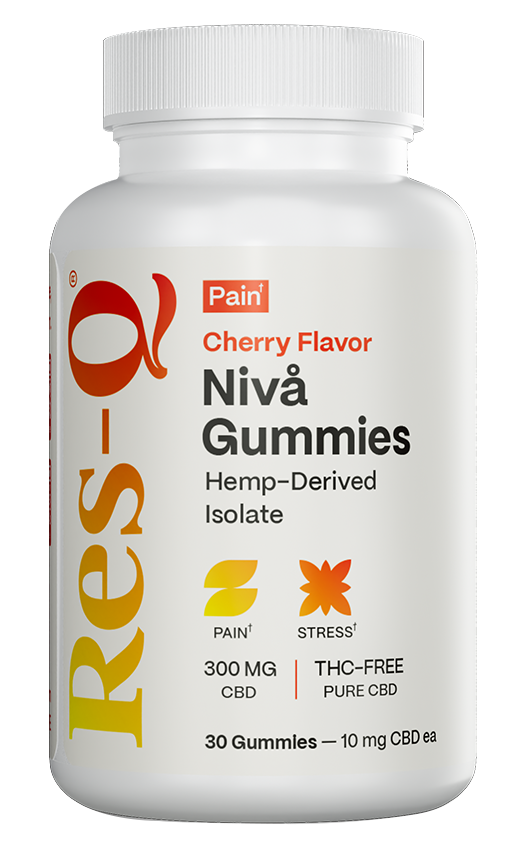
The CBD Your Body ACTUALLY ABSORBS
Most CBD passes right through you. This one doesn't — 440% better absorption, zero THC, made in the U.S.
See Why People Are SwitchingFrequently Asked Questions About Making CBD Gummies
How long do homemade CBD gummies last?
In the refrigerator, about 2–3 weeks. In the freezer, up to 3 months. They don’t contain commercial preservatives, so treat them like perishable food. If they develop an off smell or visible mold, discard the batch.
Can I use CBD flower instead of oil or isolate?
Technically yes, but it requires an extra step. You’d need to decarboxylate the flower first — bake it at 240°F for 40 minutes to activate the CBD from its raw acid form (CBDA) into CBD. Then infuse it into coconut oil or butter over low heat for 2–4 hours. Strain out the plant material and use the infused oil in your recipe. It works, but the dosing is much harder to calculate precisely.
Will homemade CBD gummies show up on a drug test?
If you use full-spectrum CBD, there is a small risk. Standard urine drug tests screen for THC metabolites at a cutoff of 50 ng/mL. Full-spectrum products contain up to 0.3% THC. At high daily doses (above 100 mg of full-spectrum CBD per day), some users have triggered positive results. A 2019 study in the Journal of Analytical Toxicology confirmed this possibility. If drug testing is a concern, use broad-spectrum or isolate exclusively.
What is the best type of CBD for gummies?
CBD isolate is easiest to work with — it’s flavorless, dissolves well, and dosing is straightforward. Full-spectrum oil gives you additional cannabinoids that may improve effectiveness but adds a stronger flavor. Your choice depends on whether you prioritize ease of use or maximum therapeutic benefit.
Can I make CBD gummies without gelatin?
Yes. Use agar-agar powder as a 1:1 substitute by volume. Agar-agar is derived from seaweed and is vegan. The gummies will be slightly firmer with less chew, but they set reliably and hold their shape at room temperature better than gelatin-based gummies.
Making the Process Your Own
Learning how to make CBD gummies gives you something that buying a bottle off a shelf never will — complete control over what enters your body. For anyone managing chronic pain, anxiety, or sleepless nights, that control matters. You set the dose. You choose the extract quality. You decide what goes in and what stays out.
The process takes under 30 minutes of active work. The ingredients cost a fraction of retail gummies. And every batch you make teaches you something about what works for your body. Start with a small batch. Track your results. Adjust. That’s the entire method.
Read the rest of our articles and more useful info down below for deeper guides on CBD dosage charts, product comparisons, and honest user reviews from people actually living with these conditions.