

So, Is CBD Good for Focus? Let’s Get Into It
If you’ve been wondering is CBD good for focus, you’re not alone. Millions of people are turning to cannabidiol — CBD — as an alternative to traditional supplements for mental clarity. And the interest isn’t random. There’s actual science forming around CBD’s interaction with brain chemistry, specifically how it may influence attention, calm racing thoughts, and support cognitive function without the high that THC delivers.
This article breaks down what we know, what we don’t, and what real people are experiencing when they use CBD for focus and concentration. No hype. No miracle claims. Just a clear look at the research, some practical guidance, and honest talk about where CBD fits — or doesn’t — in your daily routine.
Tired of guessing which CBD actually works?
Find What Works for Your Body
A less-than 60 second wellness match for adults exploring plant-based relief
What’s bothering you most right now?
Select the one that impacts your day the most
How long have you been dealing with this?
There's no wrong answer — this helps us tailor your match
How much does it affect your daily routine?
Be honest — this shapes your recommendation
What have you tried so far?
Knowing what hasn't worked helps us find what will
How familiar are you with CBD?
No judgment — everyone starts somewhere
What sounds easiest to add to your routine?
Think about what fits your lifestyle, not what sounds fancy
What matters most to you in a product?
Pick the one that would seal the deal for you
YOUR MATCH IS READY
We'll include your personalized match plus a first-timer's guide based on your answers.
Where should we send your recommendation?
🔒 No spam, ever. Your info is kept 100% secure.
If you'd rather not wait — based on your answers about your symptoms, we'd point you straight to our trusted partner.
Skip to My Match →What CBD Actually Does in Your Brain
CBD is one of over 100 cannabinoids found in the cannabis plant. Unlike THC, it doesn’t produce a euphoric high. Instead, it interacts with your endocannabinoid system (ECS), a network of receptors spread across your brain and body that helps regulate mood, sleep, pain, and yes — cognitive function.
The ECS has two main receptor types: CB1 and CB2. CB1 receptors are concentrated in the brain. CBD doesn’t bind directly to CB1 the way THC does. Instead, it modulates receptor activity indirectly. It also influences serotonin receptors (specifically 5-HT1A), which play a role in anxiety, mood stability, and mental clarity.
A 2019 study published in The Permanente Journal found that 79.2% of participants reported lower anxiety scores within the first month of CBD use, and 66.7% reported improved sleep. Both of those factors — reduced anxiety and better sleep — are directly tied to your ability to focus during the day.
So CBD doesn’t act like a stimulant. It doesn’t amp you up like caffeine or Adderall. It works more like a background stabilizer. It may help remove barriers to focus — anxiety, restlessness, poor sleep — rather than forcing concentration through neurochemical brute force.
Does CBD Help With Focus? What the Studies Say
Let’s be clear: there is no large-scale, definitive clinical trial that says “CBD improves focus in healthy adults.” That study hasn’t been done yet. But there’s a growing pile of indirect evidence that supports the connection.
Anxiety Reduction and Cognitive Performance
A 2020 review in CNS Drugs analyzed 8 studies on CBD and anxiety disorders. Across those studies, CBD doses ranging from 150 mg to 600 mg showed consistent anxiolytic effects. When anxiety drops, your prefrontal cortex — the part of your brain responsible for planning, decision-making, and sustained attention — works more efficiently. That’s not speculation. That’s established neuroscience.
Think about it like this. You sit down to work. Your brain keeps circling back to a conversation you had yesterday, a bill you forgot to pay, a weird noise your car made. That’s low-grade anxiety eating your focus alive. CBD may help quiet that loop.
Sleep Quality and Daytime Alertness
Poor sleep destroys focus. A 2022 randomized controlled trial in the Journal of Clinical Pharmacology found that participants taking 25 mg of CBD nightly experienced significantly better sleep quality scores over a 4-week period compared to placebo. Better sleep means better working memory, faster processing speed, and longer attention spans during waking hours.
Neuroinflammation and Brain Fog
CBD has demonstrated anti-inflammatory and neuroprotective properties in preclinical research. A 2021 paper in Frontiers in Pharmacology reviewed CBD’s effects on neuroinflammation and found that it reduced pro-inflammatory cytokines in brain tissue. Chronic low-level inflammation in the brain is one proposed mechanism behind “brain fog” — that fuzzy, sluggish feeling where you can’t hold a thought together. If CBD dials down neuroinflammation, it could theoretically support clearer thinking.
Real People Using CBD for Focus and Concentration
Research is one thing. Lived experience is another. Here’s what actual users report — and to be fair, anecdotal evidence has limits. But patterns across thousands of reports start to mean something.
The Freelance Writer Who Ditched Afternoon Coffee
A freelance writer based in Austin shared her experience on a CBD forum in early 2026. She’d been using 20 mg of broad-spectrum CBD oil each morning for about three months. Her biggest observation: she stopped reaching for that 2 p.m. coffee. Not because she wasn’t tired, but because the mid-afternoon mental dip just got smaller. She described her focus as “less forced,” like she didn’t have to fight her own brain to stay on task.
She also noticed fewer intrusive thoughts while writing. No dramatic transformation. Just a smoother cognitive experience throughout the day.
The College Student Managing Test Anxiety
A junior at Ohio State started taking 15 mg CBD capsules before study sessions after reading about its anti-anxiety effects. He wasn’t diagnosed with ADHD or any attention disorder. His problem was simple: test anxiety bled into his study time, making it hard to retain information. After six weeks, he reported that his study sessions felt “less panicky” and that he could read longer stretches without re-reading the same paragraph four times.
Again — not a miracle. But a meaningful shift for someone whose focus was being hijacked by stress.
Looking For Something Pure & Potent?
If your current CBD isn't full-spectrum and U.S.-sourced, you're wasting money
Check Out This Full-Spectrum, American Made CBDHow CBD Compares to Common Focus Supplements
People searching does CBD help with focus often want to know how it stacks up against other popular options. Here’s a straightforward comparison based on available evidence.
CBD vs. Caffeine
Caffeine blocks adenosine receptors, making you feel less tired. It works fast — usually within 20 minutes — and is backed by decades of research for improving alertness and reaction time. CBD doesn’t deliver that immediate jolt. It operates on a slower, subtler level. Some people combine the two: caffeine for acute alertness, CBD to smooth out the jitteriness. There’s no published research on this specific combination yet, but anecdotal reports are common.
CBD vs. L-Theanine
L-Theanine is an amino acid found in green tea that promotes alpha brain wave activity — the state associated with relaxed focus. A 2019 study in Nutrients found that 200 mg of L-Theanine improved attention and reaction time in a group of 30 healthy adults. CBD and L-Theanine share some overlap in mechanism: both reduce anxiety without sedation. Neither is a stimulant. Some supplement companies now combine them in a single product.
CBD vs. Prescription ADHD Medication
This is important. CBD is not a replacement for prescribed ADHD medications like methylphenidate (Ritalin) or amphetamine salts (Adderall). Those medications directly increase dopamine and norepinephrine availability in the prefrontal cortex. They are potent, well-studied, and carry real side effects. CBD does not operate on the same pathways with the same intensity. If you have a clinical ADHD diagnosis and are considering CBD, talk to your prescribing physician first. Do not swap medications on your own.
Dosing CBD for Focus: What Actually Works
Dosing is where most people go wrong with CBD. There’s no universal dose. Individual responses vary based on body weight, metabolism, the specific product, and what you’re trying to address.
General Starting Range
Most clinical studies on anxiety and cognitive function use doses between 15 mg and 50 mg per day. For focus specifically, a common starting point is 10–25 mg taken in the morning. Some people split their dose — half in the morning, half after lunch.
Titration Is Key
Start low. Give it 7–10 days. If you notice nothing, increase by 5 mg. CBD builds up in your system over time. Fat-soluble compounds like CBD accumulate in adipose tissue, which means consistent daily use may produce effects that a single dose won’t. A 2018 review in Cannabis and Cannabinoid Research confirmed that CBD’s half-life ranges from 18 to 32 hours depending on the delivery method, supporting the case for daily dosing.
Delivery Method Matters
Sublingual oils (held under the tongue for 60–90 seconds) hit faster — usually within 15 to 30 minutes. Capsules take longer, often 45 minutes to 2 hours, because they pass through your digestive system. Gummies fall somewhere in between. For focus, sublingual tends to work best because you can time it precisely before a work session or study block.
Common Mistakes People Make With CBD and Focus
Understanding what not to do saves time and money.
Taking Too Much Too Soon
Higher doses of CBD (above 100 mg) tend to produce more sedation. That’s the opposite of what you want for focus. A 2017 study in the Brazilian Journal of Psychiatry tested CBD doses of 150 mg, 300 mg, and 600 mg for social anxiety. The 300 mg dose performed best. The 600 mg dose was actually less effective. More is not always better. For focus, staying in the low-to-moderate range is usually the move.
Buying Low-Quality Products
The CBD market is still poorly regulated. A 2020 analysis in the Journal of the American Medical Association tested 84 CBD products purchased online and found that only 31% were accurately labeled. Some contained significantly more or less CBD than advertised. Some contained detectable levels of THC. If your “CBD” product is actually giving you small amounts of THC, that could impair focus rather than improve it.
Look for products that provide a third-party Certificate of Analysis (COA) from an ISO-accredited lab. The COA should show cannabinoid content, heavy metal testing, pesticide screening, and residual solvent analysis. If a company doesn’t provide one, skip them.
Expecting Instant Results
CBD is not a light switch. Some people feel something the first day. Many don’t notice meaningful effects for 2–4 weeks of consistent use. The endocannabinoid system adapts gradually. If you take one dose, feel nothing, and conclude it doesn’t work — you haven’t given it a fair trial.
Who Should Be Cautious
CBD is generally well-tolerated. The World Health Organization stated in a 2018 report that CBD “exhibits no effects indicative of any abuse or dependence potential” and has “a good safety profile.” But that doesn’t mean it’s harmless for everyone.
Drug Interactions
CBD inhibits cytochrome P450 enzymes in the liver — the same enzymes responsible for metabolizing many common medications. This means CBD can increase or decrease the effective blood levels of drugs like warfarin, certain anti-epileptics, and some SSRIs. If you take prescription medication, check with a pharmacist or physician before adding CBD.
Pregnant or Nursing
The FDA has explicitly advised against CBD use during pregnancy or breastfeeding. There is insufficient data on how CBD affects fetal development or infant health through breast milk.
People Under 18
The developing brain is more sensitive to cannabinoid exposure. Unless prescribed by a physician for a specific condition (like certain forms of epilepsy, where Epidiolex is FDA-approved), CBD is not recommended for minors seeking cognitive enhancement.
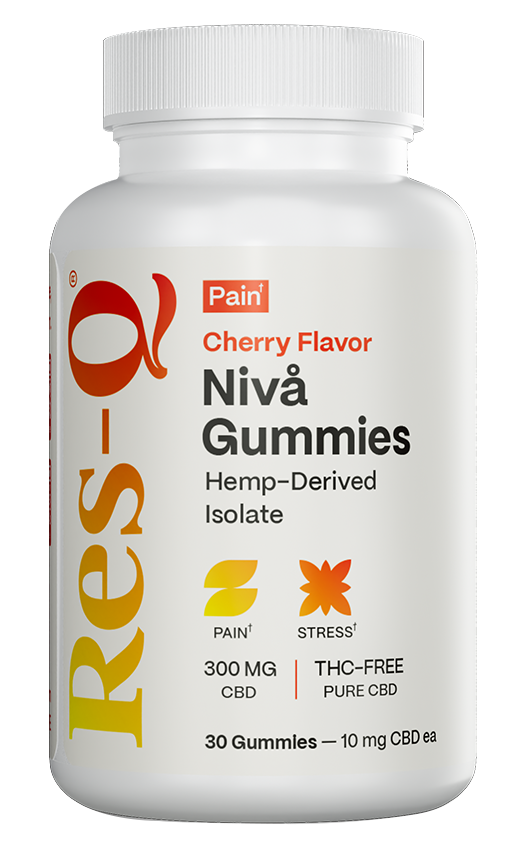
The CBD Your Body ACTUALLY ABSORBS
Most CBD passes right through you. This one doesn't — 440% better absorption, zero THC, made in the U.S.
See Why People Are SwitchingIs CBD Good for Focus? The Honest Bottom Line
Here’s where we land. Is CBD good for focus? The evidence is promising but incomplete. CBD does not directly sharpen attention the way stimulants do. What it appears to do — based on available clinical data and widespread user reports — is reduce the things that wreck focus: anxiety, poor sleep, and chronic low-grade inflammation in the brain. By clearing those obstacles, it may create a mental environment where concentration comes more naturally.
The best candidates for using CBD for focus and concentration are people whose attention problems stem from stress, anxiety, or sleep issues rather than structural neurological conditions. If that describes you, a low-dose trial with a high-quality product is reasonable. Track your experience. Give it time. Adjust methodically.
If your focus issues are severe, persistent, and interfering with daily life, see a healthcare provider. CBD might be part of the picture, but it shouldn’t be the whole picture.
Keep Reading
Read the rest of our articles and more useful info down below! We cover everything from specific product breakdowns to deeper dives on cannabinoid science, dosing strategies, and how CBD fits into broader wellness routines. There’s a lot more ground to cover, and we update our content regularly as new research drops.