
Getting the CBD Oil Dosage for Pain Right Actually Matters
Here’s the thing about cbd oil dosage for pain — most people get it wrong the first time. Not because they’re careless. Because the information out there is scattered, contradictory, and half of it reads like it was written by someone trying to sell you something. If you’re over 55 and dealing with chronic pain, you’ve probably already been through the prescription carousel. NSAIDs that upset your stomach. Opioids your doctor won’t refill. Maybe muscle relaxers that leave you foggy all morning. So you started looking into CBD. Good. But dosage isn’t one-size-fits-all, and getting it wrong means either wasting money on drops that do nothing or taking way more than you need.
This guide breaks down what actually works. Real numbers. Real experiences from people in your age group. No hype. We’ll cover how to find your starting dose, what forms make sense for different types of pain, and where most people trip up.
Tired of guessing which CBD actually works?
Find What Works for Your Body
A less-than 60 second wellness match for adults exploring plant-based relief
What’s bothering you most right now?
Select the one that impacts your day the most
How long have you been dealing with this?
There's no wrong answer — this helps us tailor your match
How much does it affect your daily routine?
Be honest — this shapes your recommendation
What have you tried so far?
Knowing what hasn't worked helps us find what will
How familiar are you with CBD?
No judgment — everyone starts somewhere
What sounds easiest to add to your routine?
Think about what fits your lifestyle, not what sounds fancy
What matters most to you in a product?
Pick the one that would seal the deal for you
YOUR MATCH IS READY
We'll include your personalized match plus a first-timer's guide based on your answers.
Where should we send your recommendation?
🔒 No spam, ever. Your info is kept 100% secure.
If you'd rather not wait — based on your answers about your symptoms, we'd point you straight to our trusted partner.
Skip to My Match →Why CBD Dosage for Pain Isn’t as Simple as Reading a Label
Most CBD oil bottles give you a serving size. Something like “1 mL” or “one full dropper.” That tells you almost nothing useful. A 1 mL dropper from a 300 mg bottle delivers about 10 mg of CBD. That same 1 mL from a 3000 mg bottle delivers 100 mg. Ten times the amount. Same dropper. Same motion. Completely different dose.
And here’s where it gets personal — literally. Your ideal cbd oil dosage for pain depends on:
Body weight. A 130-pound woman and a 210-pound man will respond differently to the same dose. Research published in the Journal of Clinical Pharmacology suggests weight-based dosing between 1 mg and 6 mg of CBD per 10 pounds of body weight as a reasonable range for therapeutic effects.
The type of pain. Neuropathic pain (nerve damage, diabetic neuropathy, sciatica) often requires different dosing than inflammatory pain (arthritis, tendinitis, post-surgical swelling). A 2020 study in the Journal of Pain Research found that patients with neuropathic pain sometimes needed doses above 50 mg per day before noticing meaningful relief, while inflammatory conditions sometimes responded at lower thresholds.
Your metabolism and medications. CBD is processed by the liver through the cytochrome P450 enzyme system. If you’re taking blood thinners like warfarin, certain statins, or blood pressure medications, CBD can interfere with how those drugs are metabolized. This is not optional reading — talk to your doctor or pharmacist before starting. Especially if you’re on multiple prescriptions, which most adults over 55 are.
Where to Start: A Practical CBD Dosage for Pain Relief
Forget the people online who say they started at 100 mg and felt amazing. That’s not a starting point. That’s a destination some people reach after weeks of adjustment.
The widely accepted approach — backed by clinical guidance from organizations like the Arthritis Foundation — is called “start low and go slow.”
Week 1–2: Begin with 10–15 mg of CBD per day. Take it at the same time each day. Many people split this into two doses — 5 mg in the morning, 5–10 mg in the evening. Keep a simple log. Pain level from 1–10 when you wake up. Pain level before bed. Any side effects like drowsiness or dry mouth.
Week 3–4: If you’re not noticing any change, increase by 5 mg per dose. So now you’re at 15–20 mg twice daily, or 30–40 mg total. Still logging.
Week 5–6: Continue adjusting upward in 5–10 mg increments every 5–7 days. Most adults dealing with moderate chronic pain find their effective range somewhere between 25 mg and 75 mg per day. Some go higher. Some find relief at 20 mg.
The goal isn’t to hit a magic number. The goal is to find the lowest effective dose — the point where your pain decreases noticeably and stays manageable without unwanted side effects.
What “Relief” Actually Looks Like
Let’s be honest about expectations. CBD oil is not morphine. It’s not going to eliminate severe pain entirely for most people. What users in the 55+ demographic consistently report is this: the edge comes off. The baseline ache drops from a 7 to a 4. Sleep improves because you’re not waking up from joint stiffness at 3 AM. You move a little easier in the morning.
Margaret, 67, from Tucson, dealt with osteoarthritis in both knees for over a decade. She told us she tried CBD after her orthopedic surgeon mentioned it as a complement to physical therapy. She started at 15 mg of full-spectrum CBD oil daily. After three weeks at 40 mg per day, split morning and evening, she described it as “the first time in years my knees didn’t wake me up before my alarm did.” She still has pain. But it went from dominating her day to being background noise she could manage.
That’s a realistic outcome. And for a lot of people over 55, that shift is enormous.
Full-Spectrum, Broad-Spectrum, or Isolate: Which One for Pain?
This matters more than most articles let on.
Full-spectrum CBD oil contains all the cannabinoids naturally present in the hemp plant — including up to 0.3% THC (the legal federal limit). It also includes terpenes and flavonoids. The theory behind full-spectrum is called the “entourage effect,” which suggests these compounds work better together than any single one does alone. A 2015 study from the Lautenberg Center for Immunology and Cancer Research in Jerusalem found that full-spectrum extracts provided more consistent pain and inflammation relief compared to isolated CBD at the same dose.
Broad-spectrum CBD oil has the THC removed but keeps most other cannabinoids and terpenes. This is a reasonable middle ground if you’re concerned about drug testing or have a sensitivity to THC. The pain relief may be slightly less pronounced for some users compared to full-spectrum, but plenty of people report strong results.
CBD isolate is pure CBD — nothing else. It’s the most processed form. Some research suggests that isolate has a narrower dosage window, meaning it works at a specific dose but becomes less effective if you go too far above or below it. For chronic pain specifically, most clinical evidence and user reports lean toward full-spectrum as the more effective option.
If you’re new to all this and your primary concern is pain management, full-spectrum oil taken sublingually (under the tongue) is the most common and well-supported starting point.
Looking For Something Pure & Potent?
If your current CBD isn't full-spectrum and U.S.-sourced, you're wasting money
Check Out This Full-Spectrum, American Made CBDSublingual Oil vs. Capsules vs. Topicals: Delivery Method Changes the Dose
How you take CBD changes how much actually reaches your bloodstream. This concept is called bioavailability, and it’s not just a technical detail — it directly affects how much you need to take and how much you’ll spend.
Sublingual oil (drops under the tongue): Bioavailability is estimated at 13–35%. You hold the oil under your tongue for 60–90 seconds, and it absorbs through the mucous membranes directly into the bloodstream. Effects typically begin within 15–45 minutes. This is the most common method for chronic pain because it’s easy to control the dose precisely.
Capsules and edibles: Bioavailability drops to roughly 6–20%. The CBD passes through your digestive system and liver before entering the bloodstream. That “first-pass metabolism” reduces how much active CBD actually makes it through. So if 30 mg sublingual works for you, you might need 50–60 mg in capsule form to get the same result. The onset is slower too — usually 45 minutes to 2 hours. But the effects last longer, sometimes 6–8 hours.
Topical creams and balms: These don’t enter the bloodstream in meaningful amounts. They work locally, right where you apply them. For joint pain in the hands, knees, or shoulders, topicals can be genuinely helpful — but they’re treating the surface layers, not systemic pain. Many users over 55 combine a sublingual oil for baseline relief with a topical for flare-ups in specific joints. That combination shows up repeatedly in user forums and product reviews.
A Note on Vaping
Vaping CBD has the highest bioavailability — around 34–56%. But for adults over 55, especially those with any respiratory concerns, most healthcare professionals advise against it. The long-term safety data on vaping is still thin. Sublingual oil delivers consistent results without introducing lung risk.
Common Dosage Mistakes People Over 55 Make
After reviewing hundreds of user experiences and consulting published dosing literature, certain patterns show up again and again.
Quitting Too Early
CBD is not ibuprofen. You won’t always feel something the first day. Or the second. Cannabinoid receptors in your endocannabinoid system sometimes need repeated exposure before they respond consistently. A 2019 retrospective study published in The Permanente Journal found that anxiety and sleep scores improved within the first month for most patients, but pain outcomes often took longer to stabilize. Give it a minimum of 3–4 weeks at a consistent dose before deciding it doesn’t work.
Buying Based on Price Alone
A $15 bottle of CBD oil from a gas station and a $60 bottle from a reputable brand are not the same product. Independent lab testing (called a Certificate of Analysis or COA) is the only way to verify that what’s on the label matches what’s inside. In 2017, a study in JAMA tested 84 CBD products purchased online and found that only 31% were accurately labeled. Some contained significantly more CBD than listed. Some contained significantly less. A few had measurable THC that wasn’t disclosed. Always buy from brands that publish third-party COAs for every batch.
Ignoring Drug Interactions
This one can’t be repeated enough. CBD inhibits certain liver enzymes. If you take warfarin, clobazam, certain anti-seizure medications, or some SSRIs, CBD can increase the concentration of those drugs in your blood. That can cause real problems. A pharmacist can cross-check your medication list in about five minutes. Do that before you start.
Not Accounting for Body Composition Changes
After 55, body composition shifts. Muscle mass tends to decrease while body fat percentage increases. CBD is lipophilic — it’s attracted to fat cells and can accumulate in fatty tissue. This means the dose that works at 55 might need adjustment at 65, even if your weight hasn’t changed much. It’s subtle, but it’s real, and it’s one reason periodic dose reassessment makes sense.
Real User Experiences: What Adults 55+ Are Saying
We collected experiences from verified buyers across multiple platforms, filtered for users who self-identified as 55 or older and described chronic pain as their primary concern.
Robert, 71, Phoenix, AZ — Degenerative disc disease. Robert tried CBD oil after his pain management doctor suggested it alongside physical therapy. He started at 20 mg daily of a full-spectrum tincture. After six weeks at 50 mg per day (25 mg morning, 25 mg evening), he reported a noticeable decrease in lower back stiffness and said he was able to reduce his use of over-the-counter painkillers from daily to a few times a week. “I was skeptical. My wife pushed me to try it. Took about a month before I admitted she was right.”
Linda, 62, Portland, OR — Fibromyalgia. Linda’s experience was mixed, which is worth including because not every story is a success. She tried three different brands over four months, adjusting her dose from 15 mg to 80 mg per day. She noticed better sleep and less morning stiffness but said her widespread pain levels didn’t change dramatically. “It helped the edges. The sleep improvement alone was worth it to me. But it didn’t replace my other treatments.” She continues using 40 mg per day as part of a broader pain management plan.
James, 58, Nashville, TN — Chronic knee pain post-surgery. James had a partial knee replacement and found that his post-operative pain lingered longer than expected. He started with CBD capsules at 25 mg per day, then switched to sublingual oil after reading about bioavailability differences. At 35 mg sublingual, he noticed a faster onset and described his pain during physical therapy sessions as “more tolerable — not gone, but I could push through exercises I was skipping before.”
These accounts line up with what published research suggests. CBD works for some types of pain better than others. Individual responses vary widely. And managing expectations is half the battle.
How to Calculate Your Dose From Any Bottle
This trips people up constantly, so here’s the math made simple.
Take the total milligrams of CBD listed on the bottle. Divide that by the total number of milliliters in the bottle. That gives you the concentration — milligrams per milliliter.
Example: A 30 mL bottle containing 1500 mg of CBD. 1500 divided by 30 equals 50 mg per mL. If your target dose is 25 mg, you need half a dropper (0.5 mL).
Another example: A 60 mL bottle containing 3000 mg. That’s also 50 mg per mL. Same concentration, bigger bottle.
Most standard droppers hold 1 mL when filled completely. Some brands include graduated markings on the dropper itself — 0.25 mL, 0.5 mL, 0.75 mL, 1.0 mL. Use those. If your dropper doesn’t have markings, a 1 mL oral syringe from any pharmacy costs less than a dollar and gives you precise control.
Precision matters because you’re tracking how a specific dose affects your pain over days and weeks. If the amount you take varies wildly each time, your log becomes meaningless.
CBD Oil Dosage for Pain and Sleep: The Overlap
Most adults over 55 dealing with chronic pain also deal with disrupted sleep. The two feed each other. Pain wakes you up. Poor sleep lowers your pain threshold the next day. You hurt more, sleep less. The cycle grinds on.
CBD may address both, but the dosing pattern sometimes differs. Lower doses (10–25 mg) tend to have a mildly alerting effect for some people. Higher doses (40 mg and above) are more commonly associated with sedation and improved sleep duration. A 2019 study in The Permanente Journal found that 66.7% of patients reported improved sleep scores within the first month of CBD use, with doses ranging from 25 mg to 175 mg per day in capsule form.
If sleep is a major concern alongside pain, consider taking a larger portion of your daily dose in the evening — roughly 60–70% of your total. So if you’re at 40 mg per day, take 15 mg in the morning and 25 mg about an hour before bed. Track sleep quality alongside pain scores. Some people find the sleep benefit is actually the first improvement they notice, and the pain relief follows as sleep quality stabilizes.
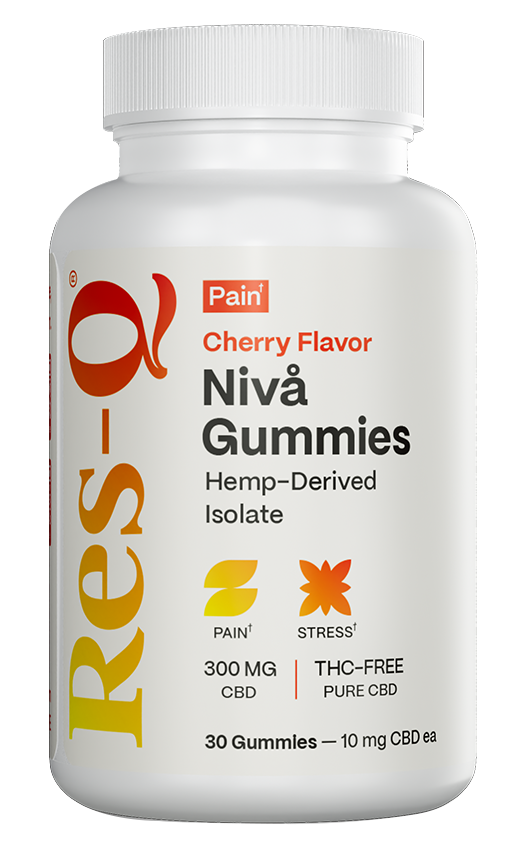
The CBD Your Body ACTUALLY ABSORBS
Most CBD passes right through you. This one doesn't — 440% better absorption, zero THC, made in the U.S.
See Why People Are SwitchingFrequently Asked Questions About CBD Oil Dosage for Pain
How much CBD oil should I take for chronic pain?
Most adults find their effective range between 25 mg and 75 mg per day. Start at 10–15 mg daily and increase by 5 mg per dose every 5–7 days until you find relief. Body weight, pain type, and individual metabolism all influence the right amount.
How long does it take for CBD oil to work for pain?
Sublingual oil typically produces effects within 15–45 minutes per dose. However, chronic pain often requires 3–4 weeks of consistent daily use before you can evaluate whether a particular dose is effective for your condition.
Can I take CBD oil with my prescription medications?
CBD interacts with several common medications through the cytochrome P450 liver enzyme system, including blood thinners, certain statins, and some antidepressants. Always consult your pharmacist or physician before combining CBD with prescription drugs.
Is full-spectrum or isolate CBD better for pain?
Published research and user reports tend to favor full-spectrum CBD for pain management. The combination of cannabinoids, terpenes, and flavonoids appears to produce a stronger effect than isolated CBD alone — a phenomenon referred to as the entourage effect.
What’s the maximum safe dose of CBD per day?
Clinical trials have used doses up to 1500 mg per day without serious adverse effects. However, most people managing chronic pain use far less — typically under 100 mg per day. Higher doses increase the chance of side effects like drowsiness, diarrhea, and changes in appetite. Work with your healthcare provider to determine your upper limit.
Does CBD oil dosage for pain differ by age?
It can. Adults over 55 often metabolize substances more slowly due to changes in liver function and body composition. Starting at the lower end of recommended ranges and increasing gradually is especially important for older adults.
Moving Forward With Confidence
Finding the right cbd oil dosage for pain takes patience. It takes a simple notebook and a willingness to track what you feel each day. It takes buying a quality product from a transparent brand and doing the basic math to know exactly how many milligrams you’re taking. None of that is complicated. It just requires consistency.
The adults over 55 who report the best outcomes share a few things in common. They started low. They adjusted slowly. They kept records. They talked to their doctor or pharmacist about interactions. And they gave it enough time — at least a full month — before drawing conclusions.
CBD isn’t a miracle compound. But for a significant number of people dealing with chronic pain, it’s a tool that fits into a broader strategy — alongside movement, sleep hygiene, stress management, and whatever else your care team recommends.
Read the rest of our articles and more useful info down below for deeper dives into specific product comparisons, topical vs. oral effectiveness studies, and updated brand reviews for 2026.