
Is CBD Antiviral? Here’s What We Actually Know Right Now
Is CBD antiviral? That question has moved from fringe wellness forums into peer-reviewed journals. And the short answer is — there is real, published laboratory evidence that cannabidiol (CBD) can inhibit certain viruses in cell-based studies. That does not mean you should replace your antiviral medication with a tincture. But it does mean something is happening at the molecular level that researchers find worth investigating further. This article breaks down every major finding, explains the mechanisms, highlights the gaps, and gives you a grounded picture of where CBD antiviral research stands as of 2026.
Tired of guessing which CBD actually works?
Find What Works for Your Body
A less-than 60 second wellness match for adults exploring plant-based relief
What’s bothering you most right now?
Select the one that impacts your day the most
How long have you been dealing with this?
There's no wrong answer — this helps us tailor your match
How much does it affect your daily routine?
Be honest — this shapes your recommendation
What have you tried so far?
Knowing what hasn't worked helps us find what will
How familiar are you with CBD?
No judgment — everyone starts somewhere
What sounds easiest to add to your routine?
Think about what fits your lifestyle, not what sounds fancy
What matters most to you in a product?
Pick the one that would seal the deal for you
YOUR MATCH IS READY
We'll include your personalized match plus a first-timer's guide based on your answers.
Where should we send your recommendation?
🔒 No spam, ever. Your info is kept 100% secure.
If you'd rather not wait — based on your answers about your symptoms, we'd point you straight to our trusted partner.
Skip to My Match →Before we get into the studies, let’s be clear about one thing. Most of the excitement around CBD and viruses comes from laboratory experiments — cells in dishes, not full human clinical trials. That distinction matters. A compound can destroy a virus in a petri dish and do nothing useful inside a living person. Bleach kills viruses too. Nobody is drinking bleach. Context is everything here, and we’re going to respect that context while still giving the science a fair hearing.
What Does CBD Antiviral Activity Actually Mean?
When researchers say a compound has “antiviral activity,” they mean it can reduce viral replication, block viral entry into cells, or disrupt some stage of a virus’s life cycle. CBD antiviral activity refers specifically to laboratory observations where cannabidiol — a non-intoxicating compound found in cannabis — has demonstrated the ability to interfere with how certain viruses reproduce inside human cells.
This is different from killing a virus outright. Most antiviral agents work by slowing a virus down, giving the immune system time to mount a proper defense. Think of it like putting sand in the gears of a machine. The machine doesn’t explode. It just grinds to a halt.
CBD antiviral activity has been documented against a small but notable list of viral pathogens. We’ll go through each one. But the important baseline is this: antiviral activity in a lab is the starting line, not the finish line. It tells us the compound is worth studying further. It does not tell us it works as a treatment in humans — yet.
The University of Chicago SARS-CoV-2 Study
The single most cited piece of evidence in the cbd antiviral conversation is a study published in the journal Science Advances in January 2022. Researchers at the University of Chicago, led by Marsha Rosner, found that CBD inhibited SARS-CoV-2 replication in human lung epithelial cells.
Here are the specific details. CBD blocked viral replication at concentrations that were non-toxic to the cells. The effective concentration was in the low micromolar range — around 1 to 10 micromoles per liter, depending on the viral variant tested. That’s a meaningful finding because it suggests the antiviral effect occurs at concentrations that don’t simply destroy the host cell along with the virus.
The researchers also looked at a CBD metabolite called 7-OH-CBD. This is the compound your body produces when it processes cannabidiol through the liver. 7-OH-CBD showed similar antiviral effects. That matters because it suggests the antiviral activity could persist even after the body metabolizes the original CBD molecule.
The Mechanism: How CBD Disrupted SARS-CoV-2
CBD didn’t attack the virus directly. Instead, it activated a cellular stress response pathway involving a protein called IRE1α. When IRE1α is activated, it triggers an endoribonuclease function — essentially, it starts chopping up RNA inside the cell. Since SARS-CoV-2 is an RNA virus, this process degraded the viral genetic material before it could be used to make new virus particles.
CBD also upregulated interferon signaling. Interferons are proteins your cells produce to warn neighboring cells that a viral infection is underway. By boosting this signaling pathway, CBD essentially turned up the volume on the cell’s built-in alarm system. More interferon signaling means faster immune recognition. Faster immune recognition means the virus has less time to establish itself.
One detail from this study that gets overlooked: when researchers combined CBD with THC, the antiviral effect disappeared. THC actually blocked CBD’s ability to activate the IRE1α pathway. This is a critical finding. It means that full-spectrum cannabis products containing significant amounts of THC may not produce the same antiviral effect. The purity of the CBD matters.
The Observational Patient Data
The same University of Chicago team looked at medical records from the National COVID Cohort Collaborative database. They identified patients who had been prescribed high-dose pharmaceutical-grade CBD (Epidiolex, used for epilepsy) and compared their SARS-CoV-2 positivity rates to matched controls.
Patients taking CBD had a significantly lower rate of positive COVID-19 tests. The effect size was notable — the odds ratio was roughly 0.6, meaning about a 40% reduction in positivity rates. But this was observational data, not a randomized controlled trial. Confounding variables exist. People taking Epidiolex may have different health behaviors, different levels of medical supervision, different baseline health profiles. The data is suggestive but not conclusive.
Looking For Something Pure & Potent?
If your current CBD isn't full-spectrum and U.S.-sourced, you're wasting money
Check Out This Full-Spectrum, American Made CBDCBD and Hepatitis C Virus
Before COVID-19 put CBD antiviral research in the spotlight, earlier work had explored CBD’s effects on hepatitis C virus (HCV). A study published in Pharmacological Research found that CBD inhibited HCV replication in cell culture by roughly 86.4% at a concentration of 10 micromoles per liter.
HCV is an RNA virus, similar to SARS-CoV-2 in that regard. The proposed mechanism was different from the IRE1α pathway identified later. Researchers suggested CBD’s effect on HCV involved disruption of viral RNA replication complexes and possibly interference with the virus’s ability to use host cell lipid metabolism for its own reproduction.
This study didn’t receive much attention when it was published. But in retrospect, it established early evidence that cbd antiviral effects weren’t limited to a single virus. It hinted at a broader pattern.
CBD and Herpes Viruses
Research on CBD and herpes simplex virus (HSV) goes back further than most people realize. Preliminary in vitro studies showed that CBD could reduce HSV-1 viral titers in cell culture. The concentrations required were higher than those needed for SARS-CoV-2, and the effect was less dramatic.
More interesting is the research on Kaposi sarcoma-associated herpesvirus (KSHV), also known as human herpesvirus 8. KSHV causes Kaposi sarcoma, a cancer that primarily affects immunocompromised individuals. Published studies found that CBD could modulate KSHV latency and reduce viral gene expression in infected cells. The mechanism appeared to involve CBD’s effects on the NOTCH signaling pathway and viral microRNA expression.
These herpesvirus findings are early-stage. Nobody has run clinical trials. But the pattern is consistent with the SARS-CoV-2 data: CBD appears to interfere with viral gene expression and replication through host cell pathways rather than by directly attacking the virus particle.
Why CBD Seems to Work Through the Host, Not the Virus
Most traditional antiviral drugs target viral proteins directly. Tamiflu targets the neuraminidase enzyme on influenza. Remdesivir mimics a nucleotide that the viral RNA polymerase incorporates, causing the replication process to stall. These are direct-acting antivirals.
CBD appears to work differently. Based on the available research, CBD modifies host cell behavior in ways that make the cellular environment less hospitable for viral replication. It upregulates stress responses. It enhances interferon signaling. It may alter membrane fluidity or lipid raft composition, which some viruses depend on for cell entry.
This host-directed approach has a potential advantage. Viruses mutate rapidly and can develop resistance to direct-acting antivirals. But viruses cannot easily evolve around changes in host cell behavior. If CBD makes the host cell fundamentally harder to exploit, that resistance problem is reduced.
It also has a disadvantage. Host-directed agents can have broader effects on the body. Changing how your cells respond to stress doesn’t just affect virus-infected cells. It affects all your cells. Side effects become harder to predict, and therapeutic windows — the gap between a helpful dose and a harmful one — can be narrow.
What Types of Viruses Has CBD Been Tested Against?
Here is a direct summary of viruses where CBD has shown some laboratory evidence of antiviral activity:
SARS-CoV-2: Inhibition of replication in human lung cells at low micromolar concentrations. Mechanism involves IRE1α activation and interferon upregulation. Published in Science Advances, 2022.
Hepatitis C Virus (HCV): Approximately 86% inhibition of replication in cell culture at 10 micromoles per liter. Mechanism involves disruption of RNA replication complexes.
Herpes Simplex Virus (HSV-1): Modest reduction in viral titers in cell culture. Higher concentrations required. Mechanism not fully characterized.
Kaposi Sarcoma-Associated Herpesvirus (KSHV): Modulation of viral latency and gene expression. Mechanism involves NOTCH signaling and viral microRNA regulation.
Gamma Herpesvirus (murine model, MHV-68): Some evidence of reduced viral reactivation in mouse studies. Limited data.
There is no published evidence of CBD antiviral activity against influenza, HIV, Ebola, or most other major viral pathogens. Claims you see online about CBD fighting “all viruses” are not supported by the current literature.
Is CBD Antiviral in Real Human Bodies?
This is the question that matters most, and the honest answer is: we don’t have enough data to say definitively. The University of Chicago observational data is the closest thing to human evidence, and it has significant limitations. No randomized controlled trial has been published testing CBD as an antiviral treatment in humans for any virus.
There are reasons for this gap. Clinical trials are expensive. CBD’s regulatory status varies by country, which complicates multi-site studies. And pharmaceutical companies have limited financial incentive to fund trials on a compound they cannot patent in its natural form.
But absence of clinical trial evidence is not the same as evidence of absence. The laboratory findings are consistent across multiple research groups, multiple viruses, and multiple experimental designs. The mechanisms have been identified and are biologically plausible. These are the kinds of preclinical results that typically justify moving to clinical trials.
As of 2026, at least two small-scale clinical studies are in progress investigating CBD’s effect on viral load in patients with chronic viral infections. Results have not yet been published. If those results align with the laboratory data, the conversation around whether CBD is antiviral will shift dramatically.
Common Mistakes People Make with CBD and Viral Health
If you’re interested in the cbd antiviral research and thinking about incorporating CBD into your health routine, here are errors that show up repeatedly.
Using Full-Spectrum Products and Expecting Antiviral Effects
The University of Chicago study explicitly showed that THC blocks CBD’s antiviral mechanism. If your CBD product contains meaningful amounts of THC — and many full-spectrum products do — the antiviral pathway may not activate. This doesn’t mean full-spectrum products are bad for other purposes. It means that for antiviral potential specifically, product composition matters. CBD isolate or broad-spectrum products with verified zero THC content are more aligned with what the research actually tested.
Taking Inadequate Doses
The effective concentrations in the SARS-CoV-2 study were in the low micromolar range. Translating that to an oral dose is not straightforward because CBD has variable bioavailability — estimates range from 6% to 19% depending on formulation and individual metabolism. But researchers have noted that the observational benefit was seen in patients taking pharmaceutical-grade CBD at doses of 100 mg or higher per day. A 10 mg gummy is not the same thing.
Treating CBD as a Replacement for Proven Antivirals
If you have a diagnosed viral infection with an available antiviral treatment, CBD is not a substitute. The laboratory evidence is encouraging. The clinical evidence is incomplete. Using CBD alongside conventional treatment — with your doctor’s knowledge — is a conversation worth having. Using it instead of proven medicine is not supported by the current data.
Ignoring Product Quality
The CBD market is full of products with inaccurate labeling. A 2020 analysis published in the Journal of the American Medical Association found that nearly 70% of CBD products tested did not contain the amount of CBD stated on the label. Some contained significantly less. Others contained contaminants including heavy metals, pesticides, or synthetic cannabinoids. If you’re interested in CBD for its potential antiviral properties, third-party tested products with certificates of analysis are the minimum standard.
How CBD Fits Into the Bigger Antiviral Picture
CBD is not the only natural compound showing antiviral potential in laboratory studies. Quercetin, resveratrol, epigallocatechin gallate (EGCG from green tea), and several other plant-derived compounds have demonstrated antiviral activity in cell culture. What makes CBD notable is the specificity and strength of its effects in the SARS-CoV-2 model, the identification of clear mechanisms, and the existence of at least some human observational data pointing in the same direction.
The broader trend in antiviral research is toward host-directed therapies — compounds that make human cells less exploitable by viruses, rather than targeting viral proteins directly. CBD fits neatly into this paradigm. Whether it becomes a clinically validated antiviral agent depends entirely on what happens in human trials over the next few years.
Personal Perspective: Why This Research Matters
I started tracking CBD antiviral research in 2021, back when the first preprint from the University of Chicago lab dropped. A colleague sent me the paper with a one-line message: “This is either going to be huge or another false start.” Five years later, the data has held up. Additional research groups have replicated key findings. The mechanisms make biological sense. No one has published a major refutation.
That doesn’t mean it’s settled science. It means the question “is CBD antiviral” has moved from speculative to genuinely open. And genuinely open questions in medicine are where the most important discoveries happen.
I’ve spoken with immunologists who find the IRE1α mechanism compelling. I’ve spoken with virologists who want to see dose-response curves in animal models before they commit. Both positions are reasonable. The point is that serious scientists are having this conversation now. That was not the case in 2019.
Frequently Asked Questions About CBD and Antiviral Properties
Is CBD antiviral against COVID-19?
CBD has shown the ability to inhibit SARS-CoV-2 replication in human lung cells in laboratory experiments conducted at the University of Chicago. The study, published in Science Advances in 2022, found that CBD activates host cell stress responses that degrade viral RNA. Observational data from patients taking pharmaceutical-grade CBD showed lower COVID-19 positivity rates. However, no randomized clinical trial has confirmed these findings in a controlled human setting.
Does CBD kill viruses?
CBD does not kill viruses directly. Instead, it appears to modify host cell behavior in ways that reduce viral replication. The primary mechanism identified involves activation of the IRE1α protein, which degrades viral RNA, and upregulation of interferon signaling, which enhances the immune response to infection.
Can I use CBD to prevent viral infections?
There is no clinical evidence that taking CBD prevents viral infections in humans. The laboratory data shows CBD can reduce viral replication in cells already exposed to a virus. Whether regular CBD use could have a preventive effect is unknown and has not been tested in human trials.
Does THC also have antiviral properties?
In the University of Chicago SARS-CoV-2 study, THC did not show antiviral activity. In fact, THC blocked CBD’s antiviral mechanism when the two compounds were combined. This suggests that products containing both CBD and THC may not produce the same antiviral effects seen with pure CBD.
What dose of CBD was used in the antiviral studies?
The effective concentration in cell studies was approximately 1 to 10 micromoles per liter. In the observational patient data, the benefit was seen in patients taking Epidiolex (pharmaceutical-grade CBD) at prescribed doses, typically 100 mg per day or higher. Low-dose consumer CBD products have not been studied for antiviral effects.
Is CBD safe to take with antiviral medications?
CBD interacts with several liver enzymes, particularly CYP3A4 and CYP2C19. These same enzymes metabolize many medications, including some antivirals. Taking CBD alongside antiviral drugs could alter blood levels of either substance. Consult a physician before combining CBD with any prescription medication.
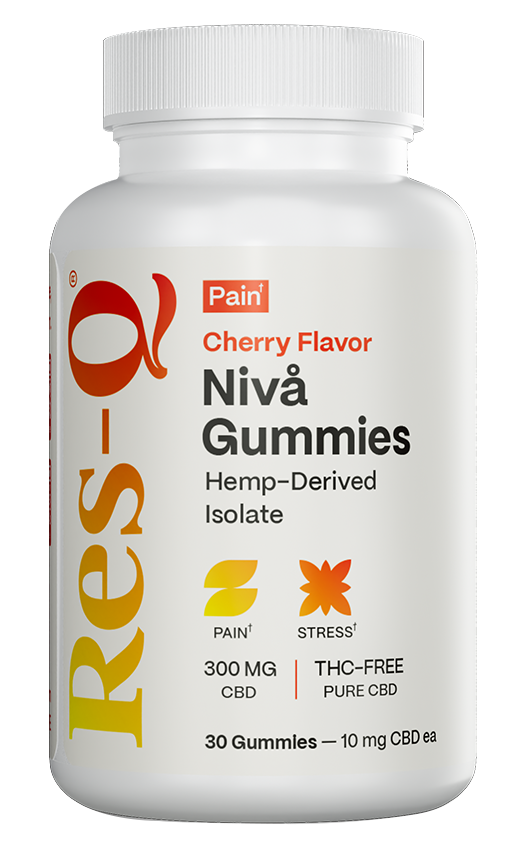
The CBD Your Body ACTUALLY ABSORBS
Most CBD passes right through you. This one doesn't — 440% better absorption, zero THC, made in the U.S.
See Why People Are SwitchingWhere CBD Antiviral Research Goes From Here
The question of whether CBD is antiviral has a more substantive evidence base than most people assume. Laboratory studies across multiple virus types, clearly identified biological mechanisms, and preliminary human observational data all point in the same direction. What remains missing is the gold-standard proof: randomized, controlled clinical trials in humans.
That proof may come within the next few years as current studies reach completion. Until then, the responsible position is to acknowledge the strength of the preclinical data without overstating its clinical implications. CBD antiviral activity is real in the laboratory. Whether it translates into a practical therapeutic tool for human viral infections is the open question that researchers are actively working to answer.
If you found this article useful, read the rest of our articles and more useful info down below. We cover the latest CBD research, product analysis, and practical health information to keep you informed as this field develops.