
Most Weight Loss Strategies Fail — Here Is Why Yours Does Not Have To
Around 80% of people who lose weight regain it within one to two years. That number comes from research published in the American Journal of Clinical Nutrition. It is not meant to discourage you. It is meant to show that the weight loss strategies most people follow are broken from the start. They rely on willpower instead of systems. They cut too many calories too fast. They ignore hunger signals entirely. And then people blame themselves when things fall apart.
This article covers what actually works. Not theory. Not trends. Specific, evidence-backed weight loss strategies that address the real reasons people struggle — hunger management, metabolic adaptation, muscle loss, and the psychological traps that come with restricting food. If you have tried before and it did not stick, this is worth reading closely.
Get GLP-1 Online
Check which trusted sites and pharmacies in our database allow you to get GLP in your state.
Enter your ZIP code to check availability of GLP in your area:
🔒 Your information is kept 100% secure and will never be shared with anyone.
✓ GLP Treatment Found!
GREAT NEWS - We found available stock nearby.
Enter your details below to register to the limited GLP-1 waiting list
Don't want to wait? You can also go directly to this GLP-1 provider while stock is still available.
🔒 We respect your privacy. You will never receive spam and your information will never be shared. It is kept 100% secure.
✓ Confirmed - You Can Get GLP Near You - But Check Your Eligibility Below!
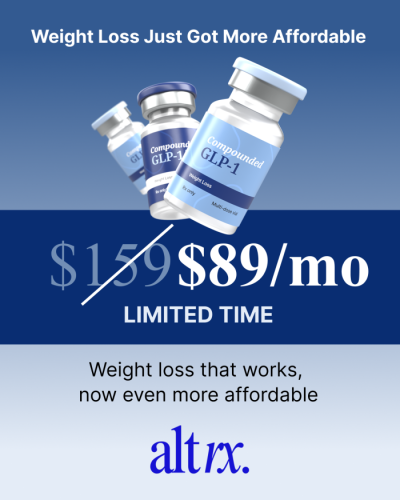
Your ZIP offers a massive saving of $89/mo instead of $159/mo.
Check Stock (Limited) →Support by Alt RX - a American Weight Loss service. Results are not a substitute for physician care.
Why Calories Still Matter — But Not The Way You Think
Every weight loss strategy comes back to energy balance. You need to burn more than you eat. That part has not changed. But how you create that deficit makes an enormous difference in whether you keep the weight off or bounce right back.
A 500-calorie daily deficit leads to roughly one pound of fat loss per week. That math is based on the old 3,500-calorie-per-pound rule, which researchers like Kevin Hall at the National Institutes of Health have since refined. The real number shifts depending on your starting weight, body composition, and how long you have been dieting. Heavier individuals lose faster at first. Lighter individuals hit plateaus sooner.
The mistake most people make is going too aggressive. Cutting 1,000 or more calories per day sounds faster. And it is — for about three weeks. Then your metabolic rate drops. A 2016 study that followed contestants from The Biggest Loser found their resting metabolic rates had slowed by an average of 500 calories per day six years after the show. Their bodies were burning significantly less energy than expected for their size. That metabolic adaptation made regain almost inevitable.
A moderate deficit — somewhere between 300 and 500 calories below your maintenance level — produces slower results but preserves more muscle mass and causes less metabolic slowdown. Pair that with strength training and adequate protein, and you protect the tissue that keeps your metabolism running.
What Are Some Strategies That Are Helpful With Controlling Hunger?
Hunger is the number one reason diets fail. Not lack of knowledge. Not laziness. Hunger. Your body has a complex hormonal system designed to make you eat when energy intake drops. Ghrelin rises. Leptin falls. Your brain starts paying more attention to food cues. Fighting that system with pure willpower is a losing battle for most people.
So what are some strategies that are helpful with controlling hunger? Here are the ones backed by actual research.
Protein At Every Meal
Protein is the most satiating macronutrient. A 2005 study in the American Journal of Clinical Nutrition found that increasing protein intake from 15% to 30% of total calories led participants to eat 441 fewer calories per day — without trying to restrict. They just felt less hungry. Aim for 25 to 40 grams of protein per meal. That looks like a palm-sized portion of chicken, fish, beef, tofu, or Greek yogurt.
Fiber-Dense Foods
Fiber slows gastric emptying. That means food stays in your stomach longer, which keeps you feeling full. A 2019 meta-analysis in The Lancet found that people eating more than 25 grams of fiber daily had lower body weight and reduced risk of chronic disease. Vegetables, legumes, oats, and whole fruits are practical sources. A cup of lentils has about 15 grams of fiber on its own.
Meal Timing And Frequency
Some people do well with three meals a day. Others need four or five smaller ones. There is no universal answer. But skipping meals entirely — especially breakfast for people who wake up hungry — tends to increase ghrelin spikes later in the day. A 2020 study in the journal Obesity found that front-loading calories earlier in the day improved satiety and reduced evening snacking. If you eat most of your food after 7 PM and feel out of control at night, shifting your intake earlier is worth testing.
Sleep
This one gets overlooked constantly. Sleeping fewer than seven hours per night increases ghrelin by roughly 15% and decreases leptin by a similar margin, based on research from the University of Chicago. That hormonal shift makes you hungrier the next day and specifically increases cravings for high-calorie, high-carb foods. Fixing sleep is one of the most effective weight loss strategies available, and it costs nothing.
Water Before Meals
A Virginia Tech study from 2010 found that drinking 500 milliliters of water 30 minutes before meals led to 44% greater weight loss over 12 weeks compared to a control group. Water takes up stomach volume. It is simple, and it works. Not dramatically. But consistently.
Strength Training Is Non-Negotiable
Cardio burns calories during the session. Strength training burns calories during the session and then continues to influence your metabolism for days afterward through muscle protein synthesis and increased resting energy expenditure.
A 2018 review in the journal Medicine and Science in Sports and Exercise found that resistance training during a calorie deficit preserved 93% of lean mass compared to diet-only groups that lost significant muscle along with fat. Muscle is metabolically active tissue. Each pound of muscle burns roughly 6 calories per day at rest. That does not sound like much, but over 10 or 20 pounds of preserved muscle across months of dieting, it adds up.
You do not need to train like a powerlifter. Three sessions per week hitting major muscle groups — squats, deadlifts, presses, rows, and some form of carry or core work — is enough for most people. Progressive overload matters more than variety. Add a small amount of weight or an extra rep each week. That signal tells your body to keep the muscle.
A woman named Sarah, 42, started strength training in January 2025 after two failed attempts at weight loss through running alone. She lost 11 pounds in four months, but more importantly, her body measurements changed significantly — she lost four inches from her waist while her scale weight only dropped moderately. Her lean mass stayed almost the same according to a DEXA scan. That distinction matters. The scale is a terrible sole metric.
Why Are Fad Diets An Unhealthy Weight-Loss Strategy?
Every few years a new diet takes over. Cabbage soup. Grapefruit. HCG drops. Juice cleanses. The Master Cleanse. Each one promises rapid results and each one fails the majority of people who try it. Understanding why are fad diets an unhealthy weight-loss strategy requires looking at what they actually do to your body.
Extreme Caloric Restriction Destroys Muscle
Most fad diets put you at 800 to 1,200 calories per day. At that level, your body cannot maintain its lean tissue. A 2014 study in the Journal of the International Society of Sports Nutrition found that very low calorie diets resulted in up to 25% of weight lost coming from muscle rather than fat. Losing muscle lowers your metabolic rate, making future weight gain easier and future weight loss harder.
Nutrient Deficiencies
Diets that eliminate entire food groups create gaps. The ketogenic diet, taken to extremes, can cause deficiencies in vitamin C, potassium, and magnesium if vegetable intake is not carefully managed. Juice cleanses strip out protein and fat almost entirely. The body needs all three macronutrients to function — protein for tissue repair, fat for hormone production, carbohydrates for brain function and high-intensity exercise.
The Binge-Restrict Cycle
Fad diets are almost always temporary. They come with an end date. And when that date hits, people go back to old habits — often with a vengeance. Research from the University of Melbourne published in the New England Journal of Medicine showed that hormonal changes from aggressive dieting persisted for at least 12 months after the diet ended. Ghrelin stayed elevated. Leptin stayed suppressed. The body was physiologically primed to regain.
This is why fad diets are an unhealthy weight-loss strategy at a fundamental level. They create short-term results at the cost of long-term metabolic damage and psychological harm. People who have been through multiple fad diets often develop a difficult relationship with food that takes years to repair.
How To Build A Calorie Deficit That Lasts
Sustainable weight loss strategies share a few traits. They are moderate. They are flexible. They do not require you to avoid social events or eat from a list of 12 approved foods.
Calculate Your Maintenance Calories
Use a formula like Mifflin-St Jeor to estimate your basal metabolic rate, then multiply by an activity factor. For a sedentary 170-pound, 35-year-old male at 5 foot 10, maintenance is roughly 2,200 to 2,400 calories. Subtract 300 to 500 from that number. Track your intake for two weeks using a food scale and an app like Cronometer or MyFitnessPal. Adjust based on what the scale and measurements do.
Focus On Food Quality, Not Just Quantity
A calorie is a calorie from an energy balance standpoint. But 400 calories of chicken breast and roasted vegetables will keep you full for three to four hours. 400 calories of candy will keep you full for about 20 minutes. The thermic effect of food also varies — your body uses roughly 20 to 30% of protein calories just to digest the protein. For carbohydrates, that number is 5 to 10%. For fat, 0 to 3%.
Whole foods — vegetables, fruits, lean meats, fish, legumes, whole grains, nuts, and seeds — are harder to overeat because of their fiber content, water content, and volume. This is not about being perfect. It is about tilting the ratio. If 80% of your intake comes from whole foods, you have a lot of room for the other 20%.
Do Not Eliminate Foods You Love
A 2017 study in Appetite found that food restriction increased cravings for the restricted foods in 73% of participants. Telling yourself you can never eat pizza again is a setup for failure. Instead, fit it in. Track it. Have two slices instead of five. Pair it with a salad. The psychological freedom of knowing nothing is off limits reduces the binge urge dramatically.
Walking Is Underrated
High-intensity interval training gets all the attention. But for fat loss, daily walking might be more impactful for most people. A person weighing 180 pounds burns approximately 100 calories per mile walked. Walking 8,000 to 10,000 steps per day adds 400 to 500 calories of expenditure with almost zero recovery cost and minimal joint stress.
NEAT — non-exercise activity thermogenesis — accounts for a much larger portion of daily calorie burn than formal exercise for most people. Fidgeting, standing, walking to the store, taking the stairs. These small movements compound. Research from Mayo Clinic found that differences in NEAT between individuals could account for up to 2,000 calories per day. That gap explains why some people seem to eat a lot and stay lean. They move more throughout the day without thinking about it.
Adding a 20-minute walk after each meal improves blood sugar regulation as well. A 2022 study in Sports Medicine found that even a 2 to 5 minute walk after eating reduced post-meal glucose spikes by up to 60% compared to sitting. Better glucose control means less insulin. Less insulin means less fat storage signaling.
Tracking Progress Without Obsessing
The scale fluctuates. Daily. Sometimes by 2 to 5 pounds based on water retention, sodium intake, bowel contents, and hormonal cycles. Weighing yourself once a week at the same time — first thing in the morning, after using the bathroom, before eating — gives a more accurate picture. Even better, take a four-week rolling average and compare averages month to month.
Body measurements tell a clearer story than the scale alone. Measure your waist at the navel, your hips at the widest point, and your thighs at the midpoint. Take progress photos monthly in the same lighting and same clothing. Visual change often happens before the scale moves, especially when you are strength training and gaining muscle while losing fat.
A man named David tracked only the scale for six months and nearly quit when it stalled for three weeks straight. His trainer convinced him to take measurements. He had lost an inch and a half from his waist during that same period. The scale lied. His belt did not.
The Role Of Stress And Cortisol
Chronic stress raises cortisol. Elevated cortisol promotes visceral fat storage — the deep abdominal fat wrapped around organs that is linked to cardiovascular disease and type 2 diabetes. A 2017 study in Obesity found a direct correlation between hair cortisol levels and waist circumference.
Stress also drives emotional eating. The hypothalamus, when flooded with cortisol, increases appetite and specifically drives preference toward high-sugar and high-fat foods. This is not a character flaw. It is a neurochemical response.
Managing stress is a legitimate weight loss strategy. Meditation, even 10 minutes daily, has been shown to reduce cortisol by up to 25% in studies from Johns Hopkins. Cognitive behavioral therapy helps people identify emotional eating triggers. Even simple breathing exercises — four seconds in, seven seconds hold, eight seconds out — activate the parasympathetic nervous system and blunt the cortisol response within minutes.
Accountability And Environment Design
A study published in the Journal of Consulting and Clinical Psychology found that people who had regular check-ins with an accountability partner lost 20% more weight than those who dieted alone. This does not have to be a paid coach. A friend, a partner, an online community — someone who asks how things are going and means it.
Environment matters too. If your kitchen counter has chips and cookies visible, you eat more of them. Cornell University researcher Brian Wansink found that people who kept fruit visible on the counter weighed an average of 13 pounds less than those who kept cereal boxes visible. Out of sight is not out of mind entirely, but it reduces impulse consumption.
Stock your fridge at eye level with pre-prepped vegetables, cooked proteins, and portioned snacks. Put the less ideal options in a cabinet you do not open often. Use smaller plates — the Delboeuf illusion makes portions on a smaller plate look larger, and multiple studies show people eat 22% less when switching from a 12-inch plate to a 10-inch plate.
When To Consider Medical Support
For individuals with a BMI over 30, or over 27 with comorbidities like type 2 diabetes or hypertension, medical intervention may be appropriate. GLP-1 receptor agonists like semaglutide (marketed as Wegovy and Ozempic) have shown average weight loss of 15 to 17% of body weight in clinical trials published in the New England Journal of Medicine.
These medications work by mimicking a gut hormone that reduces appetite and slows gastric emptying. They are not magic. They still require dietary changes and exercise to maintain results. And they come with side effects — nausea, vomiting, and in rare cases, pancreatitis. But for people who have struggled with obesity for years despite consistent effort, they represent a legitimate tool.
Bariatric surgery remains the most effective intervention for severe obesity, with sustained weight loss of 25 to 35% of body weight at five-year follow-up according to data from the Swedish Obese Subjects study. It is not a first-line option. But it exists, it works, and the stigma around it is not grounded in science.
Talk to a physician. Not a social media influencer. Not a supplement company. A physician who understands metabolic health and can evaluate your specific situation.
Tired of diets that don't work?
GLP-1 medication prescribed online by U.S.-licensed doctors — delivered free to your door. No office visits. No insurance required. No hidden fees.
Start Free EvaluationPutting It All Together
Effective weight loss strategies are not complicated. They are just not exciting. Moderate calorie deficit. High protein intake. Strength training three times per week. Daily walking. Enough sleep. Stress management. Consistency over weeks and months, not days.
The people who succeed long-term are not the ones who found the perfect diet. They are the ones who found a way of eating and moving that they did not hate. They built habits instead of following rules. They tracked progress without letting the scale control their mood. They asked for help when they needed it.
Weight loss strategies work when they fit your life. Not when your life has to contort to fit the strategy. Start with one or two changes. Master those. Add more. That compounding effect is where real, lasting transformation happens.
Read the rest of our articles and more useful info down below!