
Is CBD Good for Muscles? Here’s What You Need to Know
If you’ve been dealing with sore muscles after workouts, long shifts on your feet, or just general tension that won’t quit, you’ve probably wondered — is CBD good for muscles? It’s a fair question. CBD products are everywhere now. Gyms, pharmacies, online stores. But separating real information from marketing noise takes effort. This article covers what CBD actually does inside your body, how it interacts with muscle tissue, what research exists, and how to use it without wasting your money.
No vague promises here. Just the facts, the studies, and practical guidance that applies to real people with real muscle issues.
Tired of guessing which CBD actually works?
Find What Works for Your Body
A less-than 60 second wellness match for adults exploring plant-based relief
What’s bothering you most right now?
Select the one that impacts your day the most
How long have you been dealing with this?
There's no wrong answer — this helps us tailor your match
How much does it affect your daily routine?
Be honest — this shapes your recommendation
What have you tried so far?
Knowing what hasn't worked helps us find what will
How familiar are you with CBD?
No judgment — everyone starts somewhere
What sounds easiest to add to your routine?
Think about what fits your lifestyle, not what sounds fancy
What matters most to you in a product?
Pick the one that would seal the deal for you
YOUR MATCH IS READY
We'll include your personalized match plus a first-timer's guide based on your answers.
Where should we send your recommendation?
🔒 No spam, ever. Your info is kept 100% secure.
If you'd rather not wait — based on your answers about your symptoms, we'd point you straight to our trusted partner.
Skip to My Match →How CBD Interacts With Your Muscles
The Endocannabinoid System in Plain Language
Your body has a built-in system called the endocannabinoid system, or ECS. It was first identified by researchers in the early 1990s. The ECS helps regulate pain signaling, inflammation, immune response, sleep, and mood. It does this through a network of receptors spread across your entire body — including your muscles and connective tissue.
CBD, short for cannabidiol, is one of over 100 cannabinoids found in the cannabis plant. Unlike THC, it doesn’t get you high. What it does is interact with the ECS in ways that researchers are still mapping out. It doesn’t bind directly to the main ECS receptors the way THC does. Instead, it appears to influence them indirectly, modulating how they respond to signals.
The World Health Organization published a critical review report on CBD in 2018. It concluded that CBD has a good safety profile and is generally well tolerated in humans. That same report noted CBD exhibits no effects indicative of abuse or dependence potential. That matters if you’re considering it for daily muscle support.
CB1 and CB2 Receptors — Where They Sit and Why It Matters
There are two primary receptor types in the ECS. CB1 receptors are concentrated in the brain and central nervous system. CB2 receptors are found primarily in the immune system and peripheral tissues — which includes skeletal muscle, fascia, and joints.
When muscle tissue gets damaged, your immune system sends inflammatory signals through those CB2-rich areas. CBD appears to modulate this inflammatory response. A 2014 study published in the Journal of Clinical Investigation found that CBD has notable anti-inflammatory properties, acting through multiple molecular pathways rather than a single mechanism.
That multi-pathway approach is part of what makes CBD interesting for muscle-related issues. It doesn’t just block one signal. It seems to dial down the overall volume of the inflammatory response.
CBD and Muscle Recovery
What Actually Happens After a Hard Workout
When you train hard — whether it’s lifting, running, or even an intense yoga session — you create micro-tears in your muscle fibers. That’s normal. It’s how muscles grow. But the repair process triggers inflammation, and that inflammation is what causes the soreness, stiffness, and reduced range of motion you feel 24 to 72 hours later. That delayed onset muscle soreness, or DOMS, is your body working overtime to rebuild damaged tissue.
The problem isn’t inflammation itself. Some inflammation is necessary for healing. The issue is when inflammation lingers too long, or when it’s excessive relative to the actual damage. That’s where CBD and muscle recovery starts to get interesting.
How CBD May Help the Recovery Process
A 2020 review published in Sports Medicine examined the existing evidence on CBD for exercise recovery. The authors noted that CBD demonstrates anti-inflammatory and analgesic properties in preclinical models. They also highlighted its potential to improve sleep quality — which is arguably the single most important factor in muscle recovery that people overlook.
Sleep is when your body does the heavy lifting on tissue repair. Growth hormone release peaks during deep sleep. Protein synthesis ramps up. If CBD improves sleep quality, that alone could meaningfully impact how fast your muscles bounce back.
A 2019 case series published in The Permanente Journal tracked 72 adults using CBD. Within the first month, 66.7% of participants reported improved sleep scores. Sleep and muscle recovery are deeply linked, so this data point matters even though the study wasn’t specifically about exercise.
There are also anecdotal reports from professional athletes. After the World Anti-Doping Agency removed CBD from its prohibited substances list in January 2018, a growing number of athletes across MMA, the NBA, the NFL, and endurance sports began publicly discussing CBD use for recovery. Former NFL linebacker Derrick Morgan has spoken openly about using CBD products post-career. UFC fighters have been particularly vocal, with multiple competitors describing reduced recovery times and less reliance on over-the-counter painkillers.
Does cbd help muscle recovery in a clinically proven, FDA-stamped way? Not yet. The FDA has only approved one CBD-based medication — Epidiolex — and that’s for specific seizure disorders. But the preclinical evidence and athlete testimonials paint a consistent picture that warrants attention.
Does CBD Help Muscles Relax?
Tension, Spasms, and What Drives Them
Muscle tension is different from post-exercise soreness. Tension often comes from stress, poor posture, repetitive movement, or neurological signaling issues. Muscle spasms — those involuntary contractions that hit out of nowhere — can result from dehydration, mineral deficiency, nerve irritation, or overuse.
So does CBD help muscles relax? The evidence here is more nuanced. A 2017 review in Frontiers in Neurology looked at cannabinoids broadly for spasticity, particularly in multiple sclerosis patients. While that review focused on THC-CBD combinations (like the prescription drug Sativex), it established that cannabinoid receptors play a role in muscle tone regulation. CBD alone hasn’t been studied as extensively for spasticity as THC-CBD combos, but its influence on the ECS suggests it could contribute to muscle relaxation through reduced neural excitability and lowered inflammatory signaling.
I had a friend who worked as a dental hygienist for twelve years. Constant upper trap and neck tension from leaning over patients all day. She started applying a CBD topical balm to her shoulders and neck every evening. Within about two weeks, she said the persistent tightness loosened up noticeably. Was it the CBD specifically? The act of massaging the area? Some combination? Hard to say definitively. But she’d tried other topicals before — menthol creams, arnica gel — and nothing had that same sustained effect.
That’s one person’s experience. Not a clinical trial. But it tracks with what thousands of users report and what the biological mechanisms suggest.
Looking For Something Pure & Potent?
If your current CBD isn't full-spectrum and U.S.-sourced, you're wasting money
Check Out This Full-Spectrum, American Made CBDTopical CBD vs. Oral CBD for Muscle Relaxation
This distinction matters more than most people realize. Topical CBD — creams, balms, roll-ons — works locally. It absorbs through the skin and interacts with cannabinoid receptors in the immediate area. It doesn’t enter your bloodstream in significant amounts. That makes topicals ideal for targeted muscle tension in a specific area. Your neck. Your lower back. Your calves after a run.
Oral CBD — oils, tinctures, capsules, gummies — enters your bloodstream and gets distributed systemically. It takes longer to kick in (typically 30 to 90 minutes depending on the delivery method and whether you’ve eaten). But it affects your whole body, including your nervous system. If your muscle tension is driven by stress or anxiety, oral CBD may address the root cause more effectively than a topical.
Many people use both. A topical for acute, localized muscle tightness, and an oral product for overall relaxation and sleep support. That layered approach makes physiological sense based on how each delivery method works.
What the Research Actually Shows
Studies Worth Knowing About
Research on CBD for muscles is still in relatively early stages. Most existing studies are preclinical (meaning animal models or cell cultures) or small human trials. Here are the ones that carry the most weight:
Frontiers in Neurology, 2018: A comprehensive review examining cannabinoids for chronic pain. The authors concluded that there is substantial evidence that cannabis (including CBD-containing products) is an effective treatment for chronic pain in adults. They noted anti-inflammatory mechanisms as a key factor.
European Journal of Pain, 2016: A preclinical study using a rat model of arthritis. Transdermal CBD application significantly reduced joint swelling, limb posture scores (a pain indicator), immune cell infiltration, and thickening of the synovial membrane. The researchers wrote that the data indicate that topical CBD application has therapeutic potential for relief of arthritis-related pain and inflammation without evident side effects.
Journal of Clinical Investigation, 2014: While focused on skin cells, this study demonstrated CBD’s anti-inflammatory actions through multiple molecular pathways, including suppression of NF-kB signaling — a master switch for inflammatory gene expression that is also active in muscle tissue inflammation.
Sports Medicine, 2020: This review specifically examined CBD in the context of athletic recovery. It identified anti-inflammatory, neuroprotective, analgesic, and anxiolytic properties as potentially beneficial for sport recovery. The authors called for more rigorous controlled trials.
The Permanente Journal, 2019: The sleep study mentioned earlier. Improved sleep in 66.7% of participants within the first month of CBD use. Relevant because sleep drives muscle repair.
What Professional Athletes Report
Beyond the formal research, athlete experiences add useful context. Nate Diaz, the UFC fighter, was one of the first high-profile athletes to openly vape CBD at a post-fight press conference back in 2016. Since then, the floodgates opened.
Megan Rapinoe, the U.S. women’s soccer star, became a spokesperson for a CBD brand, citing muscle recovery and sleep as primary benefits. Bubba Watson in golf. Rob Gronkowski in football. Eugene Monroe became the first active NFL player to publicly advocate for CBD research. These aren’t fringe figures. They’re elite-level athletes whose livelihoods depend on recovery speed and muscle function.
None of this replaces controlled double-blind trials. But when dozens of athletes across multiple sports independently reach the same conclusion, it adds a data point that shouldn’t be dismissed.
Types of CBD Products for Muscle Support
CBD Topicals
Topicals include creams, balms, salves, lotions, and roll-on sticks. They’re applied directly to the skin over the affected muscle group. Most topical products contain between 250mg and 1500mg of CBD per container. Higher concentrations generally mean more CBD per application, but product formulation matters too. Look for products that list CBD content per milliliter or per ounce, not just per container.
Many topicals also include complementary ingredients — menthol for a cooling effect, camphor, arnica, turmeric extract, or essential oils like eucalyptus and peppermint. These additional ingredients can enhance the muscle-relief experience but can also irritate sensitive skin. Patch test first if you’ve never used a particular product.
CBD Oils and Tinctures
Tinctures are liquid CBD in a carrier oil (usually MCT oil or hemp seed oil). You take them sublingually — under the tongue — and hold for 60 to 90 seconds before swallowing. This method allows CBD to absorb through the mucous membranes directly into the bloodstream, bypassing the digestive system. Onset is typically 15 to 45 minutes.
For muscle-related use, tinctures offer systemic benefits. They can help with overall inflammation reduction, stress-driven tension, and sleep quality. Dosing is easy to control because most tinctures come with a graduated dropper.
CBD Capsules and Gummies
Capsules and gummies pass through your digestive system, which means slower onset (45 to 90 minutes) and lower bioavailability compared to sublingual tinctures. However, they offer convenience, consistent dosing, and no earthy taste. A lot of people prefer gummies for nightly use, taking them about an hour before bed to support sleep-driven recovery.
One thing to watch: some gummies contain added sugar, artificial colors, or fillers. Read labels carefully. The best products use organic ingredients and provide third-party lab test results (called Certificates of Analysis, or COAs) that verify CBD content and confirm the absence of heavy metals, pesticides, and residual solvents.
How Much CBD to Relax Muscles
Starting Doses
There’s no single dose that works for everyone. Body weight, metabolism, the severity of muscle tension, and individual ECS sensitivity all play roles. But general guidelines from practitioners and product manufacturers converge on a starting range.
For mild muscle tension or general recovery support, most sources suggest starting at 15 to 25mg of CBD per day. For moderate soreness after intense training, 25 to 50mg is a common range. Some athletes and heavy users take 50 to 150mg daily, but that’s after building up gradually and finding what their body responds to.
Start low. Give it at least a week at one dose before adjusting. CBD builds up in your system over time, and effects may become more noticeable with consistent use rather than one-off doses.
Adjusting Based on Body Weight and Activity Level
A common formula used in wellness circles is 1 to 6mg of CBD per 10 pounds of body weight. A 150-pound person might start at 15mg and work up to 90mg depending on need. A 200-pound person might start at 20mg and scale from there.
Activity level matters too. A recreational jogger doing three miles three times a week probably needs less CBD for recovery than a CrossFit athlete training five or six days a week at high intensity. Match the dose to the demand you’re placing on your body.
For topicals, dosing is less precise. Apply a generous amount to the affected area, massage it in, and reapply as needed. Most people find that two to three applications per day — morning, post-workout, and before bed — covers their needs.
Common Mistakes People Make With CBD for Muscles
A lot of people try CBD once, feel nothing dramatic, and write it off. That’s the biggest mistake. CBD is not ibuprofen. It doesn’t hit fast and hard. For most people, the benefits accumulate over days and weeks of consistent use. Expecting immediate, obvious relief from a single dose sets you up for disappointment.
Another common mistake is buying low-quality products. The CBD market is still loosely regulated. A 2017 study published in JAMA found that nearly 70% of CBD products sold online were mislabeled — either containing significantly more or less CBD than stated on the label. Always buy from brands that provide third-party lab testing with accessible COAs.
Dosing too low is also widespread. Some people take 5mg and assume CBD doesn’t work for them. That’s like taking a quarter of an aspirin and concluding aspirin is ineffective. Start at a reasonable dose — 15 to 25mg — and give yourself room to adjust upward.
Ignoring product type is another pitfall. Using only a topical when your muscle tension is driven by systemic stress and poor sleep means you’re addressing the symptom without touching the cause. Using only an oral product when you have acute, localized soreness in your quads after leg day means the CBD gets distributed everywhere instead of concentrating where you need it most. Think about what’s actually driving your muscle issue and choose the product format accordingly.
Potential Side Effects and Safety Considerations
CBD is generally well tolerated. The WHO’s 2018 report confirmed this. But side effects can occur, especially at higher doses. The most commonly reported side effects include dry mouth, mild drowsiness, reduced appetite, and diarrhea. These tend to be mild and dose-dependent.
The bigger concern for most people is drug interactions. CBD is metabolized by the cytochrome P450 enzyme system in the liver — the same system that processes a wide range of prescription medications, including blood thinners, certain heart medications, and some anti-seizure drugs. If you take prescription medication, talk to your doctor before adding CBD. This isn’t an empty disclaimer. CYP450 interactions can meaningfully alter how your medication works.
For topical use, side effects are rare and typically limited to skin irritation if you’re sensitive to one of the product’s ingredients. CBD itself is not a known skin irritant.
Pregnant or nursing individuals should avoid CBD. There isn’t enough safety data in those populations to make a responsible recommendation.
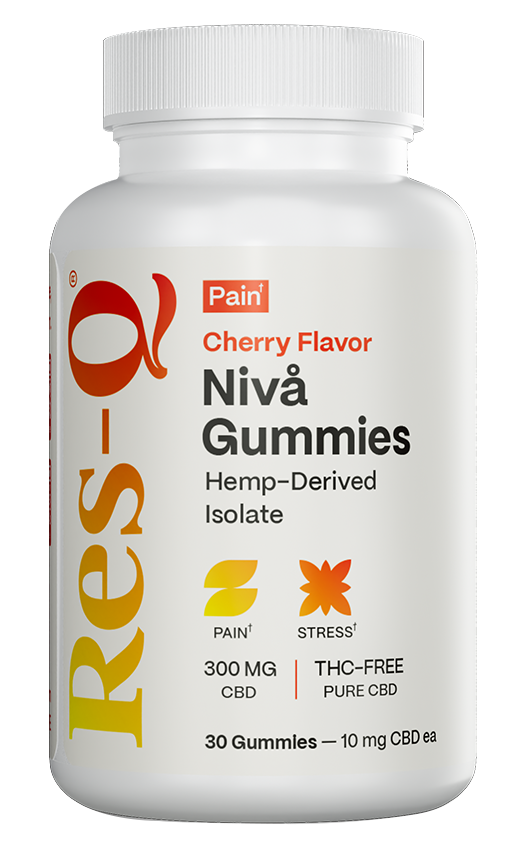
The CBD Your Body ACTUALLY ABSORBS
Most CBD passes right through you. This one doesn't — 440% better absorption, zero THC, made in the U.S.
See Why People Are SwitchingFull Spectrum, Broad Spectrum, or Isolate — Which Is Best for Muscles?
CBD products come in three main formulations, and the differences affect how they work.
Full spectrum CBD contains all the cannabinoids, terpenes, and flavonoids naturally present in the hemp plant, including trace amounts of THC (under 0.3%, which is the legal limit set by the 2018 Farm Bill). The theory behind full spectrum is called the entourage effect — the idea that these compounds work better together than any single cannabinoid in isolation. A 2015 study from the Lautenberg Center for Immunology and Cancer Research found that full spectrum CBD extracts produced stronger anti-inflammatory effects than pure CBD isolate at equivalent doses.
Broad spectrum CBD includes multiple cannabinoids and terpenes but has the THC removed. This is a middle ground for people who want the entourage effect without any THC exposure — useful if you undergo drug testing for work or sport.
CBD isolate is pure CBD with no other compounds. It’s the most predictable in terms of dosing but may be less effective for muscle-related inflammation based on the Lautenberg study’s findings. Some people prefer it for its simplicity and guaranteed zero THC content.
For muscle recovery and relaxation specifically, full spectrum tends to get the strongest recommendations from practitioners and experienced users. But if THC is a concern for any reason, broad spectrum is the next best option.
Frequently Asked Questions
Is CBD good for muscles after weight training?
CBD may support muscle recovery after weight training by reducing excess inflammation and improving sleep quality. Both factors directly affect how fast damaged muscle fibers repair and rebuild. Starting with 25 to 50mg of oral CBD post-workout, combined with a topical on the worked muscle groups, is a common approach among strength athletes.
Does CBD help muscles relax when I’m stressed?
Stress-driven muscle tension responds well to oral CBD in many user reports. CBD’s anxiolytic properties — documented in a 2015 review in Neurotherapeutics — can reduce the stress signals that cause muscles to tighten involuntarily. A daily oral dose of 25 to 50mg, taken consistently, is often reported as effective for stress-related tension.
Can I use CBD cream directly on sore muscles?
Absolutely. Topical CBD absorbs through the skin and interacts with local cannabinoid receptors. Apply it directly over the sore area and massage it in. Reapply two to three times daily for best results. The 2016 European Journal of Pain study showed transdermal CBD reduced inflammation markers in localized areas without systemic side effects.
How long does it take for CBD to work on muscles?
Topical CBD typically begins working within 15 to 30 minutes as it absorbs through the skin. Sublingual tinctures take 15 to 45 minutes. Capsules and gummies need 45 to 90 minutes because they pass through the digestive system first. Consistent daily use over one to two weeks often produces more noticeable results than single-dose use.
Is CBD better than ibuprofen for muscle soreness?
They work differently. Ibuprofen is a COX inhibitor that blocks specific inflammatory enzymes. CBD modulates inflammation through multiple pathways via the endocannabinoid system. Some athletes prefer CBD because long-term NSAID use carries risks like gastrointestinal damage, kidney strain, and cardiovascular issues. CBD’s side effect profile is generally milder, though head-to-head clinical trials are still limited.
Will CBD make me fail a drug test?
Pure CBD isolate and properly manufactured broad spectrum products should not trigger a positive drug test, as standard tests screen for THC metabolites. Full spectrum products contain trace THC (under 0.3%) and could theoretically cause a positive result with heavy, prolonged use. If drug testing is a concern, choose broad spectrum or isolate products from brands with verified third-party lab results confirming zero or undetectable THC.
Putting It All Together
Is CBD good for muscles? The evidence — preclinical studies, athlete reports, and the underlying biology of the endocannabinoid system — consistently points toward yes, with reasonable caveats. CBD isn’t a miracle cure. It won’t replace proper training, nutrition, hydration, and sleep. But as a supplemental tool for managing inflammation, supporting recovery, and easing muscle tension, it has a growing body of support behind it.
CBD and muscle recovery is a relationship that makes biological sense. The ECS is deeply involved in how your body handles tissue repair, pain signaling, and inflammatory regulation. Giving that system additional support through CBD supplementation is a logical strategy backed by real — if still developing — science.
If you’re ready to try CBD for your muscles, start by figuring out how much CBD to relax muscles based on your body weight and activity level. Begin at 15 to 25mg daily, choose a reputable full spectrum or broad spectrum product with third-party testing, and give it at least two weeks of consistent use before adjusting. Combine oral CBD for systemic recovery with a topical for targeted relief on your most affected muscle groups. Track how you feel in a simple log — soreness level, sleep quality, tension throughout the day — so you can dial in the dose that works for your body.
Your muscles do the work. Give them the support they’ve earned.