
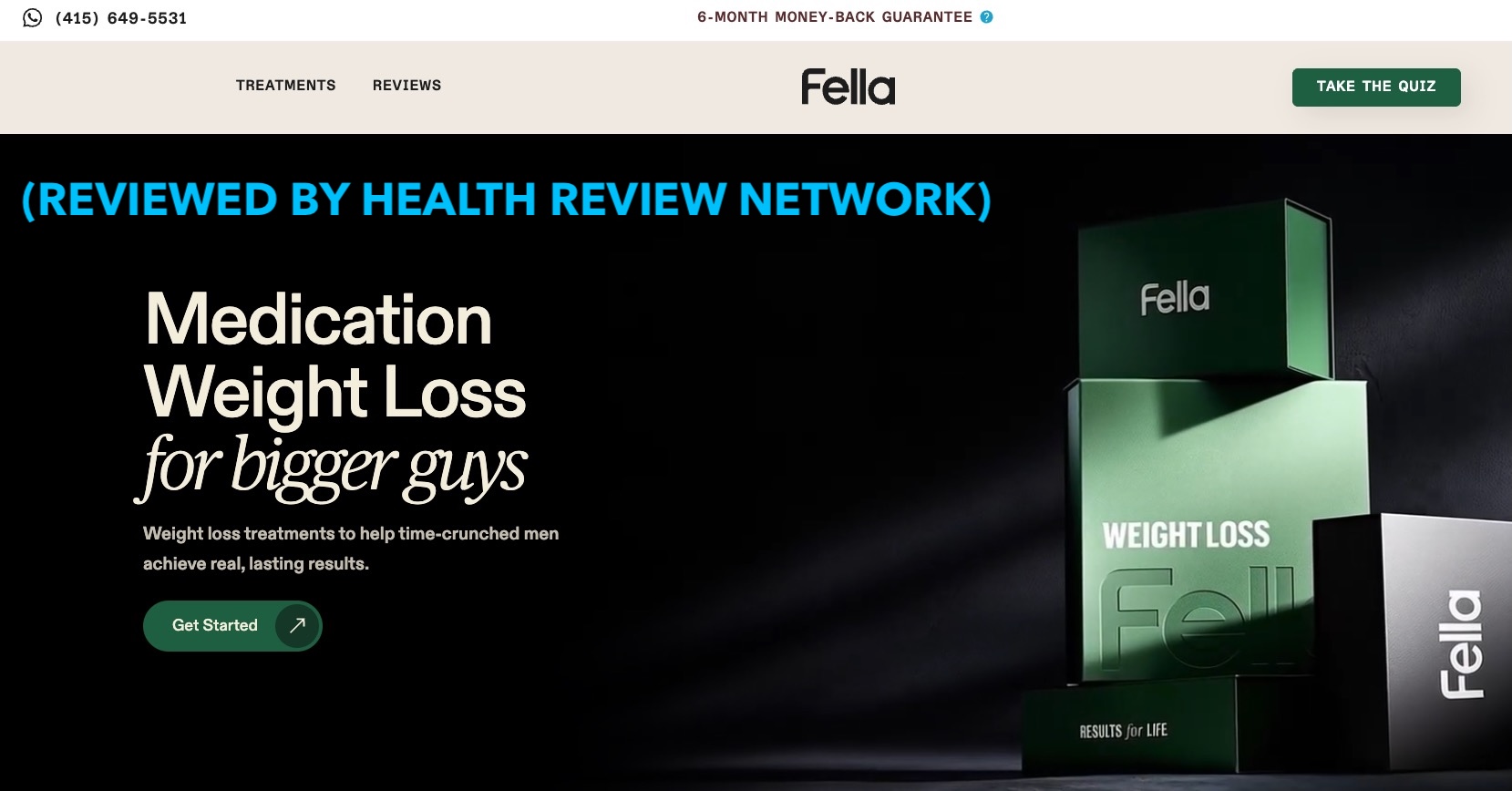
Fella GLP-1 Review — What This Men’s Weight Loss Platform Actually Offers
If you have been searching for a Fella GLP-1 review that breaks down the platform without the marketing fluff, this is it. Fella Health is a telehealth company built specifically for men who want access to GLP-1 weight loss medications — semaglutide and tirzepatide — through a structured online program. The platform pairs prescription medication with provider oversight, metabolic tracking, and behavioral guidance. Everything runs through their app and website. No in-person visits required.
The men’s weight loss telehealth space has gotten crowded. Hims, Ro, Henry Meds, and a dozen other platforms all compete for the same audience. Fella differentiates itself by focusing exclusively on male patients and building its clinical model around that demographic. Hormonal profiles, metabolic baselines, body composition patterns — the program is designed with male physiology as the default rather than an afterthought.
That focus matters more than it might seem on the surface. Men and women metabolize medications differently, store fat in different patterns, and respond to caloric deficits with different hormonal cascades. A program that accounts for those differences from the start has a structural advantage over generic platforms that treat weight loss as one-size-fits-all.
What Is Fella Health?
Fella Health is a U.S.-based telehealth platform that provides men with access to GLP-1 receptor agonist medications for weight loss. The company operates as a digital clinic — patients complete an online intake, get matched with a licensed provider, and receive their medication by mail if they qualify. The program includes ongoing clinical check-ins, dose management, and access to health coaching resources through the platform.
The company launched with a clear thesis: men are underserved in the weight loss treatment space. Most commercial weight loss programs — from Weight Watchers to Noom — skew heavily female in both marketing and program design. Clinical obesity treatment through telehealth followed the same pattern initially. Fella built its brand around closing that gap.
They are not a pharmacy. They connect patients with licensed prescribers who evaluate eligibility based on BMI, medical history, current medications, and health goals. Prescriptions are filled through partnered pharmacies — both retail and compounding — depending on the medication and the patient’s insurance situation.
How Does Fella Weight Loss Work?
The process follows a pattern similar to other telehealth GLP-1 platforms, but with some differences in how the clinical relationship is structured.
Step One — Online Health Assessment
You start by filling out a detailed intake form on the Fella Health website or app. The questionnaire covers your current weight, height, medical history, family history, existing prescriptions, allergies, and weight loss goals. There are screening questions for contraindications specific to GLP-1 medications — history of pancreatitis, medullary thyroid carcinoma, MEN2 syndrome, and gallbladder disease.
The form takes about 10 to 15 minutes. It is more detailed than what some competitors ask for, which is a good sign. A thorough intake reduces the chance of prescribing errors and gives the reviewing provider more context to work with.
Step Two — Provider Review and Consultation
A licensed medical provider reviews your intake. Fella uses both synchronous and asynchronous consultation models depending on the complexity of your case. Straightforward cases — healthy male, BMI over 30, no major contraindications — may be handled through chart review alone. More complex cases may involve a video or phone consultation.
Turnaround times range from same-day to about 48 hours based on user reports. Weekends and holidays can push that out slightly. The provider determines which medication and starting dose are appropriate. Most patients start on semaglutide at 0.25 mg per week and titrate up over several weeks.
Step Three — Prescription and Fulfillment
Once approved, the prescription routes to a partnered pharmacy. Fella works with both traditional pharmacies for brand-name medications and compounding pharmacies for compounded formulations. The medication ships directly to your address in temperature-controlled packaging with injection supplies and dosing instructions.
First-order shipping typically takes 5 to 10 business days. Refill orders tend to be faster — 3 to 5 business days in most cases. Some users in major metro areas have reported receiving refills in as few as two days.
Step Four — Ongoing Monitoring and Dose Adjustments
Fella includes follow-up check-ins as part of the subscription. Providers monitor your response to the medication, adjust dosing as needed, and screen for side effects. Dose titration — gradually increasing the amount of semaglutide or tirzepatide you inject each week — is managed through the platform. You message your provider with updates on how you are feeling, any side effects, and your weight trajectory. They adjust accordingly.
This ongoing clinical relationship is where Fella adds value over bare-bones platforms that prescribe the medication and largely leave you on your own.
What Medications Does Fella Health Prescribe?
Fella prescribes GLP-1 receptor agonists — the class of medications that includes semaglutide and tirzepatide. Depending on your eligibility and insurance coverage, you may receive:
Brand-name semaglutide (Wegovy or Ozempic). Wegovy is FDA-approved specifically for chronic weight management. Ozempic is approved for type 2 diabetes but is frequently prescribed off-label for weight loss. Both contain the same active ingredient at different dose ranges.
Brand-name tirzepatide (Zepbound or Mounjaro). Tirzepatide is a dual GIP/GLP-1 receptor agonist. Zepbound is the weight management version. Mounjaro is the diabetes version. Clinical trials have shown tirzepatide produces greater average weight loss than semaglutide — up to 22.5% of body weight in the SURMOUNT-1 trial compared to roughly 15% for semaglutide in the STEP trials.
Compounded semaglutide or tirzepatide. These are formulations prepared by licensed compounding pharmacies using the same active ingredients. Compounded versions cost significantly less than brand-name — often $199 to $399 per month compared to $1,000-plus for brand-name without insurance. The trade-off is that compounded medications do not undergo the same batch-level FDA testing as manufactured brand-name drugs.
Which medication you receive depends on your provider’s clinical judgment, your medical profile, and what your budget or insurance will support.
Benefits of Fella Health Weight Loss Program
The benefits of Fella Health weight loss program extend beyond just receiving a prescription. The platform is structured to address several pain points that men specifically encounter when pursuing medical weight loss.
Male-Focused Clinical Model
Fella’s providers specialize in treating male patients. Testosterone levels, visceral fat distribution, cardiovascular risk profiles, and metabolic syndrome markers — all of these differ between men and women. A platform that defaults to male physiology in its clinical protocols does not have to retrofit its approach the way a gender-neutral platform does.
One practical example: men carrying excess visceral fat around the midsection face elevated cardiovascular risk that responds well to GLP-1 medications. The STEP trials showed significant reductions in waist circumference — an average of 5.5 inches over 68 weeks on semaglutide 2.4 mg. Fella’s program tracks waist measurement alongside scale weight, which gives a more complete picture of metabolic improvement than weight alone.
Structured Dose Titration
Starting GLP-1 medication at too high a dose is one of the most common mistakes patients make, and it leads to severe nausea, vomiting, and early discontinuation. Fella follows clinical best practices by starting patients at the lowest effective dose and increasing gradually over 16 to 20 weeks. Each titration step is reviewed by the prescribing provider before moving forward.
Prescription Management and Refill Coordination
Refills are handled automatically through the platform. You do not need to call your pharmacy, chase down prior authorizations, or remind your doctor to send in a renewal. The system tracks your supply and initiates refills before you run out. For men managing busy work schedules, that automation removes a friction point that causes a surprising number of people to lapse on their medication.
Health Coaching and Behavioral Support
GLP-1 medications work best when paired with lifestyle modifications. Clinical trials consistently show better outcomes when participants combine semaglutide or tirzepatide with reduced caloric intake and increased physical activity. Fella includes access to health coaching resources — nutrition guidance, exercise recommendations, and behavioral strategies — through the app. The depth of this coaching varies by plan tier.
Fella Health Pricing — What Does It Cost?
Pricing is subscription-based. The monthly cost covers provider consultations, prescription management, medication (in most plans), and access to the platform’s coaching resources. Fella has offered different plan tiers over time, and pricing can shift based on medication type and promotional periods.
As of early 2026, reported pricing falls roughly in these ranges:
Compounded semaglutide plans start around $199 to $349 per month depending on dosage. Brand-name medication plans run higher — $499 to $799 per month or more depending on the drug and whether insurance covers part of the cost. Some plans offer multi-month bundles at reduced monthly rates.
Fella has run first-month promotional pricing in the past, sometimes as low as $99 for the initial consultation and starter dose. These promotions change frequently, so checking the website directly gives you the most accurate current numbers.
Compared to paying out-of-pocket for brand-name Wegovy at retail — which exceeds $1,300 per month — the savings through Fella are substantial. Compared to budget compounded semaglutide platforms that start at $149 per month, Fella is priced slightly higher. The premium reflects the male-specific clinical model, structured provider check-ins, and integrated coaching.
Does Fella Health Accept Insurance?
Fella can work with insurance for brand-name GLP-1 medications. If your plan covers Wegovy, Zepbound, or Mounjaro, Fella’s clinical team can submit prior authorization requests on your behalf. They handle the paperwork, track approval status, and file appeals if the initial request is denied.
The program fee itself — the monthly subscription for provider access and platform use — is typically paid out of pocket regardless of insurance status. Insurance may cover part or all of the medication cost, but the clinical management component is a separate charge.
For compounded medications, insurance generally does not apply. Compounded drugs are paid out of pocket in nearly all cases. This is standard across the telehealth GLP-1 space, not specific to Fella.
Side Effects To Expect on Fella’s GLP-1 Program
Side effects from semaglutide and tirzepatide are well documented in clinical literature. They apply regardless of whether you get the medication through Fella, your primary care doctor, or any other provider. The drug is the same.
Nausea is the most common side effect. It hits hardest during the first few weeks and after each dose increase. Most patients find it manageable and report that it fades as the body adjusts. Eating smaller meals, avoiding greasy foods, and staying hydrated help.
Constipation is the second most reported issue. GLP-1 medications slow gastric emptying — food moves through your digestive system more slowly. That is part of how the drug suppresses appetite, but it also means bowel movements become less frequent. Fiber supplements and adequate water intake are the standard recommendations.
Fatigue, headache, dizziness, and injection site reactions show up in a smaller percentage of users. These tend to be mild and temporary.
Serious but rare risks include pancreatitis, gallbladder complications (including gallstones), and a boxed warning about thyroid C-cell tumors observed in animal studies. Anyone with a personal or family history of medullary thyroid carcinoma or MEN2 syndrome should not take these medications. Fella’s intake process screens for all of these contraindications.
What Real Users Say About Fella Health
User feedback across Trustpilot, Reddit, and men’s health forums follows a consistent pattern. The positives center on three things: the male-focused approach resonates, the medication works, and the process is convenient.
Multiple users mention losing between 15 and 30 pounds in their first three months. One user in a weight loss forum described dropping from 247 to 211 pounds over 14 weeks while following a moderate calorie deficit alongside the injections. He specifically noted that the appetite suppression was the game-changer — he went from eating 3,000-plus calories a day to naturally settling around 1,800 without feeling deprived.
Another user in a men’s health subreddit praised the provider relationship. He had been on semaglutide through a different platform that offered minimal follow-up. After switching to Fella, he felt like his dose titration was managed more carefully, and his provider actually responded to messages within 24 hours rather than taking days.
The common complaints mirror what shows up across the entire telehealth GLP-1 industry. First-order shipping takes longer than expected. Customer support response times can lag during high-volume periods. A few users reported billing confusion around plan changes or cancellations. These are operational friction points, not clinical ones — but they affect the overall experience.
One pattern worth noting: men who had previously tried generic weight loss programs and failed tend to rate Fella more highly than men trying GLP-1 treatment for the first time. The frame of reference matters. If your baseline is years of unsuccessful dieting, a platform that gives you a medication proven to produce 15 to 22% body weight reduction feels like a significant upgrade.
Fella Health Weight Loss Program – Quick Facts & Specs
Fella Health is a men-only telehealth weight loss platform based in the United States. It connects male patients with licensed providers who can prescribe GLP-1 receptor agonist medications — primarily compounded semaglutide and, in some cases, tirzepatide. The entire process runs online. No in-person visits required.
Here are the basics at a glance:
Type: Telehealth weight loss program for men
Medications offered: Compounded semaglutide, compounded tirzepatide (availability varies)
Consultation model: Online health assessment reviewed by a licensed provider
Delivery: Medication shipped directly to your door via cold chain packaging
Pricing: Starts around $129 to $299 per month depending on medication and dosage
Prescription required: Yes — written by a licensed clinician after medical evaluation
Insurance accepted: No — cash-pay model
Availability: United States only, state availability varies based on telehealth licensing
Pros and Cons of Fella Health
Pros
The platform is built specifically for men. That means the medical providers, the dosing protocols, and the support resources account for male physiology — testosterone levels, visceral fat distribution, and metabolic rates that differ from women. Most competing telehealth platforms serve both genders with the same general approach.
Pricing is transparent. You see the monthly cost before committing. No insurance dance, no prior authorization delays, no surprise pharmacy bills. For men without GLP-1 coverage through their insurance — which is the majority as of 2026 — that clarity removes a major friction point.
The process is fast. Most users report completing the health assessment in under 15 minutes. Provider review and prescription turnaround typically happens within one to three business days. Medication arrives within a week of approval in most cases.
Ongoing provider access is included. You can message your prescriber through the platform to adjust dosing, report side effects, or ask questions without booking a separate appointment or paying an additional consultation fee.
Cons
No brand-name medications. Fella Health prescribes compounded versions of semaglutide and tirzepatide, not brand-name Wegovy, Ozempic, or Zepbound. Compounded medications are legally produced but do not undergo the same batch-level FDA testing as brand-name drugs.
No insurance billing. Everything is out of pocket. If your insurance plan does cover GLP-1 medications for weight loss, you would save more going through your primary care doctor and a retail pharmacy.
Customer service response times have drawn mixed feedback. Some users report quick replies. Others mention waiting 24 to 48 hours for answers to basic questions about shipping or billing.
State availability is not universal. Telehealth prescribing laws vary by state, and Fella Health may not be licensed to operate in every state at any given time.
Who is the Manufacturer?
Fella Health is the company behind the Fella Health weight loss program. It was founded as a men’s health telehealth platform and has expanded its offerings to include GLP-1 weight loss medications as the demand for semaglutide and tirzepatide surged starting in 2023.
Fella Health is not a pharmacy. It operates as a telehealth company that connects patients with licensed medical providers and routes prescriptions to partnered compounding pharmacies for fulfillment. The compounding pharmacies that fill Fella Health prescriptions are licensed under state boards of pharmacy and operate as either 503A (patient-specific) or 503B (outsourcing) facilities.
The company does not publicly name its compounding pharmacy partners on its website, which is standard across most telehealth GLP-1 platforms. If you want to verify the pharmacy filling your prescription, you can ask Fella Health directly and cross-reference the license through your state’s Board of Pharmacy or the FDA’s registered outsourcing facility database.
What Are the Prescriptions Available?
Fella Health primarily prescribes compounded semaglutide. This is the same active ingredient found in Ozempic and Wegovy, produced by a compounding pharmacy rather than by Novo Nordisk. The medication comes as a subcutaneous injection — a small needle injected under the skin, typically in the abdomen or thigh, once per week.
Some users have reported that Fella Health also offers compounded tirzepatide, the active ingredient in Mounjaro and Zepbound. Tirzepatide is a dual GIP/GLP-1 receptor agonist, meaning it targets two hormones involved in blood sugar regulation and appetite control rather than just one. Clinical trials have shown tirzepatide produces slightly greater average weight loss compared to semaglutide — roughly 20% to 25% of body weight over 72 weeks in the SURMOUNT-1 trial versus approximately 15% for semaglutide in the STEP trials.
Availability of tirzepatide through Fella Health may depend on regulatory status and compounding pharmacy supply. The FDA’s stance on compounded tirzepatide has shifted multiple times in 2025 and 2026, so check directly with the platform for current options.
Dosing follows standard escalation protocols. Semaglutide typically starts at 0.25 mg per week and increases gradually — 0.5 mg, 1.0 mg, 1.7 mg, up to 2.4 mg — over several months. The titration schedule helps minimize gastrointestinal side effects. Your Fella Health provider adjusts the dose based on your tolerance and response.
What Kind of Medical Treatments Does Fella Health Offer?
Beyond GLP-1 weight loss medications, Fella Health positions itself as a broader men’s health platform. Depending on current offerings, the platform may include treatments for testosterone optimization, metabolic health, and related conditions that affect men dealing with obesity or weight-related health issues.
The core service most users come for is the GLP-1 prescription program. The medical evaluation covers not just your weight and BMI but also your metabolic health markers, existing conditions, and current medications. Providers look at the full picture — blood pressure history, cholesterol, blood sugar levels, sleep quality, and activity level — before writing a prescription.
This is not a pill mill. Providers deny patients who do not meet clinical criteria. If your BMI is below 27 or you have contraindications like a personal history of medullary thyroid carcinoma, pancreatitis, or MEN2 syndrome, you will not receive a prescription. That level of screening is a positive sign.
What Kind of Support is Provided Beyond Medication?
Fella Health includes ongoing provider messaging as part of the subscription. You can reach your prescribing clinician through the platform to discuss side effects, request dosage changes, or ask medical questions without scheduling a separate appointment.
Some Fella Health plans include access to nutritional guidance and lifestyle recommendations tailored to men on GLP-1 medications. This is not the same as a full behavioral coaching program — platforms like Calibrate or Found offer more structured support with dedicated health coaches, meal planning, and exercise programming. Fella Health’s approach is leaner. You get the medication, medical oversight, and basic guidance. The rest is on you.
For men who prefer autonomy over hand-holding, this works. For men who need structured accountability — weigh-ins, food logging, weekly coaching calls — Fella Health may feel too hands-off. Know which category you fall into before signing up.
Is the Fella Health Weight Loss Program Safe?
The safety profile of the Fella Health weight loss program comes down to two things: the medication itself and the platform delivering it.
Semaglutide and tirzepatide are well-studied medications. Semaglutide was FDA-approved for chronic weight management under the brand name Wegovy in 2021, based on clinical trials involving over 4,500 participants. Tirzepatide received FDA approval for weight loss as Zepbound in 2023. The safety data behind both drugs is extensive.
The compounded versions prescribed through Fella Health use the same active ingredients. The difference is in manufacturing oversight. Brand-name drugs go through standardized production lines with batch-level FDA testing. Compounded medications are produced by pharmacies that operate under state licensing and, in the case of 503B facilities, FDA inspection. Quality depends on the specific pharmacy. A well-run 503B outsourcing facility maintains rigorous standards. A poorly managed 503A pharmacy may not.
Fella Health’s intake process screens for contraindications — thyroid cancer history, pancreatitis, pregnancy, MEN2 syndrome. That screening is where safety starts. If you answer the health questionnaire honestly and completely, the provider has the information needed to make a safe prescribing decision.
One practical concern: medication storage. Semaglutide needs refrigeration. When your shipment arrives, check the cold packs. If the box is warm or the ice packs are fully melted, contact Fella Health for a replacement before injecting.
Fella Health Weight Loss Program Customer Reviews
User reviews for Fella Health cluster around a few themes. The positive ones focus on results and convenience. The negative ones focus on logistics and communication.
On the positive side, men report meaningful weight loss within the first two to three months. Numbers vary — 12 to 30 pounds is a common range depending on starting weight, dosage, and lifestyle changes made alongside the medication. One user on a men’s health forum described losing 22 pounds in 10 weeks while maintaining his strength training routine. He noted that appetite suppression was the biggest change — he stopped snacking between meals entirely by week three.
Another recurring theme is the male-specific framing. Several reviewers mentioned feeling more comfortable using a platform designed for men rather than a general telehealth service. One user put it plainly: he had avoided seeking weight loss help for years because every program he found felt marketed toward women. Fella Health removed that barrier for him.
On the negative side, shipping delays on first orders come up. Some users waited 10 to 14 days from signup to receiving medication. Refill orders seem to ship faster, but that initial wait frustrates people who just paid several hundred dollars and want to start immediately.
Customer support response times are uneven. Email tends to be the most reliable channel. A few users reported difficulty reaching anyone by phone. Billing questions and dosage adjustment requests sometimes took two to three business days to resolve.
Side effect complaints appear in the review mix, but these reflect the medication’s known profile — nausea, constipation, fatigue — rather than issues specific to Fella Health as a platform.
How Do You Take the Medications?
The medication arrives as a subcutaneous injection. That means you inject it just under the skin using a small needle. The injection goes into the fatty tissue of your abdomen, upper thigh, or upper arm. You rotate injection sites each week to avoid irritation.
Fella Health ships the medication along with injection supplies — syringes, alcohol swabs, and dosing instructions. The vials need to be stored in the refrigerator between 36°F and 46°F. Do not freeze the medication. Do not leave it out at room temperature for extended periods.
Injections happen once per week, on the same day each week. Pick a day that works for your schedule and stick with it. Many users inject in the evening to sleep through any initial nausea. Others prefer morning injections. There is no clinical difference in effectiveness based on time of day.
The injection itself takes about 10 seconds. Clean the injection site with an alcohol swab, pinch a fold of skin, insert the needle at a 45 to 90 degree angle, push the plunger slowly, hold for five seconds, and remove. Most men describe the needle as barely noticeable — comparable to a mosquito bite.
How Effective Is Fella Health Weight Loss Program?
Effectiveness depends on the medication, the dosage, and what you do alongside it. The drugs prescribed through Fella Health — semaglutide and tirzepatide — have some of the strongest clinical evidence behind them of any weight loss medications ever approved.
In the STEP 1 clinical trial, adults on semaglutide 2.4 mg lost an average of 14.9% of their body weight over 68 weeks compared to 2.4% in the placebo group. For a 250-pound man, that translates to roughly 37 pounds. The SURMOUNT-1 trial for tirzepatide showed even larger effects — participants on the highest dose lost an average of 22.5% of body weight.
Those are clinical trial numbers with structured support and monitoring. Real-world results vary. Men using Fella Health report a wide range — from 8 to 40 pounds lost in the first three to four months. The variance comes down to adherence, diet, activity level, and individual metabolic response.
The medication works best when paired with a caloric deficit and consistent physical activity. Men who treat GLP-1 medication as a standalone fix without changing eating habits tend to lose less weight and plateau earlier. The drug reduces appetite and slows gastric emptying. It does not burn fat on its own. The caloric reduction it enables is what produces weight loss.
Does Fella Health Weight Loss Program Have a Return Policy?
Prescription medications are generally non-returnable once dispensed. This is a federal regulation, not a Fella Health-specific policy. Once a compounding pharmacy prepares and ships your medication, it cannot legally be restocked or resold.
Fella Health’s refund and cancellation terms are outlined in their terms of service on the website. Read them before submitting payment. Key things to look for: whether you can get a refund if the provider denies your prescription, whether unused months on a prepaid plan are refundable if you cancel early, and what happens if your medication arrives damaged or temperature-compromised during shipping.
Some users have reported that Fella Health issued replacements for shipments that arrived with compromised cold chain packaging. If your medication arrives warm, document it with photos and contact support immediately.
Can I Switch Medications if the Initial Treatment Does Not Work for Me?
Yes. If you start on compounded semaglutide and do not respond well — whether due to side effects or insufficient results — you can discuss switching medications with your Fella Health provider. The most common switch is from semaglutide to tirzepatide, which works on both GLP-1 and GIP receptors and may produce better results for some patients.
Switching requires a new evaluation by your provider. They will review your experience on the current medication, assess your tolerance, and determine whether an alternative is appropriate. This is handled through the platform’s messaging system. You do not need to start the intake process over from scratch.
Dosage adjustments within the same medication are more common than full switches. If nausea is severe at a particular dose, your provider may slow the titration schedule — staying at a lower dose for an extra two to four weeks before increasing. This is standard practice with GLP-1 medications and not a sign that the treatment is failing.
What Sets Fella Health Weight Loss Program From the Competition?
The men-only focus is the primary differentiator. Most telehealth GLP-1 platforms — Hims, Ro, Henry Meds, Found, Calibrate — serve both men and women. Fella Health built its entire platform around male patients. That affects everything from the marketing language to the clinical protocols.
Men carry weight differently than women. Visceral fat — the deep abdominal fat surrounding internal organs — is more prevalent in men and carries higher cardiovascular risk. Men also have different hormonal profiles affecting metabolism, including testosterone levels that can drop significantly with obesity. A 2011 study in the Journal of Clinical Endocrinology & Metabolism found that approximately 30% of obese men had low testosterone levels. Fella Health’s providers factor these male-specific variables into treatment decisions.
The streamlined model is another differentiator. Fella Health does not bundle in mandatory coaching programs, group sessions, or app-based meal tracking. You get the medical evaluation, the prescription, the medication, and provider access. That stripped-down approach keeps the price lower than premium programs like Calibrate, which charges for behavioral coaching on top of medication costs.
For men who want the pharmaceutical intervention without the lifestyle program wrapper, Fella Health fits. For men who need more structured accountability, a platform with built-in coaching may serve them better.
Why Is Fella Health Weight Loss Program Focused on Men?
Men are underserved in the weight loss market. That is not opinion — it is reflected in the data. A 2019 study published in Obesity Reviews found that men were significantly less likely than women to enroll in weight management programs, despite having comparable or higher rates of obesity. The reasons cited included stigma, lack of male-targeted programs, and the perception that weight loss services are designed for women.
Fella Health was built to close that gap. The platform uses direct, clinical language. There are no pastel color schemes or before-and-after photos of women in yoga pants. The content, the provider conversations, and the treatment approach are framed around how men experience weight gain, metabolic dysfunction, and the specific health risks — cardiovascular disease, type 2 diabetes, low testosterone, sleep apnea — that disproportionately affect obese men.
From a clinical standpoint, men respond to GLP-1 medications with some differences compared to women. Men tend to lose more visceral fat relative to subcutaneous fat during treatment, which has outsized benefits for cardiovascular and metabolic health markers. Having providers who understand and track those male-specific outcomes is a meaningful advantage over generic platforms.
Are Fella Health Weight Loss Program Medications FDA Approved?
The active ingredients — semaglutide and tirzepatide — are FDA-approved in their brand-name forms. Semaglutide is approved as Wegovy for chronic weight management and as Ozempic for type 2 diabetes. Tirzepatide is approved as Zepbound for weight management and as Mounjaro for type 2 diabetes.
The compounded versions prescribed through Fella Health are not individually FDA-approved products. Compounded medications are legally produced by licensed pharmacies under Section 503A or 503B of the Federal Food, Drug, and Cosmetic Act. They use the same active ingredient but are mixed and dosed by the compounding pharmacy rather than manufactured by the original drug company.
The FDA has allowed compounding of semaglutide during documented drug shortages. The regulatory landscape around this has shifted multiple times since 2024. If semaglutide is fully removed from the FDA’s drug shortage list, compounding pharmacies may lose the legal basis to produce it. As of mid-2026, this remains an evolving situation. Fella Health users on long-term treatment should stay aware of regulatory updates that could affect medication availability.
Is It Safe To Use Fella Health’s Medications With Other Supplements or Medications?
GLP-1 medications can interact with other drugs, particularly those that affect blood sugar. If you take insulin, sulfonylureas, or other diabetes medications, combining them with semaglutide or tirzepatide increases the risk of hypoglycemia — dangerously low blood sugar. Your Fella Health provider needs to know about every medication you currently take before writing a prescription.
Blood thinners like warfarin may also be affected. Semaglutide slows gastric emptying, which can alter how quickly other oral medications are absorbed. This does not mean you cannot take them together, but timing and monitoring may need adjustment. Your provider should coordinate with your primary care doctor if you are on blood thinners or other narrow-therapeutic-index drugs.
Over-the-counter supplements are generally less concerning, but a few deserve attention. Berberine supplements, which are marketed as natural GLP-1 boosters, can lower blood sugar independently. Stacking berberine with a GLP-1 injection could push blood sugar too low. Similarly, high-dose chromium supplements affect insulin sensitivity and should be disclosed to your provider.
The intake questionnaire asks about current medications and supplements for this reason. Do not skip those fields or leave them incomplete. Full disclosure protects you. Your provider cannot account for interactions they do not know about.
Fella Health Compared To Other GLP-1 Telehealth Platforms
The telehealth GLP-1 market has dozens of players. Here is how Fella stacks up against the most common alternatives.
Fella vs. Hims
Hims offers compounded GLP-1 medications at competitive prices and serves both men and women. The platform is larger, with more brand recognition and generally faster shipping. Hims does not specialize in male-specific clinical protocols the way Fella does. For men who want the cheapest possible access to compounded semaglutide, Hims may win on price. For men who want a program designed around male health markers, Fella offers more targeted care.
Fella vs. Ro
Ro’s Body Program includes GLP-1 prescriptions with metabolic coaching. The program is comprehensive and well-reviewed. Like Hims, Ro serves all genders. Pricing is competitive. The main difference is clinical focus — Ro’s weight loss program is broader in scope, while Fella narrows its lens to male patients and male-specific health outcomes.
Fella vs. Henry Meds
Henry Meds is one of the more affordable compounded semaglutide options, with plans starting around $149 per month. The trade-off is less clinical infrastructure — fewer provider touchpoints, less structured dose management, and minimal coaching. For budget-conscious patients who are comfortable self-managing, Henry Meds works. For men who want more oversight, Fella provides it at a higher price point.
Is Fella Health Legit?
Yes. Fella Health operates as a licensed telehealth platform with providers who hold active state medical licenses. Prescriptions are filled through licensed pharmacies — both retail and compounding. The platform requires valid medical evaluations before prescribing and screens for contraindications that would make GLP-1 medications unsafe.
You can verify any prescribing provider’s license through your state medical board’s website. You can verify the dispensing pharmacy through your state Board of Pharmacy or, for 503B outsourcing facilities, through the FDA’s registered facility list.
Fella requires a valid medical assessment before issuing any prescription. If a platform offers to sell you GLP-1 medications without evaluating your health history, that is a red flag. Fella does not operate that way.
Who Is a Good Candidate for Fella Health?
Fella’s program is designed for men with a BMI of 30 or higher, or a BMI of 27 or higher with at least one weight-related health condition — type 2 diabetes, hypertension, high cholesterol, or sleep apnea. These are the same clinical thresholds used in the semaglutide and tirzepatide trials that led to FDA approval.
Men who have tried diet and exercise without achieving sustained weight loss are the primary audience. The medication addresses the biological side of weight regulation — appetite, satiety signaling, and metabolic rate — in ways that behavioral changes alone often cannot.
Men with a history of pancreatitis, medullary thyroid carcinoma, MEN2 syndrome, or active gallbladder disease should not take GLP-1 medications. Pregnant or breastfeeding individuals are also excluded, though that is less commonly relevant for Fella’s male patient base.
Can You Cancel Your Fella Health Plan?
Yes. Fella operates on a subscription model, and cancellation is available through the platform. The specific terms — whether you can cancel mid-cycle, whether refunds are prorated, and how much notice is required — are outlined in their terms of service. Reading those before signing up saves headaches later.
Multiple users have confirmed that cancellation is possible without extended haggling, though a few have mentioned that the process required emailing support rather than being available as a one-click option in the app. That is a minor friction point but worth knowing about.
Frequently Asked Questions About Fella GLP-1
How long does it take to start losing weight on Fella’s program?
Most users report noticeable appetite suppression within the first one to two weeks. Measurable weight loss — 3 to 8 pounds — typically appears within the first month. Significant results of 15 to 30 pounds or more accumulate over three to six months as the dose titrates up to therapeutic levels.
Does Fella Health prescribe tirzepatide?
Yes. Fella prescribes both semaglutide and tirzepatide depending on your provider’s clinical assessment, your health profile, and what your insurance or budget supports. Tirzepatide has shown higher average weight loss in clinical trials compared to semaglutide.
Is Fella Health only for men?
Yes. Fella Health exclusively serves male patients. The clinical model, provider training, and program design are built around male physiology and health markers. Women looking for GLP-1 telehealth access have numerous other platform options available.
Does Fella offer compounded semaglutide?
Yes. Fella offers compounded semaglutide through partnered licensed compounding pharmacies. Compounded versions cost less than brand-name but do not undergo the same batch-level FDA testing. The active ingredient is the same.
What happens if I stop taking the medication?
Clinical data consistently shows that patients who discontinue GLP-1 medications regain a significant portion of lost weight within 12 months. The medication manages appetite and metabolic signaling while you take it. When you stop, those biological drivers return to baseline. Long-term use or a structured transition plan with lifestyle modifications in place improves the chances of maintaining results.
The Bottom Line On This Fella GLP-1 Review
This Fella GLP-1 review covers the full picture — what the platform offers, how the process works, what it costs, and what real users report. Fella Health occupies a specific niche in the telehealth GLP-1 market by building its entire program around male patients. That focus translates into a clinical model that accounts for male-specific metabolic patterns, hormonal profiles, and health risks.
The medication works. Semaglutide and tirzepatide have the clinical data behind them — tens of thousands of trial participants, FDA approval, and real-world results that consistently show 15 to 22% body weight reduction over 12 to 18 months. What Fella adds on top of that is structured provider oversight, dose management, and a platform that does not treat male weight loss as an afterthought.
The weak spots are operational. Shipping times on first orders can stretch longer than expected. Customer support response times are not always fast. Pricing sits above the cheapest competitors, though the premium buys more clinical depth. These are real trade-offs, not dealbreakers.
For men managing obesity or weight-related health conditions who want a telehealth program built for them specifically, Fella delivers a solid, structured experience that justifies its place in the market.
Read the rest of our articles and more useful info down below!