
Elevate Health GLP-1 Review: what this program really is, what it gets right, and where people should slow down
This Elevate Health GLP-1 Review is based on public information from Elevate’s own pages, its safety disclosures, FDA guidance on compounded GLP-1 drugs, NIDDK guidance on weight-loss medications, and visible public reviews. That matters, because too many review articles pretend to be personal trials when they are really just sales copy. This one is not doing that. If you are looking at Elevate because you want help with appetite control, steady weight loss, and an online process instead of office visits, there is a real case for it. But there are also real tradeoffs, especially because the company says the medications offered are compounded versions of semaglutide or tirzepatide and are not FDA-approved.
The short version first. Elevate looks strongest for people who want a telehealth path, know they may qualify by BMI, and understand that convenience does not remove risk. The company’s pages describe an online quiz, provider review, and home delivery model. Its app site says the Rx path is for qualifying members with a BMI of 30 or higher, or 27 or higher with certain comorbidities. It also says medication usually arrives within 7 to 10 business days once approved. That sounds simple. In practice, simple is only good if the details are handled well.
If you only read one thing before deciding, read this: Elevate’s sales pages focus on convenience and success stories, while its safety pages make clear that compounded semaglutide and compounded tirzepatide are not FDA-approved and come with meaningful warnings, side effects, and dosing risks. That gap matters. A good review should put both pieces on the same page.
Get Access To Elevate Health GLP-1
What is GLP-1 Elevate?
If someone asks, “What is GLP-1 Elevate?”, the clean answer is this: it is not one single branded FDA-approved drug. Elevate Health is a telehealth platform that says it helps patients access physician-guided weight-loss treatment, including compounded semaglutide or compounded tirzepatide when a licensed provider decides it is medically appropriate. The company also says it provides administrative and operational support to physicians and practitioners contracted through MDIntegrations and TelegraMD, and that payment does not guarantee a prescription.
That distinction is big. Many people search for GLP-1 help and assume they are buying the same thing as Ozempic, Wegovy, Mounjaro, or Zepbound. Elevate says directly that its compounded medications are not generic versions of, or the same as, those brand-name products. So if you join, you need to know what you are actually being prescribed, which pharmacy is compounding it, what concentration it comes in, and how your dose is measured. If you skip those questions, you are guessing with a medication that should never be handled casually.
How the Elevate process works on paper
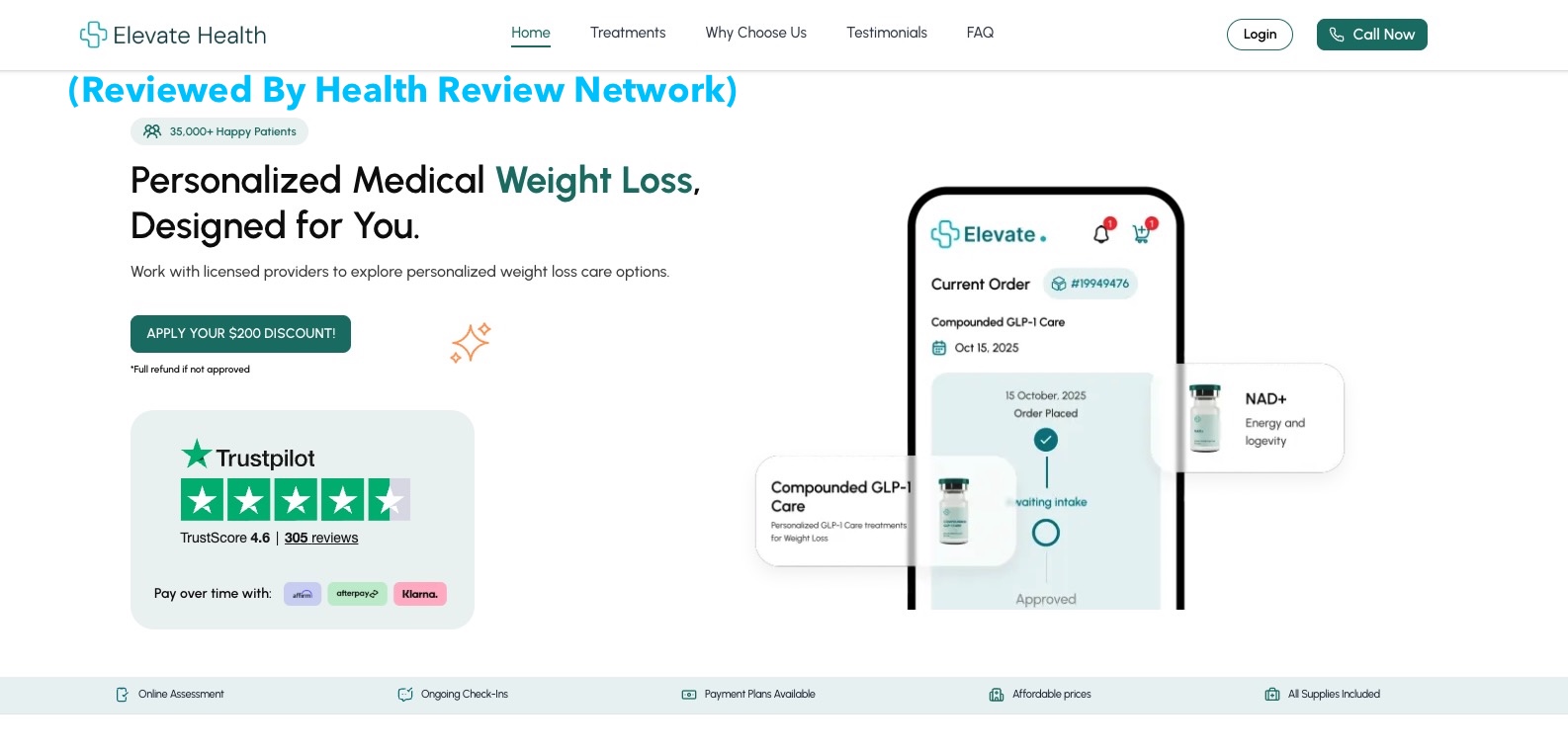
Elevate’s app site lays out a three-step process. First, you take a short intake quiz. Second, a licensed provider connects with you through a telehealth system. Third, if approved, medication is shipped to your door. The same page says most patients receive a prescription decision within 24 hours, medication usually arrives within 7 to 10 business days after approval, and each shipment may include a multi-dose vial, syringes, alcohol wipes, and anti-nausea medication.
That is a practical setup. It removes the normal friction of booking a clinic visit, getting a paper prescription, and making separate pharmacy calls. For some people, that is the main appeal right there. Busy schedule. No nearby obesity specialist. No interest in waiting rooms. Fair enough. But convenience should not be confused with lower complexity. GLP-1 treatment still needs real screening, proper dosing, and follow-up.
What stands out in this Elevate Health GLP-1 Review
The main thing that stands out is not the marketing language. It is the split between the promise and the safety fine print. The front-end message is easy to understand: appetite control, weight loss, energy, support, doorstep delivery. The back-end message is stricter: compounded drugs are not FDA-approved, dosing errors can be serious, and you should not use GLP-1 drugs just because you want to look different for a season. That second part is less exciting, but it is the part that protects people from bad decisions.
The company makes outcome claims, but they are still claims
Elevate’s app page says it has served 200,000+ weight loss patients. It also displays individual success stories such as 30 pounds lost in 14 weeks, 20 pounds in 6 weeks, 42.4 pounds in 11 weeks, and 72 pounds in 13 months. Those stories may be true for the people shown. They are not a promise for the next person. Weight-loss response varies a lot based on starting weight, dose, adherence, food intake, activity, sleep, medical history, and whether the medication is tolerated long enough to stay on plan.
This is where public reviews help. One visible Trustpilot review says the person lost 50 pounds, lowered blood pressure, and felt much better physically. Another says their package arrived earlier than expected with instructions and ice packs. But other visible reviews describe the opposite kind of story: shipping delays, warm medication, refund disputes, or feeling no effect after weeks of use. That mix does not prove the program is good or bad by itself. It does tell you the experience is not uniform, and customer support quality really matters here.
Get Access To Elevate Health GLP-1
The clinical evidence behind GLP-1 treatment is real
Here is the part that should keep this review grounded. GLP-1-based treatment is not internet hype pulled out of nowhere. NIDDK says prescription medications for overweight and obesity can help when used with lifestyle changes, and that people taking medication as part of a lifestyle plan lose about 3% to 12% more body weight after 1 year than those in a lifestyle program without medication.
FDA’s approval summary for Zepbound, which contains tirzepatide, is even more specific. In adults without diabetes, those randomized to the highest approved dose lost an average of 18% of body weight after 72 weeks. In adults with type 2 diabetes, the average at the highest approved dose was 12%. Those are serious numbers. They also came from controlled trials using an FDA-approved branded product, not from every compounded version being sold online. That difference matters more than most ad copy lets on.
So yes, the category is legitimate. No, that does not mean every telehealth GLP-1 offer is equal. The burden is on the buyer to separate good medical oversight from smooth landing-page design.
Who this program may fit, and who should probably not rush into it
Elevate’s own pages say the Rx path is for qualifying members with a BMI of at least 30, or at least 27 with certain comorbidities. That lines up with NIDDK’s general guidance for obesity medications. So if someone is trying to use GLP-1 treatment just to drop a small amount of vanity weight with no medical need, that is already outside the spirit of the mainstream guidance. NIDDK is blunt about this. These medications should not be taken only to improve appearance.
In plain language, this kind of program tends to make more sense for people who have struggled with appetite, repeated regain, weight-related health issues, or a long pattern of trying to white-knuckle their way through diets and then burning out. It makes less sense for people who want a shortcut but do not want monitoring, do not want to learn injection basics, or are not ready to deal with side effects and follow-up.
Who should slow down and ask much harder questions
Elevate’s safety pages say compounded semaglutide or tirzepatide should not be used in several cases, including a personal or family history of medullary thyroid carcinoma, MEN 2 syndrome, known allergy to the medication, pregnancy, and use with other GLP-1 receptor agonists. The tirzepatide safety page also says safety has not been established in people under 18, in pregnancy or breastfeeding, or in those with a history of pancreatitis.
If any of that applies, do not treat this like a casual purchase. Slow down. Ask the provider to explain exactly why this path is appropriate for you and what alternatives exist.
How often should I take GLP-1 elevate?
This is one of the most searched questions, so let’s answer it directly. Based on Elevate’s current safety pages, compounded semaglutide is described as a once-weekly subcutaneous injection taken on the same day every week, and compounded tirzepatide is also described as a once-weekly subcutaneous injection on the same day each week. The semaglutide page says a licensed provider may increase the dose every four weeks as part of the regimen.
That does not mean you should copy a schedule you saw in a comment section. It means the general cadence on Elevate’s own safety pages is weekly dosing, with dose changes guided by a provider. If your vial concentration, syringe markings, or dose units are not crystal clear to you, stop and ask before injecting. FDA says dosing errors with compounded semaglutide have led to adverse events, including some that required hospitalization.
Common mistakes people make with GLP-1 treatment
Most problems do not start because people are careless on purpose. They start because people feel rushed, embarrassed to ask questions, or too eager to speed up results. That is how mistakes happen.
-
Taking more than prescribed because weight loss feels too slow. FDA warns that taking doses more frequently or increasing the amount too quickly can lead to serious side effects like nausea, vomiting, diarrhea, abdominal pain, and constipation.
-
Misreading the syringe or measuring the wrong amount from a multi-dose vial. FDA specifically flags dosing errors with compounded semaglutide.
-
Ignoring shipping temperature issues. FDA says injectable GLP-1 drugs that arrive warm or with insufficient refrigeration should not be used because quality can be affected.
-
Using it with other GLP-1 drugs or extra weight-loss products without provider oversight. Elevate’s safety pages say not to combine compounded tirzepatide with other tirzepatide-containing or GLP-1 receptor agonist products.
-
Skipping site rotation. Elevate says to rotate injection sites weekly. It sounds small, but small process mistakes pile up.
If you do this wrong, the result is not just “less progress.” It can be dehydration, severe GI symptoms, wasted medication, or a provider stopping treatment because the risk got too high. That is the part people need to hear before they pay, not after.
Get Access To Elevate Health GLP-1
Side effects: what the official pages say, and why this part should not be skimmed
Elevate’s semaglutide safety page lists common side effects such as nausea, diarrhea, vomiting, constipation, stomach pain, indigestion, injection site reactions, fatigue, belching, hair loss, and heartburn. It also lists more serious concerns including thyroid C-cell tumor warnings, pancreatitis, gallbladder disease, low blood sugar, acute kidney injury, allergic reactions, diabetic retinopathy complications, increased heart rate, and suicidal thoughts or behavior.
The tirzepatide safety page carries a similar tone. Common issues include nausea, vomiting, diarrhea, constipation, indigestion, reflux, bloating, fatigue, and injection site reactions. Serious risks listed include pancreatitis, gallbladder disease, hypoglycemia, kidney injury from dehydration, allergic reactions, diabetic retinopathy complications, and suicidal thoughts or behavior.
That is why a shallow review is not enough. One part of the program page says nausea is the most common side effect and that anti-nausea medication may be included. Fine. Helpful even. But the full safety picture is much wider than that. People deserve to see both the simpler sales-page version and the heavier safety-page version at the same time.
What public reviews add to the side-effect conversation
Anecdotes are not clinical trials, but they do show where real friction happens. One visible Trustpilot reviewer wrote that the medicine was carefully packaged with ice packs and arrived in exactly one week. Another said the medication gave them their life back and helped them lose significant weight. But there are also visible negative reviews saying shipments were delayed, ice melted, support was frustrating, or the person felt no effect. That matches the practical risks FDA highlights around temperature control and compounded product quality.
That does not automatically mean the program is unsafe. It means shipping, storage, and support are not side issues here. They are part of the product experience.
What Elevate seems to do well
First, the company makes the path easy to understand. Quiz, provider review, shipment. That is good design. Second, the published eligibility criteria broadly line up with mainstream guidance for obesity medication use. Third, the site says support is available, the team responds within 24 to 48 hours, and a person can call during business hours. Fourth, if a physician does not deem you eligible, the company says you receive a 100% refund. Those are all meaningful strengths if they happen consistently in the real world.
There is also one understated benefit worth saying out loud. Telehealth lowers the activation energy. A person who has been putting this off for months may finally move because the process feels doable. Sometimes that is the difference between another year of stalled attempts and actually starting. That is not a small thing.
What would make me cautious
The biggest caution is the compounded-drug issue. Elevate says the medications are compounded and not FDA-approved. FDA says unapproved versions of GLP-1 drugs do not undergo the agency’s review for safety, effectiveness, and quality before they are marketed. FDA also says it has received hundreds of adverse-event reports involving compounded semaglutide and tirzepatide, while noting that many events are likely underreported because many state-licensed pharmacies are not required to submit them.
The second caution is that payment does not guarantee a prescription. Some buyers miss that. The company says treatment is at the sole discretion of the prescribing provider. That is how it should work medically, but buyers still need to hear it plainly before entering payment details.
The third caution is consistency. Public reviews are mixed. Some people rave about support and results. Others complain about shipping warmth, refunds, communication, or lack of effect. Mixed reviews do not kill a program, but they do increase the need for due diligence before joining.
Get Access To Elevate Health GLP-1
Elevate versus seeing a local clinic
This is not a simple winner-loser comparison. It depends on what kind of person you are. If you want speed, remote access, and a clear online flow, Elevate has the edge. If you want an in-person physical exam, same-office lab follow-up, and direct hands-on injection teaching, a local clinic may feel safer and easier to trust.
I have seen this split play out again and again with telehealth in general. One group loves the reduced friction. Another group looks at a shipped vial and a syringe and realizes they wanted more face-to-face support than they thought. Neither group is wrong. They just need different levels of structure.
So ask yourself one practical question: when something goes slightly wrong, not catastrophically wrong, just annoying wrong, how do you want that fixed? A call center? A portal message? Or someone in front of you? Your answer matters more than most landing pages admit.
Questions worth asking before you pay
A good buyer asks specific questions. Not because they are difficult. Because the details here are the whole game.
-
Which medication am I being evaluated for: compounded semaglutide or compounded tirzepatide?
-
What pharmacy is compounding it, and is it state-licensed?
-
What exact concentration will be on the vial, and how is my dose measured?
-
What is the titration schedule, and who approves increases?
-
What should I do if the shipment arrives warm, delayed, or damaged?
-
What side effects mean “keep monitoring” and what side effects mean “stop and call right now”?
-
What is the cancellation process, and when does it take effect?
-
What happens if I do not tolerate the medication after the first dose or two?
These are not picky questions. They are the basic questions any careful patient should ask before starting a compounded injectable medication.
FAQ: quick answers for common voice-search questions
Is Elevate Health the same as Ozempic or Zepbound?
No. Elevate says its medications are compounded versions of semaglutide or tirzepatide and are not generic versions of, or the same as, brand-name drugs like Ozempic, Wegovy, Mounjaro, or Zepbound.
Does Elevate offer FDA-approved GLP-1 medication?
The company says the medications offered are compounded and not FDA-approved. That does not make them automatically unlawful, but it does mean they do not go through the same FDA review for safety, effectiveness, and quality as approved drugs.
How often should I take GLP-1 elevate?
According to Elevate’s current safety pages, compounded semaglutide and compounded tirzepatide are both described as once-weekly injections taken on the same day each week, with dose changes guided by a licensed provider.
What is GLP-1 Elevate best for?
It appears best suited for adults who may medically qualify for GLP-1-based weight-loss treatment, want a telehealth process, and are comfortable with careful follow-up and injection instructions.
What if my medication arrives warm?
FDA says patients should not use injectable GLP-1 medication that arrives warm or with insufficient refrigeration because quality can be affected. Contact the provider or pharmacy right away and do not guess.
How long does shipping usually take?
Elevate’s app page says medication is usually delivered within 7 to 10 business days after approval.
Final verdict
My bottom line on this Elevate Health GLP-1 Review is simple. The opportunity is real. The clinical category is real. The convenience is real. The risks are real too. Elevate may be a workable option for someone who wants remote access to provider-guided GLP-1 treatment and is willing to verify the details carefully. But it is not the kind of product to buy on vibe alone. You need to know that the medications discussed on the company’s pages are compounded, not FDA-approved, and that proper dosing, storage, and follow-up matter a lot.
If you want the cleanest version of the decision, here it is. Join if you want telehealth convenience, understand the compounded-medication tradeoff, and are prepared to ask direct questions before starting. Hold off if you want the reassurance of a fully FDA-approved pathway only, or if you are not comfortable managing a weekly injectable treatment with precision.
Get Access To Elevate Health GLP-1
Read the rest of our articles and more useful info down below!.