

What You Need to Know About Synthetic CBD Before You Buy Anything
Synthetic CBD is cannabidiol made in a lab instead of extracted from a hemp plant. That one-sentence definition sounds simple. The reality behind it is not. The CBD market has grown into a multi-billion dollar industry, and not every product on the shelf comes from a farm. Some are manufactured using chemical reactions or bioengineered organisms. The differences between synthetic CBD and plant-derived CBD affect safety, legality, labeling, and what actually ends up in your body.
This article covers the full picture. How synthetic CBD is produced. What the risks look like. How to tell if a product contains it. Whether you’re asking “is CBD synthetic” for the first time or you’ve already been researching synthetic CBD oil for weeks, the information here is grounded in documented data and practical guidance that applies right now in 2026.
Tired of guessing which CBD actually works?
Find What Works for Your Body
A less-than 60 second wellness match for adults exploring plant-based relief
What’s bothering you most right now?
Select the one that impacts your day the most
How long have you been dealing with this?
There's no wrong answer — this helps us tailor your match
How much does it affect your daily routine?
Be honest — this shapes your recommendation
What have you tried so far?
Knowing what hasn't worked helps us find what will
How familiar are you with CBD?
No judgment — everyone starts somewhere
What sounds easiest to add to your routine?
Think about what fits your lifestyle, not what sounds fancy
What matters most to you in a product?
Pick the one that would seal the deal for you
YOUR MATCH IS READY
We'll include your personalized match plus a first-timer's guide based on your answers.
Where should we send your recommendation?
🔒 No spam, ever. Your info is kept 100% secure.
If you'd rather not wait — based on your answers about your symptoms, we'd point you straight to our trusted partner.
Skip to My Match →What Is Synthetic CBD, Exactly?
Synthetic CBD is cannabidiol produced in a laboratory rather than being pulled from hemp or cannabis plant material. The target molecule shares the same chemical formula as natural CBD: C₂₁H₃₀O₂. In theory, a molecule of synthetic CBD should behave the same way inside your body as one extracted from a living plant.
In practice, things get complicated fast.
Plant-derived CBD doesn’t arrive alone. It comes bundled with dozens of other compounds. Terpenes. Flavonoids. Minor cannabinoids like CBG, CBN, and CBDV. This mix of compounds working together is sometimes called the “entourage effect.” Dr. Raphael Mechoulam and Dr. Shimon Ben-Shabat introduced the concept in 1998. Synthetic CBD, by default, doesn’t include any of these companion compounds unless a manufacturer deliberately adds them after the fact.
There’s also a structural issue. CBD has multiple stereocenters. That’s a chemistry term meaning the molecule can exist in slightly different three-dimensional shapes. The natural form found in hemp is primarily (−)-CBD. A poorly controlled lab synthesis can produce a mix of (−)-CBD and (+)-CBD. The (+) form has different effects in the body and hasn’t been studied nearly as much. That distinction matters more than most product labels let on.
Is CBD Synthetic? It Depends on the Product
People search “is CBD synthetic” often enough that it’s worth addressing directly. The answer depends entirely on what’s in the bottle.
CBD itself is a naturally occurring compound. It exists in the Cannabis sativa plant. Hemp-derived CBD — the kind sold legally across most of the United States — comes from plant material through extraction methods like supercritical CO2 extraction or ethanol extraction. That’s not synthetic. That’s agriculture and chemistry working together.
But some products on the market do contain synthetic CBD. Several reasons drive this. Cost is one. At commercial scale, chemical synthesis can undercut the price of growing, harvesting, and extracting from plants. Consistency is another. Lab production removes the variability that comes with different harvests, growing conditions, and soil compositions.
Then there’s the deceptive end of the spectrum. In 2018, more than 50 people in Utah were hospitalized after using products labeled as “CBD oil.” Lab analysis revealed the products contained 4-cyano CUMYL-BUTINACA — a synthetic cannabinoid that has nothing to do with CBD. Those people thought they were buying a natural supplement. They ended up in emergency rooms with seizures, hallucinations, and loss of consciousness.
The takeaway is straightforward. CBD as a molecule is natural. The CBD inside a specific product might or might not be. You can’t know without third-party lab documentation.
How Synthetic CBD Is Manufactured
Chemical Synthesis
Chemical synthesis builds the CBD molecule from the ground up. Scientists start with simpler chemical building blocks — common precursors include limonene, which is found in citrus peels, and olivetol. The process involves a sequence of chemical reactions, typically between five and twelve steps depending on the route taken.
Each step requires specific reagents, controlled temperatures, and precise timing. The yield isn’t great. Published synthesis routes report final yields ranging from about 30% to 40%. That means a large portion of the starting material either doesn’t convert or turns into unwanted byproducts.
The biggest technical challenge is controlling the molecule’s three-dimensional shape. Getting a pure batch of (−)-CBD — the natural form — requires careful stereochemical control. Skip that step or do it poorly, and the result is a racemic mixture. That mixed batch behaves differently in the human body than pure (−)-CBD.
Biosynthesis
Biosynthesis takes a different approach. Instead of chemical reactions in beakers, it uses genetically modified microorganisms. The most common host organism is Saccharomyces cerevisiae — the same yeast used to brew beer and bake bread.
Scientists insert genes from the cannabis plant into the yeast’s genome. These genes code for specific enzymes, including CBGA synthase and CBDA synthase, that are part of the plant’s natural cannabinoid-making machinery. The modified yeast is grown in fermentation tanks, fed sugar, and produces cannabinoid precursors. Those precursors are then converted to CBD through additional enzymatic or chemical steps.
Companies like Hyasynth Bio invested tens of millions of dollars into this technology before being acquired. The pitch is scalability. A fermentation tank runs around the clock. It doesn’t need farmland, irrigation systems, or seasonal harvest windows.
But yields have been a persistent problem. Early published results showed microgram-to-milligram quantities per liter of culture medium. Scaling that to the kilograms needed for commercial products has proven difficult. Contamination during fermentation is a constant risk. And the regulatory classification of yeast-made CBD remains murky.
Synthetic CBD Oil Compared to Natural CBD Oil
A bottle of synthetic CBD oil can look identical to a plant-derived product on the shelf. Same dropper. Same carrier oil — usually MCT oil or hemp seed oil. Same milligram count printed on the label. The difference is in the active ingredient itself.
Here’s where that difference shows up:
Cannabinoid profile. A full-spectrum hemp extract contains a range of compounds beyond CBD. A typical batch might include CBDV, CBG, CBN, trace amounts of THC below 0.3%, and a mix of terpenes like myrcene and limonene. Synthetic CBD oil usually contains only cannabidiol. No terpenes. No minor cannabinoids. Unless the manufacturer adds them separately, which some do.
Batch consistency. Synthetic CBD can be produced to exact specifications every single time. Plant-derived CBD varies from harvest to harvest. Soil quality, rainfall, sun exposure, genetics of the cultivar — all of these change the final chemical profile. For pharmaceutical use, synthetic consistency has clear advantages. Epidiolex, the only FDA-approved CBD medication as of 2026, uses highly purified plant-derived CBD, but pharmaceutical companies continue exploring synthetic alternatives for this reason.
Contamination risks. Each source carries its own set of contamination concerns. Plant-derived CBD can contain pesticide residues, heavy metals absorbed from soil, or residual solvents left over from extraction. Synthetic CBD avoids agricultural contaminants but can carry residual chemical reagents, catalysts, or byproducts from incomplete reactions.
Price. High-quality plant-derived CBD isolate wholesales for roughly $800 to $2,000 per kilogram in 2026, depending on volume and sourcing. Synthetic CBD pricing varies dramatically. Some chemical synthesis routes produce CBD for less. Biosynthetic methods remain more expensive at current yields.
Looking For Something Pure & Potent?
If your current CBD isn't full-spectrum and U.S.-sourced, you're wasting money
Check Out This Full-Spectrum, American Made CBDWhy Companies Produce Synthetic CBD in the First Place
There are real, defensible reasons for making CBD in a lab.
Pharmaceutical development demands consistency. When a drug company runs a clinical trial involving hundreds of patients across multiple sites, every dose needs to contain the exact same thing. Plant extraction introduces variability that complicates regulatory submissions to the FDA. A synthetic production method removes that variable entirely.
Supply chain independence matters too. Hemp farming depends on weather, available labor, functional irrigation, and stable growing conditions. A drought in one major hemp-producing state can ripple through the entire supply chain. Lab-based production eliminates agricultural dependency.
Intellectual property is a major driver. Patenting a naturally occurring molecule is extremely difficult. But a novel chemical synthesis route, a bioengineered yeast strain, or a proprietary purification process — those can all be patented and licensed. Several companies hold active patents on their specific synthetic CBD production methods.
Environmental arguments come up as well, though they’re debated. Biosynthesis in fermentation tanks uses less land and water than large-scale agriculture. But fermentation requires significant energy input and generates its own waste streams. The net environmental comparison isn’t settled.
Safety Risks and Health Concerns with Synthetic CBD
This is the section that matters most to anyone thinking about buying a product.
Pure synthetic CBD — the actual cannabidiol molecule, produced to pharmaceutical-grade standards — has a safety profile that is most likely comparable to plant-derived CBD. The molecule is identical. The extensive safety data compiled during FDA review of Epidiolex applies to pure CBD regardless of origin.
But “pharmaceutical-grade standards” is doing a lot of work in that sentence. Most synthetic CBD on the consumer market is not pharmaceutical grade.
Two scenarios create genuine danger:
Impure synthetic CBD. A sloppy synthesis leaves behind unreacted precursors, metal catalysts, or unexpected byproducts. Some of these compounds can be toxic. Without rigorous quality control and independent third-party testing at every batch, there’s no way for a consumer to know what’s actually in the final product.
Mislabeled products. This is the bigger and more documented problem. The Utah incident in 2018 is the most cited case, but it’s not isolated. Reports from Virginia, North Carolina, and Mississippi have described similar events — products sold as “CBD oil” that actually contained dangerous synthetic cannabinoids. The people who were hospitalized didn’t know they were consuming something entirely different from what the label claimed.
Synthetic cannabinoids — K2, Spice, and dozens of chemical variants — are not synthetic CBD. They are completely different molecules. They act on different brain receptors. They produce different effects. They have killed people. But because both categories sometimes get called “synthetic,” consumers end up confused. That confusion is dangerous in both directions. It causes unnecessary panic about legitimate synthetic CBD while failing to adequately warn people about the very real lethality of synthetic cannabinoids like JWH-018 or AB-FUBINACA.
If you buy CBD, purchase from companies that provide current Certificates of Analysis from ISO-accredited third-party laboratories. Those reports should show a full cannabinoid profile, a contaminant panel including heavy metals and pesticides, and confirmation of the absence of synthetic cannabinoids.
The Legal Status of Synthetic CBD Is Genuinely Unclear
The 2018 Farm Bill legalized hemp and hemp-derived products containing less than 0.3% THC. But the law specifically references hemp — defined as the plant Cannabis sativa L. and derivatives, extracts, and cannabinoids of such plant. Synthetic CBD doesn’t come from a plant. Whether the Farm Bill covers it is a question lawyers have been arguing about for years.
The DEA added another layer of complexity. In 2020, they published an Interim Final Rule stating that synthetically derived tetrahydrocannabinols remain Schedule I controlled substances. Some legal analysts believe this language could extend to synthetic CBD, particularly if THC is produced as an intermediate step during synthesis. Others argue that CBD is specifically excluded from the Controlled Substances Act regardless of its origin.
Individual states complicate things further. Some state hemp programs explicitly require that CBD products be derived from licensed, registered hemp operations. That language effectively excludes synthetic sources. Other states haven’t addressed the question at all, leaving a regulatory gap.
As of 2026, there is no federal statute that clearly legalizes or clearly prohibits synthetic CBD. The result is a patchwork of interpretations that shifts depending on jurisdiction, enforcement priorities, and which lawyer you ask.
For consumers: check your state’s current regulations. For businesses: selling synthetic CBD without transparent labeling carries meaningful legal risk.
How to Identify Synthetic CBD Products
Here are specific things to look for when evaluating a product.
Read the Certificate of Analysis. Every reputable CBD product should have a COA from an accredited third-party lab. Look for the lab’s name, ISO accreditation number, and the date of testing. The report should list individual cannabinoids and their concentrations. If a COA shows CBD and absolutely nothing else — no CBG, no CBN, no detectable terpenes — the product likely contains CBD isolate. That isolate could be plant-derived or synthetic. A single-compound profile doesn’t prove synthetic origin, but it raises a question worth investigating.
Verify the source. Good companies tell you where their hemp was grown. State-licensed farms in Colorado, Oregon, Kentucky, or other established hemp states are common sources. If the product description is vague — no farm name, no state, no growing practices mentioned — that’s a gap in transparency.
Evaluate the price. CBD oil priced below roughly $0.03 per milligram of CBD is unusually cheap. The economics of hemp cultivation, extraction, and third-party testing establish a pricing floor. Products significantly below that floor may use synthetic CBD, low-quality biomass, or inadequate testing. Cheap is not always a deal.
Watch for unusual effects. CBD — real CBD, whether natural or synthetic — does not cause euphoria, hallucinations, or severe mental disorientation at standard doses. If a product produces psychoactive effects that feel more like a drug than a supplement, stop using it immediately and report it. Those symptoms suggest contamination with synthetic cannabinoids, not CBD.
Mistakes People Make When Buying CBD
I’ve talked with dozens of CBD consumers over the past several years. A handful of patterns repeat constantly.
Trusting packaging over documentation. A professional-looking label and a green hemp leaf graphic create an impression of quality. But packaging is marketing. Documentation is evidence. Some of the worst products I’ve encountered came in the slickest bottles.
Assuming “natural” equals safe. Hemp is a bioaccumulator. It pulls heavy metals, pesticides, and other contaminants out of the soil. A “natural” CBD oil extracted from hemp grown in contaminated soil can contain lead, cadmium, or arsenic. Natural origin doesn’t eliminate the need for testing.
Shopping by price alone. The lowest-priced option in CBD is almost never the highest-quality option. Low prices frequently mean low-grade biomass, minimal third-party testing, or substitution with cheaper synthetic material.
Ignoring the COA. The majority of CBD buyers never look at the lab report even when it’s available on the company’s website. That report tells you exactly what’s in the product and what isn’t. Skipping it means trusting a company’s marketing team instead of an independent laboratory.
Conflating synthetic cannabinoids with synthetic CBD. This confusion causes problems in both directions. It generates fear about legitimate synthetic CBD products while simultaneously leaving people unaware of the genuine, documented lethality of synthetic cannabinoid drugs.
What Current Research Says About Synthetic CBD
Published research focusing specifically on synthetic CBD — compared to plant-derived CBD — remains limited. Most clinical data comes from studies using plant-extracted material. The Epidiolex trials, the largest body of clinical evidence on pure CBD, used plant-derived cannabidiol.
Comparative studies do exist, though they tend to focus on isolate versus full-spectrum rather than synthetic versus natural. A 2015 study from the Lautenberg Center for Immunology and Cancer Research in Israel, led by Ruth Gallily, found that full-spectrum CBD extract provided more consistent anti-inflammatory effects in a mouse model than pure CBD isolate. The researchers pointed to the entourage effect as the likely explanation.
A 2019 review in Frontiers in Plant Science documented the technical feasibility of biosynthetic cannabinoid production while raising unresolved questions about regulatory classification and consumer trust.
More recent work published in 2025 has explored synthetic CBD analogs — molecules structurally similar to CBD but with targeted modifications designed to improve absorption or target specific medical conditions. These analogs represent the next stage of cannabinoid pharmaceutical development, moving beyond replication of existing molecules into creation of new ones.
The bottom line from the scientific literature: pure synthetic CBD and pure plant-derived CBD should theoretically produce equivalent effects. But long-term safety comparisons in human subjects haven’t been completed. The equivalence is assumed from molecular identity rather than demonstrated through head-to-head clinical trials.
Frequently Asked Questions About Synthetic CBD
Is all CBD oil synthetic?
No. The large majority of CBD oil sold in the United States is extracted from hemp plants grown on licensed farms. Synthetic CBD oil exists and is available on the market, but it represents a relatively small share of total CBD products sold.
Can a lab test determine if CBD is synthetic?
In some cases, yes. A technique called isotope ratio mass spectrometry can analyze carbon isotope ratios to distinguish between plant-derived and chemically synthesized CBD. Biosynthetic CBD produced by fermentation is harder to identify this way because the biological production process creates isotope signatures similar to plant growth. Standard cannabinoid potency tests cannot tell the difference.
Is synthetic CBD legal in the United States?
The legal status is unclear at the federal level. The 2018 Farm Bill legalized hemp-derived CBD. Synthetic CBD doesn’t come from hemp, so it may not fall under that legislation. Individual states have their own rules. Some explicitly require plant origin. Others are silent on the question.
Is synthetic CBD safe to use?
Pure synthetic CBD manufactured to high purity standards has a safety profile likely comparable to plant-derived CBD. The risks arise from impurities, contaminants, or mislabeling. Products that claim to contain CBD but actually contain synthetic cannabinoids like K2 or Spice are dangerous and have caused hospitalizations and deaths.
Why would a company choose synthetic CBD over plant-derived?
Cost savings, batch-to-batch consistency, supply chain independence from agricultural variables, and the ability to patent production methods are the primary motivations.
Will synthetic CBD make me fail a drug test?
Standard workplace drug tests screen for THC metabolites, not CBD. Pure synthetic CBD should not trigger a positive result. However, if a synthetic CBD product is contaminated with THC or other cannabinoids — which can happen with poorly controlled production — a positive test result is possible.
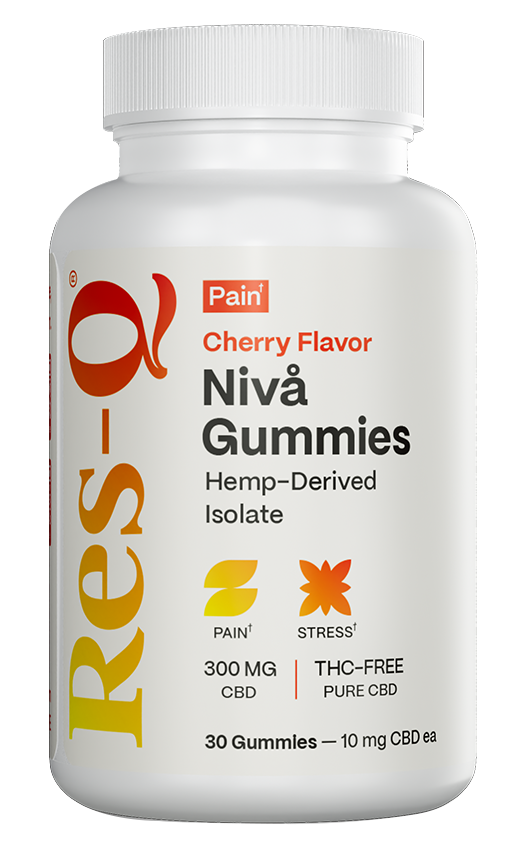
The CBD Your Body ACTUALLY ABSORBS
Most CBD passes right through you. This one doesn't — 440% better absorption, zero THC, made in the U.S.
See Why People Are SwitchingThe Bottom Line on Synthetic CBD
Synthetic CBD is a production method. The molecule itself — cannabidiol — carries the same chemical structure whether it’s grown in a field or assembled in a flask. What determines whether a product is safe, effective, and worth your money is not the origin of the CBD. It’s the purity, the testing, the transparency of the company selling it, and the regulatory framework around it.
The synthetic CBD market is expanding as companies pursue cheaper production methods and more consistent output. That expansion creates opportunities for better pharmaceutical products and more stable supply chains. It also creates openings for low-quality, untested, or deceptively labeled products to reach consumers.
Know your source. Read every COA before you spend a dollar. Ask direct questions about how the CBD in a product was produced. And understand the difference between synthetic CBD — a lab-made version of a real compound — and synthetic cannabinoids, which are unrelated and dangerous drugs.
Read the rest of our articles and more useful info down below for everything you need to stay informed about CBD, hemp-derived products, and the evolving landscape of cannabinoid science and regulation.