

What Are the Real CBD Oil Benefits for Skin?
CBD oil benefits for skin go beyond what most people expect. This isn’t just another trendy ingredient that shows up in a serum and disappears in two years. Cannabidiol — CBD — interacts with your body’s endocannabinoid system, which plays a direct role in how your skin behaves. That includes oil production, inflammation response, and cell turnover. There’s actual science behind it, not just marketing copy on a fancy bottle.
In this article, we’re going to break down what CBD does to the skin at a cellular level, how it performs for specific conditions like acne and eczema, and whether it can genuinely tighten or firm skin over time. We’ll also cover mistakes people make when choosing cbd skincare products and what to look for so you don’t waste money.
Tired of guessing which CBD actually works?
Find What Works for Your Body
A less-than 60 second wellness match for adults exploring plant-based relief
What’s bothering you most right now?
Select the one that impacts your day the most
How long have you been dealing with this?
There's no wrong answer — this helps us tailor your match
How much does it affect your daily routine?
Be honest — this shapes your recommendation
What have you tried so far?
Knowing what hasn't worked helps us find what will
How familiar are you with CBD?
No judgment — everyone starts somewhere
What sounds easiest to add to your routine?
Think about what fits your lifestyle, not what sounds fancy
What matters most to you in a product?
Pick the one that would seal the deal for you
YOUR MATCH IS READY
We'll include your personalized match plus a first-timer's guide based on your answers.
Where should we send your recommendation?
🔒 No spam, ever. Your info is kept 100% secure.
If you'd rather not wait — based on your answers about your symptoms, we'd point you straight to our trusted partner.
Skip to My Match →What Does CBD Do to the Skin? The Basics
Your skin has cannabinoid receptors. CB1 and CB2 receptors exist throughout your epidermis and dermis. When CBD interacts with these receptors, it influences how your skin cells communicate. That’s important because miscommunication between skin cells is what causes a lot of common problems — excess sebum, redness, uneven texture.
A 2014 study published in the Journal of Clinical Investigation found that CBD acted as a sebostatic agent on human sebocytes. In plain terms, it helped reduce the amount of oil those cells produced. That same study showed CBD had anti-inflammatory effects on those cells, which matters if you deal with breakouts that come with redness and swelling.
So what does cbd do to the skin on a practical level? It calms things down. Not in a vague, wellness-blog kind of way. It reduces specific inflammatory markers like TNF-alpha and IL-6. These are measurable proteins your body produces during inflammation. CBD lowers their activity in skin tissue.
The Endocannabinoid System and Your Skin
Most people hear “endocannabinoid system” and think about the brain. But your skin is your largest organ, and it has its own local endocannabinoid system. This system helps regulate skin homeostasis — the balance your skin tries to maintain. When that balance gets disrupted, you see dryness, oiliness, sensitivity, or accelerated aging.
CBD supports that balance by modulating receptor activity rather than forcing a single response. That’s different from something like salicylic acid, which has one main job. CBD works more broadly, which is part of why people report improvements across several skin concerns at once.
CBD Oil for Acne: How It Targets Breakouts
Acne is driven by four main factors: excess sebum, clogged pores, bacteria, and inflammation. CBD addresses at least two of those directly.
The sebostatic effect we mentioned earlier is significant. Overactive sebaceous glands produce too much oil, which mixes with dead skin cells and clogs pores. CBD doesn’t shut down oil production entirely — your skin needs some sebum. It regulates the output. Think of it as turning a faucet from full blast to a normal flow.
Then there’s the inflammation piece. Inflammatory acne — the red, painful kind — responds to CBD because of how it interacts with TRPV4 ion channels and adenosine receptors. A 2019 clinical study in La Clinica Terapeutica had 20 participants apply a CBD-enriched ointment to acne-affected skin for 90 days. Participants saw measurable improvements in hydration, elasticity, and overall appearance, with photographic documentation confirming visible reduction in scarring and active lesions.
What About Cystic Acne?
Cystic acne sits deep under the skin. It’s driven more by hormonal fluctuations and deep bacterial colonization. CBD oil applied topically may not penetrate deep enough to address cystic nodules on its own. However, some dermatologists have noted that using CBD as a complementary treatment alongside prescribed retinoids or antibiotics can reduce surface inflammation and speed recovery time between flares.
If cystic acne is your primary concern, CBD alone is unlikely to resolve it. But it can make the surrounding skin less reactive and irritated, which matters when you’re already using harsh prescription treatments.
Does CBD Oil Tighten Skin?
This is one of the most searched questions about cbd skincare right now, and the answer is nuanced. CBD oil does not tighten skin the way a surgical facelift does. Nothing topical does. But there is evidence that CBD supports processes that contribute to firmer, more resilient skin over time.
Here’s what we know. CBD has antioxidant properties. A 2020 study in Molecules confirmed that CBD acts as an antioxidant that can neutralize free radicals in skin tissue. Free radical damage is one of the primary drivers of collagen breakdown. Less free radical damage means your existing collagen structure stays intact longer.
CBD also appears to support fibroblast activity. Fibroblasts are the cells responsible for producing collagen and elastin. Research published in the International Journal of Molecular Sciences has shown that cannabinoids influence fibroblast behavior, though specific human clinical trials on CBD and collagen synthesis are still limited as of early 2026.
What You Can Realistically Expect
After about six to eight weeks of consistent use, most people report that their skin looks plumper and feels more elastic. That’s not the same as tightened, but the visual effect is similar. Fine lines appear less prominent. Skin texture evens out. Jawline and cheek areas can look slightly more defined, especially in people over 35 whose collagen production has naturally slowed.
A woman named Rachel, who runs a small esthetics practice in Portland, Oregon, started recommending CBD facial oils to clients in 2024. She told us that about 70% of her clients who used a full-spectrum CBD oil nightly for three months reported noticeable improvements in skin firmness around the eyes and mouth. Not dramatic. But consistent enough that she now includes it in most of her anti-aging protocols.
So does CBD oil tighten skin? Not mechanically. But it creates conditions where your skin maintains its structure better. Over months, that shows up as a firmer, healthier appearance.
Looking For Something Pure & Potent?
If your current CBD isn't full-spectrum and U.S.-sourced, you're wasting money
Check Out This Full-Spectrum, American Made CBDCBD Skincare for Eczema and Psoriasis
Eczema and psoriasis are both inflammatory skin conditions with an immune system component. Eczema involves a compromised skin barrier and overactive immune response to irritants. Psoriasis involves rapid skin cell turnover driven by immune dysregulation.
CBD addresses inflammation in both conditions through multiple pathways. It suppresses the release of pro-inflammatory cytokines while promoting anti-inflammatory ones. For eczema sufferers, that means less itching, less redness, and fewer flare-ups. For psoriasis patients, it can reduce the thickness and scaling of plaques.
A 2019 study in the Journal of Dermatological Science demonstrated that cannabinoids inhibited keratinocyte proliferation. Keratinocytes are the cells that overproduce in psoriasis, creating those thick, scaly patches. Slowing their production directly addresses the root mechanism of plaque formation.
Barrier Repair and Hydration
One often overlooked cbd oil benefit for skin is its fatty acid profile. Hemp-derived CBD oil contains omega-3, omega-6, and gamma-linolenic acid (GLA). GLA is particularly valuable for skin barrier repair. Your skin barrier is essentially a wall made of lipids that keeps moisture in and irritants out. When that wall has gaps — which happens in eczema — moisture escapes and allergens get in.
GLA helps fill those gaps. It integrates into the lipid matrix of the stratum corneum, your outermost skin layer. Clinical nutritionists have used GLA supplementation for eczema patients for decades. Having it in a topical oil that also delivers CBD’s anti-inflammatory effects creates a dual-action approach that addresses both symptoms and underlying barrier dysfunction.
Anti-Aging Properties of CBD Oil
Aging skin loses collagen at a rate of about 1% to 1.5% per year after age 25. By 50, most people have lost 25% to 35% of their dermal collagen. That loss shows up as wrinkles, sagging, thinning skin, and loss of volume.
CBD oil benefits for skin in the anti-aging category come down to three mechanisms: antioxidant protection, anti-inflammatory action, and potential collagen support.
Antioxidant Protection
UV exposure, pollution, and metabolic processes generate free radicals in your skin every day. These unstable molecules damage DNA, proteins, and lipids in skin cells. Over time, that damage accumulates and accelerates visible aging.
CBD has been shown to be a more potent antioxidant than both vitamin C and vitamin E in certain experimental conditions, according to research published by the U.S. National Institutes of Health. That doesn’t mean you should replace your vitamin C serum with CBD oil. It means adding CBD to your routine gives your skin an additional layer of antioxidant defense that works through different chemical pathways than traditional antioxidants.
Reducing Chronic Low-Grade Inflammation
Dermatologists use the term “inflammaging” to describe the role of chronic, low-level inflammation in skin aging. Even if you don’t have an inflammatory condition like rosacea or eczema, your skin experiences micro-inflammation from sun exposure, stress hormones, and environmental toxins daily.
CBD’s ability to modulate inflammatory response at the cellular level means it can reduce this background inflammation. Less chronic inflammation means slower degradation of collagen and elastin fibers. Over a period of years, that translates to skin that ages more gracefully.
How to Choose a CBD Skincare Product That Actually Works
The cbd skincare market is flooded with products that contain negligible amounts of CBD. Some contain hemp seed oil — which has benefits but is not the same thing as CBD oil. Others list CBD on the label but contain less than 5 mg per ounce, which is unlikely to produce any measurable skin benefit.
What to Look For on the Label
Check for milligram content. A quality CBD facial oil should contain at least 250 mg to 500 mg of CBD per one-ounce bottle. Anything below 100 mg is likely too diluted to have a meaningful effect on skin.
Look for third-party lab test results, often called a Certificate of Analysis (COA). This document confirms the actual CBD content and checks for contaminants like heavy metals, pesticides, and residual solvents. If a company doesn’t provide a COA, skip the product.
Full-spectrum CBD contains additional cannabinoids like CBG and CBN, plus terpenes and flavonoids. These compounds work together in what researchers call the entourage effect. A 2021 study in Frontiers in Pharmacology found that full-spectrum preparations produced stronger anti-inflammatory responses than CBD isolate alone in skin cell cultures.
Common Mistakes People Make
Buying CBD skincare based on brand aesthetics rather than formulation data. A pretty jar means nothing if the product inside has 10 mg of CBD isolate floating in coconut oil.
Not giving it enough time. CBD skincare is not an overnight fix. Most studies that showed positive results ran for 8 to 12 weeks minimum. Assess results after consistent daily use for at least two months.
Applying it at the wrong step. CBD oil should go on after water-based serums but before heavy creams or occlusives. If you layer it on top of a thick moisturizer, the oil sits on the surface instead of absorbing into the skin where the cannabinoid receptors are.
CBD Oil for Sensitive and Reactive Skin
People with sensitive skin often react to active ingredients like retinol, glycolic acid, and even niacinamide at higher concentrations. CBD tends to be well-tolerated because it works with your body’s existing system rather than forcing a chemical reaction.
A 2020 survey of 531 dermatology patients conducted in Germany found that topical CBD preparations caused adverse reactions in fewer than 3% of users. The most common side effect was mild tingling upon application, which resolved within minutes.
For people with rosacea, CBD’s anti-inflammatory properties can reduce the baseline redness and flushing that characterizes the condition. It won’t cure rosacea — nothing topical does — but it can make flare-ups less frequent and less intense. Pair it with a gentle, fragrance-free moisturizer and mineral sunscreen for best results.
Patch Testing Matters
Even though CBD is generally well-tolerated, the carrier oils and additional ingredients in a product can cause reactions. Always apply a small amount to the inside of your forearm and wait 24 hours before applying it to your face. This applies to any new skincare product, not just CBD.
How CBD Compares to Other Popular Skincare Ingredients
Retinol is still considered the gold standard for anti-aging. It has decades of clinical research behind it. CBD is not a replacement for retinol if your primary concern is deep wrinkles or severe photodamage.
However, CBD outperforms retinol in terms of tolerability. Retinol causes dryness, peeling, and sun sensitivity, especially during the first few months. CBD doesn’t. For someone who can’t tolerate retinol — and that includes many people with eczema, rosacea, or naturally thin skin — CBD offers anti-aging benefits without the adjustment period.
Compared to hyaluronic acid, CBD works differently. Hyaluronic acid is a humectant — it pulls water into the skin. CBD doesn’t hydrate in the same way. It reduces inflammation and supports barrier function, which helps your skin retain the moisture that hyaluronic acid delivers. They work well together.
Niacinamide and CBD share some overlap. Both reduce inflammation, regulate sebum, and support barrier repair. Using them together is generally safe and can produce additive benefits. Apply niacinamide first (it’s water-based), then layer CBD oil on top.
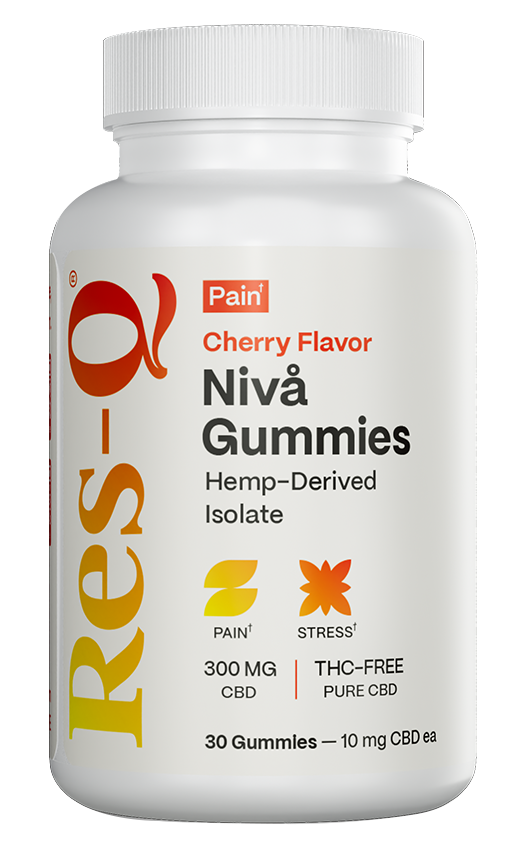
The CBD Your Body ACTUALLY ABSORBS
Most CBD passes right through you. This one doesn't — 440% better absorption, zero THC, made in the U.S.
See Why People Are SwitchingFrequently Asked Questions About CBD Oil and Skin
Can CBD oil cause breakouts?
Pure CBD oil is non-comedogenic, meaning it doesn’t clog pores. However, some CBD products contain carrier oils like coconut oil, which has a comedogenic rating of 4 out of 5. If you’re acne-prone, choose a CBD product with a non-comedogenic carrier like jojoba oil, hemp seed oil, or squalane.
How long does it take to see results from CBD skincare?
Most clinical studies measure results at the 8 to 12 week mark. Some people report improvements in redness and skin texture within two to three weeks, but structural changes like improved firmness take longer. Consistent daily application is necessary.
Is CBD oil safe to use during pregnancy?
There isn’t enough research on topical CBD use during pregnancy to make a definitive recommendation. The American College of Obstetricians and Gynecologists advises against cannabis use during pregnancy. Topical CBD is different from ingested cannabis, but most dermatologists recommend erring on the side of caution and avoiding it until more data is available.
Can I use CBD oil with prescription skincare?
CBD is generally compatible with most prescription topicals, including tretinoin and azelaic acid. However, because CBD can affect the activity of certain cytochrome P450 enzymes, there is a theoretical interaction with some topical medications. Consult your dermatologist if you’re on prescription skincare.
What’s the difference between hemp seed oil and CBD oil?
Hemp seed oil is pressed from the seeds of the hemp plant and contains no CBD. It’s rich in fatty acids and has moisturizing properties, but it won’t deliver the anti-inflammatory or sebum-regulating effects of actual CBD. CBD oil is extracted from the flowers, leaves, and stalks of the hemp plant, where cannabinoids are concentrated. Check labels carefully because many products marketed as “hemp oil” contain no CBD.
Getting Started with CBD Oil for Your Skin
The evidence for cbd oil benefits for skin is building steadily. We’re past the hype phase and into the territory of real clinical data. The anti-inflammatory effects are well-documented. The antioxidant properties hold up under scrutiny. The tolerability profile makes it accessible to people who can’t use harsher actives.
If you’ve been dealing with persistent inflammation, uneven texture, premature fine lines, or conditions like eczema and acne that haven’t responded well to conventional treatments, CBD oil for skin is worth incorporating into your routine. Start with a full-spectrum product that lists at least 250 mg of CBD per ounce, apply it consistently every evening after cleansing and water-based serums, and give it a minimum of eight weeks before evaluating results.
Try cbd oil for skin and track how your complexion responds over the next two to three months — photograph the same areas in the same lighting each week so you have an objective record of any changes taking place.