

Your Body Has a System Most Doctors Never Mention
The ECS system is one of the largest signaling networks in the human body. It influences how you sleep, how you handle stress, how you process pain, and how your immune system responds to threats. Yet most people have never heard of it. That gap in awareness is a problem — because understanding how the ECS system works changes the way you think about health, supplements, and why certain compounds like CBD do what they do.
This article breaks down the endocannabinoid system in plain language. No med school degree required. We’ll cover what it is, what it’s made of, how it can go wrong, and what the current science says about supporting it — including the growing research around CBD, ECS, and anxiety.
Tired of guessing which CBD actually works?
Find What Works for Your Body
A less-than 60 second wellness match for adults exploring plant-based relief
What’s bothering you most right now?
Select the one that impacts your day the most
How long have you been dealing with this?
There's no wrong answer — this helps us tailor your match
How much does it affect your daily routine?
Be honest — this shapes your recommendation
What have you tried so far?
Knowing what hasn't worked helps us find what will
How familiar are you with CBD?
No judgment — everyone starts somewhere
What sounds easiest to add to your routine?
Think about what fits your lifestyle, not what sounds fancy
What matters most to you in a product?
Pick the one that would seal the deal for you
YOUR MATCH IS READY
We'll include your personalized match plus a first-timer's guide based on your answers.
Where should we send your recommendation?
🔒 No spam, ever. Your info is kept 100% secure.
If you'd rather not wait — based on your answers about your symptoms, we'd point you straight to our trusted partner.
Skip to My Match →What the Endocannabinoid System ECS Actually Is
The endocannabinoid system ECS was discovered in the early 1990s by researchers studying how THC interacts with the body. What they found was unexpected. The body already had a built-in system of receptors, chemical signals, and enzymes that looked remarkably similar to compounds found in the cannabis plant.
That system got named after cannabis — hence “endocannabinoid,” meaning cannabinoids made inside the body (“endo” = within). But the ECS system exists in every mammal. Dogs have it. Cats have it. You have it regardless of whether you’ve ever touched a cannabis product in your life.
The ECS doesn’t belong to one organ. It spans your brain, your gut, your skin, your immune cells, your bones, your reproductive organs. Researchers at the National Institutes of Health have described it as a “master regulator” — a system whose primary job is maintaining homeostasis, which is your body’s internal balance.
The Three Parts of the ECS System
There are three core components. Each one plays a different role.
1. Endocannabinoids. These are molecules your body produces on demand. The two most studied are anandamide (AEA) and 2-arachidonoylglycerol (2-AG). Anandamide is sometimes called the “bliss molecule” because it’s involved in mood regulation and reward. 2-AG is found at higher concentrations throughout the brain and body and is involved in immune function, pain modulation, and appetite.
2. Receptors. Endocannabinoids bind to receptors to trigger a response. The two primary receptor types are CB1 and CB2. CB1 receptors are concentrated in the central nervous system — your brain and spinal cord. CB2 receptors are more common in peripheral tissues, especially in immune cells, the spleen, and the gastrointestinal tract. A 2018 review in Frontiers in Molecular Neuroscience identified CB1 as one of the most abundant G-protein-coupled receptors in the mammalian brain.
3. Enzymes. After endocannabinoids do their job, enzymes break them down. FAAH (fatty acid amide hydrolase) breaks down anandamide. MAGL (monoacylglycerol lipase) breaks down 2-AG. This breakdown is fast. Your body doesn’t store endocannabinoids the way it stores, say, vitamin D. They’re synthesized, used, and cleared — sometimes within seconds.
What Does the ECS System Actually Regulate
The ECS system touches nearly every major function in your body. Here’s a partial list, backed by published research:
Pain perception. CB1 receptors in the spinal cord and brain modulate how pain signals are processed. A 2020 study in The Journal of Pain Research found that people with chronic pain conditions often showed altered endocannabinoid levels compared to healthy controls.
Sleep-wake cycles. Anandamide levels rise naturally during the night. Research from the University of Chicago showed that sleep-deprived subjects had measurably disrupted endocannabinoid rhythms, with 2-AG levels peaking later and higher than normal — which correlated with increased hunger the following day.
Mood and emotional processing. The ECS modulates serotonin signaling indirectly. CB1 receptor activity in the amygdala — the brain’s fear-processing center — influences how you respond to stress and threat. This is directly relevant to the CBD ECS anxiety conversation, which we’ll get to shortly.
Immune response. CB2 receptors on immune cells help calibrate inflammation. Too little CB2 activation can lead to unchecked inflammation. Too much can suppress immune function. The ECS walks a tightrope here.
Appetite and metabolism. This is why THC gives people “the munchies.” THC directly activates CB1 receptors in the hypothalamus, the brain region that controls hunger signaling. The ECS system, when functioning well, regulates appetite without the extremes.
Gut function. The gastrointestinal tract contains a dense population of both CB1 and CB2 receptors. A 2016 paper in Neurogastroenterology & Motility linked ECS dysfunction to irritable bowel syndrome (IBS) and inflammatory bowel disease (IBD).
Clinical Endocannabinoid Deficiency — When the ECS Breaks Down
In 2001, neurologist Dr. Ethan Russo published a theory called Clinical Endocannabinoid Deficiency (CED). The idea was straightforward. If your body doesn’t produce enough endocannabinoids — or breaks them down too quickly — the ECS can’t maintain balance. That deficiency might show up as chronic pain, poor sleep, anxiety, digestive problems, or a combination.
At the time, it was considered speculative. Over two decades later, the evidence has built up. A 2016 review by Russo, published in Cannabis and Cannabinoid Research, found substantial support for CED as a factor in migraines, fibromyalgia, and IBS — three conditions that frequently overlap in the same patients and resist standard treatments.
A 2023 study from the University of Nottingham measured circulating endocannabinoid levels in patients with fibromyalgia. Results showed significantly lower anandamide levels compared to matched healthy controls. The correlation was strong enough that the researchers suggested anandamide levels could potentially serve as a biomarker for the condition.
This doesn’t mean low endocannabinoids cause these conditions outright. Biology rarely works that neatly. But a depleted or dysregulated ECS system appears to be a contributing factor — and one that most treatment plans completely ignore.
Looking For Something Pure & Potent?
If your current CBD isn't full-spectrum and U.S.-sourced, you're wasting money
Check Out This Full-Spectrum, American Made CBDHow CBD Interacts With the ECS System
CBD, or cannabidiol, doesn’t interact with the ECS the way most people assume. Unlike THC, CBD does not bind strongly to CB1 or CB2 receptors. It works through several indirect mechanisms that researchers are still mapping out.
Here’s what the current science tells us:
FAAH inhibition. CBD inhibits the FAAH enzyme — the one that breaks down anandamide. By slowing anandamide’s degradation, CBD effectively raises the amount of anandamide circulating in your system. A 2012 study in Translational Psychiatry demonstrated this mechanism in human subjects and linked elevated anandamide levels to reduced psychotic symptoms in schizophrenia patients receiving CBD.
Serotonin receptor modulation. CBD activates the 5-HT1A receptor, which is a serotonin receptor involved in anxiety and mood regulation. This is a separate pathway from the ECS, but it likely works alongside it. The dual-action profile — boosting anandamide while activating serotonin receptors — may explain why CBD shows promise in anxiety research specifically.
Allosteric modulation of CB1. CBD may act as a negative allosteric modulator of CB1 receptors. In plain language, it changes the shape of the receptor slightly so that THC and other compounds bind differently. This is one reason CBD can reduce some of THC’s more intense psychoactive effects when taken together.
TRPV1 activation. CBD activates TRPV1 receptors, also called vanilloid receptors, which are involved in pain perception and body temperature regulation. This pathway is separate from the ECS but overlaps functionally — especially when it comes to pain and inflammation.
CBD ECS Anxiety — What the Research Shows
The connection between CBD ECS anxiety has become one of the most studied areas in cannabinoid science. Here’s what exists in the published literature as of early 2026:
A 2019 trial published in The Permanente Journal followed 72 adults with anxiety and poor sleep. Within the first month, anxiety scores decreased in 79.2% of participants taking 25–175 mg of CBD daily. Sleep scores improved in 66.7%. The researchers noted these improvements were sustained at the two-month follow-up with no reported adverse effects.
A 2011 study in Neuropsychopharmacology tested CBD’s effects on social anxiety disorder using a simulated public speaking test. Participants who received 600 mg of CBD before the test showed significantly reduced anxiety, cognitive impairment, and discomfort compared to the placebo group. Their physiological stress responses — heart rate, blood pressure — were also lower.
A 2015 review in Neurotherapeutics analyzed preclinical and clinical evidence and concluded that CBD has “considerable potential” as a treatment for generalized anxiety disorder, panic disorder, social anxiety disorder, OCD, and PTSD. The authors pointed specifically to CBD’s action on both the ECS and the serotonin system as the likely mechanisms.
More recently, a 2024 randomized controlled trial from the University of São Paulo tested 300 mg of CBD daily in patients with generalized anxiety disorder over eight weeks. The CBD group showed a statistically significant reduction in anxiety symptoms versus placebo, measured on the Hamilton Anxiety Rating Scale. Side effects were minimal — mostly mild fatigue and dry mouth.
None of this means CBD is a guaranteed treatment for anxiety. Clinical trials are still relatively small in scale. Dosing protocols vary widely between studies. And individual biology — including genetic variations in CB1 receptor density and FAAH enzyme activity — affects how each person responds. But the trajectory of the evidence is consistent and moving in one direction.
Factors That Disrupt the ECS System
Knowing what damages ECS function is just as useful as knowing what supports it. Several lifestyle and environmental factors have been shown to impair endocannabinoid signaling:
Chronic stress. Sustained cortisol exposure downregulates CB1 receptors in the prefrontal cortex and hippocampus. A 2014 study in Biological Psychiatry found that chronic stress reduced anandamide levels in the amygdala by up to 50% in animal models — and that restoring those levels reversed stress-related behaviors.
Poor diet. The ECS is built from fatty acids. Omega-3 and omega-6 ratios matter here. A diet high in processed omega-6 fats and low in omega-3s disrupts endocannabinoid synthesis. A 2011 paper in Nutritional Neuroscience demonstrated that omega-3 deficiency led to impaired CB1 receptor function in mice, accompanied by anxiety-like behavior and altered emotional processing.
Sleep deprivation. Endocannabinoid levels follow circadian rhythms. Disrupting sleep — even by a few hours over several nights — throws off the timing and amplitude of 2-AG and anandamide production. This creates a feedback loop: poor sleep weakens the ECS, and a weakened ECS makes sleep worse.
Alcohol. Heavy alcohol use downregulates CB1 receptors over time. A 2006 study found reduced CB1 receptor density in the brains of people with alcohol use disorder. Moderate drinking appears to have less impact, but chronic heavy use clearly degrades ECS function.
Sedentary lifestyle. Exercise increases circulating endocannabinoid levels. The so-called “runner’s high” was once attributed entirely to endorphins. A 2015 study in Proceedings of the National Academy of Sciences proved that endocannabinoids — specifically anandamide — are a major driver of that post-exercise euphoria. People who don’t move regularly miss out on this natural ECS stimulation.
How to Support Your ECS System Naturally
Based on the mechanisms described above, several evidence-backed strategies can support a healthy endocannabinoid system ECS:
Move Your Body Regularly
Moderate aerobic exercise — 30 to 45 minutes — reliably raises anandamide and 2-AG levels. You don’t need intense workouts. Brisk walking, cycling, swimming. A 2021 study in Medicine & Science in Sports & Exercise found that even a single 30-minute session of moderate cycling elevated plasma anandamide concentrations by 28% in healthy adults.
Eat Enough Omega-3 Fatty Acids
Your body uses arachidonic acid (an omega-6 fat) to build 2-AG and anandamide. But the ratio of omega-6 to omega-3 determines how efficiently the ECS operates. The ideal dietary ratio is somewhere between 1:1 and 4:1. Most Western diets sit at 15:1 or higher. Cold-water fish, flaxseed, walnuts, and hemp seeds all help correct this imbalance.
Prioritize Sleep
Seven to nine hours. Consistent timing matters more than total duration. Going to bed and waking up at roughly the same time each day keeps endocannabinoid rhythms synchronized. Shift workers and people with irregular schedules show measurably disrupted endocannabinoid profiles in multiple studies.
Manage Stress Before It Becomes Chronic
Acute stress is normal. Chronic, unresolved stress depletes anandamide and damages CB1 receptor density over time. Meditation, therapy, regular social connection, time outdoors — the standard recommendations exist for a reason. A 2013 study found that experienced meditators had higher baseline anandamide levels than non-meditators. The practice appears to directly support endocannabinoid tone.
Consider CBD Supplementation
For people whose ECS needs additional support — especially those dealing with persistent anxiety, chronic pain, or sleep difficulties — CBD supplementation targets the system directly through FAAH inhibition and serotonin receptor modulation. Quality matters enormously here. Third-party tested, full-spectrum or broad-spectrum products with verified cannabinoid content are the baseline standard. Isolates have their uses, but the “entourage effect” — where multiple cannabis compounds work synergistically — has support in the literature, including a 2018 review in Frontiers in Plant Science.
Common Questions About the ECS System
Does Everyone Have an ECS?
Yes. Every mammal has an endocannabinoid system. It evolved over 600 million years ago. Primitive versions exist even in sea squirts and nematodes. In humans, the ECS is fully active from before birth — it plays a role in embryonic implantation and fetal brain development.
Can You Have Too Much Endocannabinoid Activity?
Theoretically, yes. Overactive CB1 signaling in the brain has been linked to obesity and metabolic syndrome. The failed diet drug rimonabant, which blocked CB1 receptors, caused weight loss but also severe depression and suicidal ideation — leading to its withdrawal from the European market in 2008. That failure demonstrated how tightly the ECS is woven into mood regulation. You can’t block one function without destabilizing others.
Is CBD the Only Way to Support the ECS?
Not at all. Exercise, diet, sleep, and stress management all influence ECS function directly. CBD is one tool. Other phytocannabinoids like CBG, CBN, and CBC also interact with the ECS through different mechanisms. Even non-cannabis compounds — like beta-caryophyllene, found in black pepper and cloves — bind to CB2 receptors. Cacao contains small amounts of anandamide and FAAH inhibitors, which may partly explain why chocolate affects mood.
How Long Does It Take for CBD to Affect the ECS?
Acute effects — like reduced situational anxiety — can appear within 30 to 90 minutes of sublingual dosing. Broader ECS support through regular CBD use typically takes two to four weeks of consistent daily dosing. A 2020 pharmacokinetic study in CNS Drugs found that CBD reaches steady-state plasma concentrations after approximately five to seven days of daily use, with therapeutic effects continuing to build beyond that point.
Does the ECS Change With Age?
Yes. CB1 receptor density decreases with age, particularly in the hippocampus and cortex. Anandamide and 2-AG levels also decline. This may contribute to age-related increases in chronic pain, sleep disturbances, and cognitive decline. A 2017 study in Nature Medicine found that low-dose THC reversed age-related cognitive decline in elderly mice by restoring CB1 signaling — results that have spurred ongoing human research.
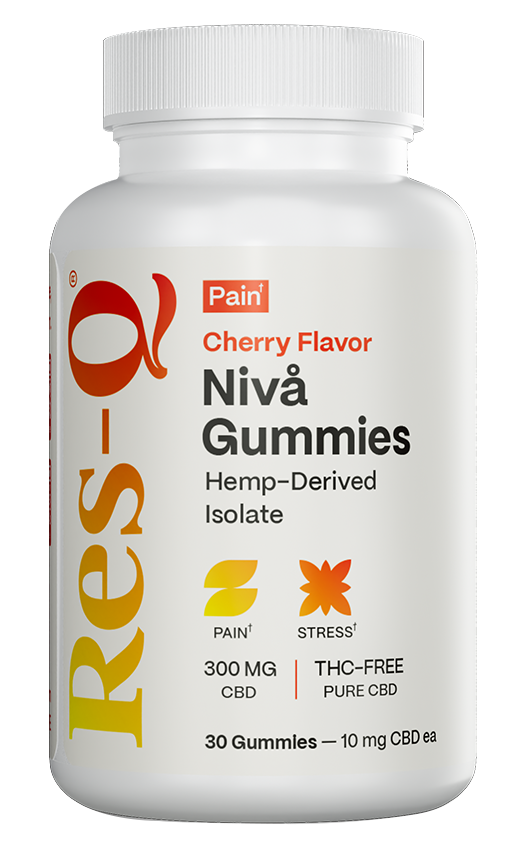
The CBD Your Body ACTUALLY ABSORBS
Most CBD passes right through you. This one doesn't — 440% better absorption, zero THC, made in the U.S.
See Why People Are SwitchingThe ECS System Is Not Optional Biology
The ECS system runs in the background of nearly every process that keeps you functional. Pain, mood, sleep, digestion, immune response, reproductive health, bone density, skin integrity — all of it passes through endocannabinoid signaling at some level. Ignoring this system means ignoring one of the most fundamental regulatory networks in your body.
The science around the endocannabinoid system ECS is still young compared to what we know about, say, the cardiovascular system. But the trajectory is clear. Research funding has increased steadily since 2018. Clinical trials involving CBD, other cannabinoids, and ECS-targeted pharmaceuticals are multiplying. The next decade will likely reshape how mainstream medicine approaches chronic pain, anxiety disorders, autoimmune conditions, and neurodegeneration — all through the lens of the ECS.
What you do with this information today is up to you. Move. Eat well. Sleep consistently. Manage stress intentionally. And if you decide to explore CBD as part of your ECS support strategy, do it with quality products and realistic expectations grounded in what the research actually says.
Read the rest of our articles and more useful info down below!