

How Does CBD Work in the Brain
Understanding how does cbd work in the brain starts with one system most people have never heard of — the endocannabinoid system, or ECS. Your brain already produces its own cannabinoids. CBD doesn’t get you high. It interacts with receptors and enzymes that regulate mood, pain, memory, and inflammation. That’s the short version. The long version involves specific receptor sites, neurotransmitter modulation, and a growing body of peer-reviewed research that’s still catching up to the hype.
This article breaks down the actual mechanisms. We’ll cover what CBD does at the neuronal level, whether cbd negative effects on the brain are real, what the research says about cbd brain fog, and whether there’s any truth to claims that cbd can grow brain cells. Just the science, explained plainly.
Tired of guessing which CBD actually works?
Find What Works for Your Body
A less-than 60 second wellness match for adults exploring plant-based relief
What’s bothering you most right now?
Select the one that impacts your day the most
How long have you been dealing with this?
There's no wrong answer — this helps us tailor your match
How much does it affect your daily routine?
Be honest — this shapes your recommendation
What have you tried so far?
Knowing what hasn't worked helps us find what will
How familiar are you with CBD?
No judgment — everyone starts somewhere
What sounds easiest to add to your routine?
Think about what fits your lifestyle, not what sounds fancy
What matters most to you in a product?
Pick the one that would seal the deal for you
YOUR MATCH IS READY
We'll include your personalized match plus a first-timer's guide based on your answers.
Where should we send your recommendation?
🔒 No spam, ever. Your info is kept 100% secure.
If you'd rather not wait — based on your answers about your symptoms, we'd point you straight to our trusted partner.
Skip to My Match →The Endocannabinoid System: Where CBD Actually Works
Your brain has two main cannabinoid receptors — CB1 and CB2. CB1 receptors sit mostly in the central nervous system. They’re concentrated in the hippocampus, the prefrontal cortex, the basal ganglia, and the amygdala. CB2 receptors show up more in immune cells, though some exist in the brain too.
THC binds directly to CB1 receptors. That’s what creates the high. CBD doesn’t do that. Instead, CBD acts as a negative allosteric modulator of CB1. That means it changes the shape of the receptor slightly so that THC and other compounds can’t bind to it as effectively. It’s indirect. Subtle. But measurably real.
CBD also inhibits an enzyme called FAAH (fatty acid amide hydrolase). FAAH breaks down anandamide — one of the brain’s naturally produced cannabinoids. Anandamide is sometimes called the “bliss molecule.” When CBD slows down FAAH, anandamide levels rise. More anandamide floating around means more activity at CB1 receptors, but through your body’s own chemistry rather than an external compound forcing its way in.
A 2015 study published in Neurotherapeutics mapped out over 65 molecular targets for CBD. It doesn’t just touch the endocannabinoid system. It influences serotonin receptors (specifically 5-HT1A), TRPV1 vanilloid receptors involved in pain signaling, GPR55 receptors linked to bone density and blood pressure, and PPAR-gamma receptors tied to gene expression and metabolic function.
That wide receptor profile is why researchers keep finding potential applications in such different conditions — anxiety, epilepsy, chronic pain, neuroinflammation. It also explains why side effects can vary so much from person to person.
How CBD Affects Neurotransmitters
Serotonin
CBD activates the 5-HT1A serotonin receptor. This is the same receptor targeted by buspirone, a prescription anti-anxiety medication. A 2019 study in the Journal of Chemical Neuroanatomy confirmed that CBD’s anxiolytic effects in animal models are blocked when 5-HT1A receptors are chemically disabled. The takeaway: CBD’s calming effects appear to run, at least partly, through serotonin pathways.
This doesn’t mean CBD is an antidepressant. It means it touches the same system. The dose matters. The timing matters. And human trials are still limited compared to animal models.
Dopamine
CBD’s relationship with dopamine is less direct. It doesn’t flood the brain with dopamine the way THC or stimulants do. Some preclinical research suggests CBD may modulate dopamine indirectly by influencing glutamate and GABA signaling in the mesolimbic pathway — the brain’s reward circuit. A 2016 paper in Psychopharmacology found that CBD reduced dopamine-related behavioral responses in rats sensitized to amphetamine. Researchers flagged this as potentially relevant for addiction treatment.
GABA and Glutamate
GABA is the brain’s main inhibitory neurotransmitter. It slows things down. Glutamate is excitatory — it speeds things up. A healthy brain keeps these balanced. CBD appears to enhance GABAergic signaling in certain contexts, which may partly explain its anti-seizure properties. Epidiolex, the FDA-approved CBD medication for severe epilepsy, was developed based on this mechanism. The FDA approved it in 2018 for Dravet syndrome and Lennox-Gastaut syndrome, and it remains the clearest clinical validation of how does cbd work in the brain at the pharmaceutical level.
Does CBD Grow Brain Cells
This claim gets thrown around a lot in wellness spaces. The question of whether does cbd grow brain cells has a nuanced answer — not a simple yes or no.
The process in question is called neurogenesis. Adult neurogenesis happens primarily in the hippocampus, specifically in the subgranular zone of the dentate gyrus. New neurons form there throughout life, though the rate slows with age, chronic stress, and certain diseases.
A 2015 study in the International Journal of Neuropsychopharmacology found that repeated CBD administration promoted hippocampal neurogenesis in mice. The researchers used a chronic unpredictable stress model — essentially, they stressed the mice out, then gave some of them CBD. The CBD group showed increased proliferation of progenitor cells in the hippocampus compared to the untreated stressed group.
A 2018 study in Frontiers in Pharmacology replicated similar findings and proposed that CBD’s neurogenic effects were mediated through CB1 receptor activity and BDNF (brain-derived neurotrophic factor) upregulation. BDNF is a protein that supports neuron survival and growth. Exercise also raises BDNF. So does adequate sleep.
Here’s the honest qualifier. These are animal studies. Mice are not humans. Hippocampal neurogenesis in adult humans is itself a debated topic — a 2018 paper in Nature questioned whether it happens at all past childhood, though a 2019 paper in Nature Medicine pushed back with evidence that it does. So the foundation for the claim is real but preliminary. CBD may support conditions favorable to neurogenesis. Saying it definitively “grows brain cells” in humans right now outpaces the data.
Looking For Something Pure & Potent?
If your current CBD isn't full-spectrum and U.S.-sourced, you're wasting money
Check Out This Full-Spectrum, American Made CBDCBD Negative Effects on the Brain
Any compound that interacts with 65+ molecular targets is going to have side effects. Ignoring cbd negative effects on the brain doesn’t help anyone make informed decisions.
Liver Enzyme Interference
CBD inhibits cytochrome P450 enzymes in the liver — specifically CYP3A4 and CYP2C19. These enzymes metabolize a large percentage of pharmaceutical drugs. If you’re taking blood thinners, certain antidepressants, anti-seizure medications, or immunosuppressants, CBD can alter the effective concentration of those drugs in your bloodstream. The clinical trials for Epidiolex documented elevated liver enzymes in some patients, particularly those also taking valproate. This is not trivial. It’s a legitimate pharmacological interaction that affects brain chemistry indirectly by changing how other neuroactive drugs behave.
Sedation and Cognitive Slowing
High doses of CBD — generally above 300 mg — can cause drowsiness, reduced alertness, and slowed reaction time. A 2017 review in Cannabis and Cannabinoid Research documented the most common side effects across clinical trials: tiredness, diarrhea, and appetite changes. Tiredness showed up consistently. For someone operating heavy machinery or doing detail-oriented cognitive work, that’s a meaningful negative effect on brain function.
Impact on Developing Brains
Adolescent brains are still forming connections, particularly in the prefrontal cortex. Research on CBD’s effects in adolescent populations is sparse and mostly preclinical. A 2020 study in the Journal of Psychopharmacology found that adolescent rats exposed to CBD showed altered emotional memory processing in adulthood. The authors cautioned against assuming CBD is harmless for developing brains simply because it’s non-psychoactive.
Contamination Risks
Many CBD products on the market contain unlisted compounds. A 2020 analysis by the FDA found that nearly half of tested CBD products contained different CBD concentrations than what was listed on the label. Some contained significant levels of THC. Some contained heavy metals or pesticide residues. When people report cbd negative effects on the brain after using commercial products, the actual cause may not be CBD itself — it may be something else in the bottle entirely.
CBD Brain Fog: Real or Imagined
Type “cbd brain fog” into any forum and you’ll find thousands of anecdotal reports. Some users describe feeling mentally dull, spacey, or disconnected after taking CBD regularly. Others say CBD cleared their brain fog. Both groups are probably telling the truth about their own experience. The reasons differ.
CBD’s activation of 5-HT1A receptors can produce a calming effect that, at higher doses, tips into cognitive blunting. Your anxiety drops, but so does your mental sharpness. For someone whose baseline cognition is impaired by anxiety — racing thoughts, inability to focus, hypervigilance — CBD can feel like fog lifting. For someone whose baseline is already calm, the same mechanism can feel like fog settling in.
Dose is the variable almost everyone ignores. A 2022 survey published in the Journal of Cannabis Research found that respondents using CBD for anxiety reported optimal results between 25 mg and 75 mg daily. Users who exceeded 150 mg daily reported more cognitive side effects, including difficulty concentrating and short-term memory hiccups.
Product quality matters here too. Full-spectrum CBD products contain trace amounts of THC (up to 0.3% legally). For some individuals, especially those sensitive to THC, even that small amount could contribute to foggy thinking. Broad-spectrum or isolate products eliminate this variable.
I spoke with a friend who started using CBD oil for insomnia in late 2025. She took 50 mg of a full-spectrum tincture nightly. Slept better within a week. But after three weeks, she noticed her mornings felt sluggish, her word recall slower than usual. She switched to a CBD isolate product at 30 mg and the sleep benefits held while the cognitive dullness faded. One person’s experience doesn’t equal evidence. But it matches what the dose-response literature suggests.
CBD and Neuroinflammation
Chronic neuroinflammation plays a role in Alzheimer’s disease, Parkinson’s disease, multiple sclerosis, traumatic brain injury recovery, and depression. Microglia — the brain’s resident immune cells — shift into a pro-inflammatory state when activated chronically. They release cytokines like TNF-alpha and IL-6 that damage surrounding neurons over time.
CBD has demonstrated anti-inflammatory properties in brain tissue in multiple preclinical models. A 2021 review in Frontiers in Pharmacology summarized findings across 26 studies showing that CBD reduced microglial activation, lowered TNF-alpha levels, and promoted a shift from pro-inflammatory M1 microglia to anti-inflammatory M2 microglia. The receptor pathways involved include PPAR-gamma, adenosine A2A receptors, and TRPV1 channels.
Traumatic brain injury research is particularly interesting. A 2023 preclinical study in Neurobiology of Disease found that CBD administered within 4 hours of a controlled cortical impact injury in rats reduced lesion volume by 22% and improved performance on spatial memory tasks 14 days post-injury. The treated rats also showed lower levels of reactive astrogliosis — a marker of brain tissue scarring.
These results are encouraging but not yet clinical reality for humans. No large-scale human trials have confirmed CBD as a neuroinflammation treatment. The preclinical signal is strong enough that several research groups have Phase 1 and Phase 2 trials ongoing as of early 2026.
CBD and Anxiety: What Brain Imaging Shows
Functional MRI studies have given some of the most concrete evidence for how does cbd work in the brain during anxiety responses. A landmark 2011 study published in Neuropsychopharmacology gave participants with social anxiety disorder either 400 mg of CBD or placebo before a simulated public speaking test. The CBD group showed significantly reduced blood flow to the amygdala and the left parahippocampal gyrus — brain regions involved in fear processing and emotional memory retrieval.
They also showed increased blood flow to the posterior cingulate cortex, a region associated with self-referential processing. The researchers interpreted this as CBD reducing threat perception while allowing the brain to re-engage with internal states in a calmer way.
A 2019 study in the Journal of Psychopharmacology replicated these findings with 300 mg CBD in a non-clinical population. The anxiety reduction was measurable on both subjective rating scales and physiological markers like skin conductance and heart rate variability.
These are small studies. Sample sizes of 12 to 57 participants. But the consistency of neuroimaging results across different research groups and different populations adds weight. CBD appears to dampen amygdala reactivity in a reliable, dose-dependent way.
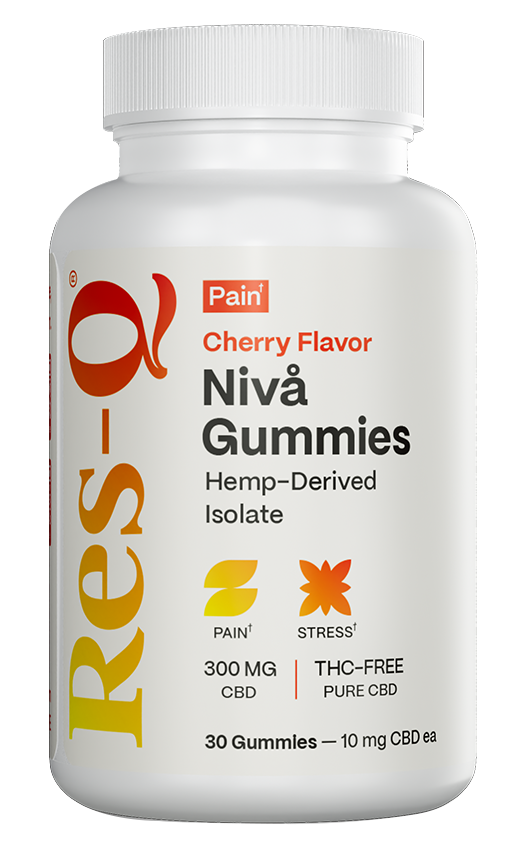
The CBD Your Body ACTUALLY ABSORBS
Most CBD passes right through you. This one doesn't — 440% better absorption, zero THC, made in the U.S.
See Why People Are SwitchingCBD and Sleep: The Brain Connection
Sleep and brain function are inseparable. Poor sleep drives neuroinflammation, impairs hippocampal function, reduces BDNF, and worsens mood regulation. If CBD improves sleep, it improves brain health indirectly — even if the direct neurological mechanisms are still being mapped.
A 2019 case series published in The Permanente Journal followed 72 adults given 25 mg CBD daily. Within the first month, 66.7% reported improved sleep scores. Anxiety scores also dropped for 79.2% of participants. Sleep improvements remained relatively stable over three months, though they fluctuated — not everyone responded consistently.
CBD’s effect on sleep likely involves adenosine signaling. Adenosine builds up in the brain during wakefulness and promotes sleep pressure. CBD interacts with adenosine receptors and may enhance adenosine signaling at the A1 and A2A subtypes. This is preliminary data, mostly from in-vitro studies, but the hypothesized mechanism aligns with user reports of drowsiness at higher doses.
Lower doses of CBD — around 10 to 25 mg — sometimes promote wakefulness. Higher doses promote sedation. This biphasic response is common across many pharmacologically active compounds and explains why two people can take CBD and have opposite experiences with alertness.
How to Think About CBD and Your Brain
CBD is not a miracle compound. It’s also not snake oil. It’s a molecule that interacts with real biological systems in measurable ways. The endocannabinoid system is involved in nearly every brain function you can name — mood, memory, pain, appetite, sleep, immune response, neuronal growth.
CBD modulates that system indirectly. It raises anandamide levels. It touches serotonin receptors. It reduces neuroinflammation in preclinical models. It dampens amygdala reactivity on brain scans. The evidence for epilepsy is strong enough for an FDA-approved drug. The evidence for anxiety is promising but needs larger trials. The evidence for neurogenesis is real in animal models but unconfirmed in humans.
CBD negative effects on the brain are real too. Drug interactions, cognitive sedation at high doses, unknown risks for adolescent brains, and product quality concerns all deserve attention. CBD brain fog appears to be dose-dependent and affected by product type.
If you’re considering CBD for brain health, start with a low dose — 10 to 25 mg — and increase slowly. Use third-party tested products with verified certificates of analysis. Tell your doctor if you’re taking other medications. Track your response in a journal: mood, sleep quality, focus, any side effects. Give it at least two weeks before judging.
Research into whether cbd can reverse brain damage is in its early stages. Animal models of traumatic brain injury, stroke, and neurodegeneration show that CBD reduces inflammation, supports cellular repair pathways, and may protect neurons from further damage. Look into the latest clinical trials on cbd and brain injury recovery to follow the science as it develops. If this area matters to you, stay close to the primary literature — PubMed, ClinicalTrials.gov — rather than relying on marketing claims.
The brain is the most complex organ you have. CBD interacts with it in ways we are still learning to measure. What we know is enough to take seriously. What we don’t know is enough to stay cautious.