

How Long Is CBD Detectable in Urine — And Why the Answer Isn’t Simple
If you’ve ever searched how long is cbd detectable in urine, you probably have a drug test coming up. Or you already took one and you’re stressing about the result. Either way, you need real numbers, not vague reassurances. Here’s the short version: pure CBD itself can linger in urine for roughly 2 to 5 days after a single use. For daily users, that window extends to anywhere from 10 to 15 days or more. But the bigger issue — the one most people miss — is that standard urine drug tests don’t even look for CBD. They look for THC. And depending on what CBD product you used, there may be enough THC hiding in it to trigger a positive result.
That’s where the confusion starts. And that’s exactly what this article is going to clear up.
Tired of guessing which CBD actually works?
Find What Works for Your Body
A less-than 60 second wellness match for adults exploring plant-based relief
What’s bothering you most right now?
Select the one that impacts your day the most
How long have you been dealing with this?
There's no wrong answer — this helps us tailor your match
How much does it affect your daily routine?
Be honest — this shapes your recommendation
What have you tried so far?
Knowing what hasn't worked helps us find what will
How familiar are you with CBD?
No judgment — everyone starts somewhere
What sounds easiest to add to your routine?
Think about what fits your lifestyle, not what sounds fancy
What matters most to you in a product?
Pick the one that would seal the deal for you
YOUR MATCH IS READY
We'll include your personalized match plus a first-timer's guide based on your answers.
Where should we send your recommendation?
🔒 No spam, ever. Your info is kept 100% secure.
If you'd rather not wait — based on your answers about your symptoms, we'd point you straight to our trusted partner.
Skip to My Match →What Actually Happens When CBD Enters Your Body
When you swallow a CBD capsule, drop oil under your tongue, or inhale CBD vapor, the compound enters your bloodstream and travels to the liver. The liver processes CBD using a group of enzymes called cytochrome P450 — specifically CYP3A4 and CYP2C19. These enzymes break CBD down into metabolites, which are then filtered through your kidneys and eventually leave your body through urine.
The half-life of CBD taken orally ranges between 18 and 32 hours, according to pharmacokinetic data published in Frontiers in Pharmacology. That means if you took 50 mg of CBD, roughly 25 mg worth of active compound would still be circulating after about a day. After two half-lives — roughly 36 to 64 hours — you’d still have about 12.5 mg worth floating around.
This is important because the compound doesn’t just vanish after you feel the effects fade. Your body is still processing it. And depending on how much you took, how often you take it, and your individual metabolism, those metabolites can accumulate in fatty tissue and release slowly over time.
CBD is lipophilic. It binds to fat cells. So if you carry more body fat, your body stores more CBD metabolites for longer periods. That’s not a moral judgment. It’s just chemistry.
How Long Will CBD Stay in Your Urine — Realistic Timelines
This is the part most people skip to. Fair enough. Here’s what research and clinical data tell us about how long will cbd stay in your urine based on usage patterns:
Single or Occasional Use (Once or Twice a Week)
CBD metabolites are generally undetectable in urine within 3 to 5 days. A 2018 study in the journal Therapeutic Drug Monitoring tested subjects who took a single 600 mg oral dose of CBD and found no detectable levels of CBD metabolites in urine after approximately 72 hours for most participants.
Moderate Use (Several Times Per Week)
If you’re using CBD three to five times a week, metabolites can persist for roughly 5 to 10 days after your last dose. Your body hasn’t had time to fully flush what it stored from each previous session before you add more. The accumulation effect is real.
Daily or Heavy Use (Every Day, High Doses)
Daily users taking 100 mg or more can expect CBD metabolites to remain detectable for 10 to 15 days — and in some heavy, long-term users, up to 25 days or longer. A case documented in the Journal of Analytical Toxicology in 2020 observed detectable CBD-related compounds in urine samples beyond the three-week mark for a patient who had been using 150 mg daily for several months.
These numbers are not absolutes. They’re ranges based on available clinical data. Your individual result will depend on factors we’ll cover in a moment.
The Real Problem: Your CBD Urine Test Isn’t Looking for CBD
Here’s where people get tripped up. A standard workplace drug screening — the kind mandated by the Substance Abuse and Mental Health Services Administration (SAMHSA) — uses a 5-panel immunoassay. That test screens for THC-COOH, which is the primary metabolite of delta-9-tetrahydrocannabinol. Not cannabidiol. Not CBD.
The federal cutoff is 50 nanograms per milliliter (ng/mL) on the initial screen. If you hit that threshold, a confirmation test using gas chromatography-mass spectrometry (GC-MS) is run at a lower cutoff of 15 ng/mL.
So technically, if your CBD product contained zero THC, a cbd urine test should come back clean. But here’s where product labeling becomes a liability.
Full-Spectrum CBD Products
Full-spectrum CBD oil is legally allowed to contain up to 0.3% THC by dry weight under the 2018 Farm Bill. That sounds negligible. It isn’t always. A person taking 1,000 mg of full-spectrum CBD oil daily could be ingesting up to 3 mg of THC per day. Over several days or weeks, that THC accumulates. Its metabolite — THC-COOH — builds up in fat tissue and releases slowly, just like CBD does.
A 2019 study published in the Journal of Analytical Toxicology tested participants who consumed hemp-derived CBD products with less than 0.3% THC content. Out of the group using full-spectrum products daily, roughly 15% produced urine samples that exceeded the 50 ng/mL cutoff within two weeks.
That’s not a small number.
Broad-Spectrum CBD Products
Broad-spectrum products are supposed to have THC completely removed while retaining other cannabinoids and terpenes. In practice, third-party lab testing has repeatedly found trace amounts of THC in products marketed as broad-spectrum. The amounts are typically under 0.1%, but they’re not always zero. If you’re using large doses daily, even trace amounts can accumulate.
CBD Isolate
CBD isolate is the purest form — 99%+ CBD with no other cannabinoids. This carries the lowest risk for triggering a positive on a cbd urine test. But manufacturing impurities exist. A 2020 analysis by the FDA found that roughly 20% of CBD products tested did not match what was stated on the label, with some isolates containing detectable levels of THC.
Bottom line: if you’re facing a drug test, knowing what type of CBD you used matters as much as how much you used or when you stopped.
Looking For Something Pure & Potent?
If your current CBD isn't full-spectrum and U.S.-sourced, you're wasting money
Check Out This Full-Spectrum, American Made CBDFactors That Change How Long CBD (and THC) Stay Detectable
Two people can take the exact same CBD product at the exact same dose, and one will test clean in four days while the other still shows metabolites at day twelve. That variability comes down to biology and behavior.
Body Fat Percentage
CBD and THC metabolites are stored in adipose tissue — body fat. Someone with a body fat percentage of 30% will retain metabolites longer than someone at 15%. During exercise or periods of calorie restriction, fat cells release stored metabolites back into the bloodstream, which can temporarily spike urine concentrations. This is well-documented in THC research and applies to CBD metabolites as well.
Metabolic Rate
Faster metabolism means faster clearance. People with higher basal metabolic rates process and excrete cannabinoid metabolites more quickly. Age, thyroid function, physical activity level, and genetics all play into this.
Hydration Level
Hydration doesn’t eliminate metabolites faster. What it does is dilute urine. A well-hydrated person might produce urine with lower concentrations of metabolites on any given sample, potentially falling under the cutoff threshold. Dehydrated urine is more concentrated, which raises the measurable level per milliliter. This is why labs also test for creatinine levels — to catch specimens that are too diluted to be valid.
Dosage and Frequency
This is the most straightforward variable. Someone taking 25 mg of CBD once a week is in a fundamentally different situation than someone using 200 mg daily for six months. Higher doses and more frequent use mean more metabolite accumulation, longer storage, and longer detection windows.
Method of Consumption
Inhaled CBD (vaping or smoking) enters the bloodstream almost immediately but is also metabolized and cleared faster. Oral consumption — capsules, edibles, oils — has a slower onset and a longer metabolic tail because the compound passes through the digestive system and liver first. Sublingual (under the tongue) falls somewhere in between.
Kidney and Liver Function
Impaired liver or kidney function slows down the metabolic clearance of all cannabinoids. Prescription medications that compete for the same liver enzymes (CYP3A4 and CYP2C19) can also slow CBD metabolism. Common examples include certain blood thinners, antidepressants, and anti-seizure medications.
Real Stories: When CBD and Drug Tests Collide
In 2022, a truck driver in Ohio was terminated after failing a DOT-mandated urine drug screen. He had been using a hemp-derived CBD oil purchased from a gas station for chronic back pain. The product label listed 0% THC. Third-party testing after the fact revealed the oil contained 0.7% THC — more than double the legal limit. His appeal was denied because DOT regulations hold employees responsible regardless of the source of THC in their system.
In another case, a nurse in Florida purchased a reputable brand of full-spectrum CBD tincture and used it nightly at 50 mg for four months. She disclosed her CBD use to her employer before a routine screening. Her initial immunoassay came back positive at 62 ng/mL. The confirmation test via GC-MS measured 23 ng/mL of THC-COOH — above the 15 ng/mL confirmatory cutoff. She was placed on administrative leave pending review.
These aren’t fringe cases. They happen regularly. The Department of Defense, the Federal Aviation Administration, and many hospital systems have zero-tolerance policies for THC. CBD use is not considered a valid medical explanation for a positive result in any of these contexts.
How to Reduce Your Risk Before a CBD Urine Test
If you know you have a urine drug test coming up, here’s what you can actually do to minimize risk. No tricks. No miracle detox kits. Just practical steps grounded in what the science shows.
Stop Using CBD Products Immediately
The earlier you stop, the more time your body has to metabolize and excrete stored compounds. For occasional users, 7 days is usually sufficient. For daily or heavy users, aim for 21 to 30 days if possible.
Verify Your Product’s Third-Party Lab Results
Check the Certificate of Analysis (COA) for your specific product and batch number. Look for the THC content. If the COA isn’t available on the manufacturer’s website, contact them directly. If they can’t or won’t provide it, treat that as a red flag.
Switch to CBD Isolate Well in Advance
If you’re going to continue using CBD for medical reasons, switch to a verified CBD isolate product from a manufacturer with published, batch-specific COAs showing non-detectable THC levels. Do this at least 30 days before your test.
Stay Hydrated but Don’t Overdo It
Drink normal amounts of water in the days leading up to your test. Excessive water consumption on test day can dilute your sample below acceptable creatinine levels, which will flag it as invalid and require a retest — or in some workplaces, be treated as a refusal.
Avoid Intense Exercise 48 Hours Before Testing
Vigorous exercise can mobilize THC metabolites stored in fat tissue into your bloodstream. Research published in Drug and Alcohol Dependence showed that exercise increased plasma THC levels in regular users. The effect was temporary but could bump your urine concentration over the cutoff right before a test. Light walking is fine. Don’t hit the gym hard the day before your screening.
Understanding Detection Times for Different Test Types
Urine is the most common drug testing method, but it’s not the only one. For context, here’s how CBD and THC detection compares across test types:
Urine Testing: THC-COOH is detectable for 3 to 30+ days depending on use pattern. CBD metabolites follow a similar but generally shorter timeline of 2 to 15 days.
Blood Testing: THC is typically detectable in blood for 1 to 2 days after occasional use. CBD clears blood within 24 to 48 hours for most users. Blood tests are rare in workplace settings.
Saliva Testing: THC can be detected in saliva for 24 to 72 hours. CBD follows a similar timeline. Saliva tests are becoming more common for roadside and workplace testing.
Hair Testing: Hair follicle tests can detect THC metabolites for up to 90 days. They’re less commonly used and generally not sensitive enough to pick up trace amounts from CBD product cross-contamination, but high-dose daily users of full-spectrum products could theoretically trigger a positive.
For anyone specifically worried about how long is cbd detectable in urine, the urine test remains the gold standard for employment screenings, and it’s where the risk from CBD-derived THC exposure is highest.
What the Research Says About CBD and False Positives
A 2020 study in the Journal of Analytical Toxicology gave participants controlled doses of CBD isolate with verified 0.0% THC content over a 25-day period. None of the participants tested positive on standard immunoassay urine screens. This confirms that pure CBD, without any THC contamination, does not cause false positives.
However, a separate 2019 study from Johns Hopkins gave participants hemp-derived CBD with THC levels at or below 0.3%. Within that group, positive urine screens occurred after as little as four days of daily use. The rate of positives increased with dose and duration.
The takeaway is clear. CBD doesn’t cause false positives. THC causes true positives. And many CBD products contain enough THC to make that happen.
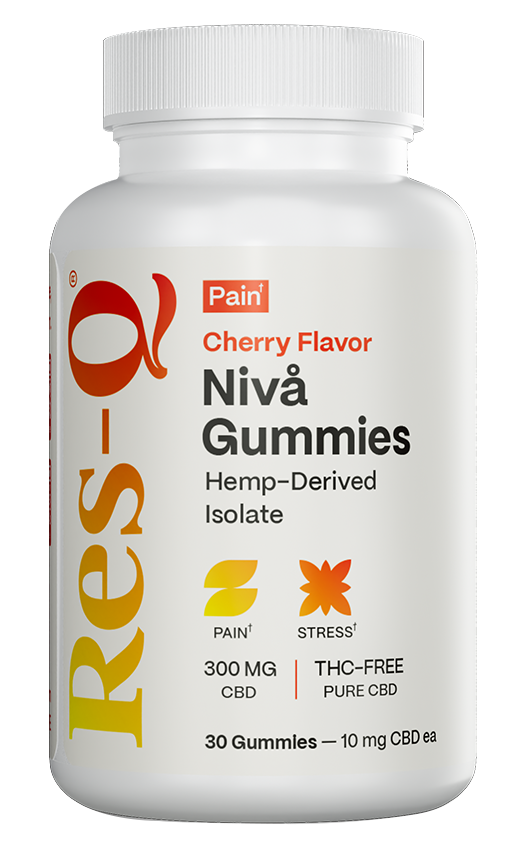
The CBD Your Body ACTUALLY ABSORBS
Most CBD passes right through you. This one doesn't — 440% better absorption, zero THC, made in the U.S.
See Why People Are SwitchingFrequently Asked Questions
Can CBD make you fail a drug test?
CBD itself does not trigger a positive result on standard urine drug screens. However, many CBD products — especially full-spectrum formulas — contain trace amounts of THC. That THC accumulates with regular use and can push urine levels above the 50 ng/mL federal cutoff. So yes, using CBD products can result in a failed drug test if those products contain any THC.
How long does CBD stay in your system for a urine test?
CBD metabolites are typically detectable in urine for 2 to 5 days after occasional use and 10 to 15 days or longer for daily users. THC metabolites from CBD products can persist even longer — up to 30 days for heavy users — because THC-COOH accumulates in body fat and releases slowly.
Does full-spectrum CBD show up on a urine drug test?
Full-spectrum CBD products contain up to 0.3% THC. With daily use, especially at higher doses, this can produce enough THC-COOH in urine to trigger a positive result. A 2019 study confirmed that approximately 15% of daily full-spectrum CBD users exceeded the standard drug test cutoff within two weeks.
What is the cutoff level for THC on a urine drug test?
The initial immunoassay cutoff set by SAMHSA is 50 ng/mL for THC-COOH. If the initial test is positive, a confirmatory GC-MS test is performed at a lower cutoff of 15 ng/mL. Both thresholds must be exceeded for a result to be reported as positive.
How can I avoid testing positive from CBD products?
Use only CBD isolate products from manufacturers who provide batch-specific Certificates of Analysis showing non-detectable THC levels. Stop all CBD use at least 14 to 30 days before a scheduled drug test. Stay hydrated, avoid intense exercise 48 hours before testing, and never rely on product labels alone — always verify with third-party lab reports.
Is there a urine test specifically for CBD?
Standard workplace drug tests do not screen for CBD. Specialized assays capable of detecting CBD metabolites exist but are used primarily in clinical research settings, not employment or legal testing. If you’re worried about a cbd urine test, the real concern is THC content in your CBD product, not the CBD itself.
Final Takeaway on CBD and Urine Detection
How long is cbd detectable in urine depends on dosage, frequency, body composition, and the type of product you used. For most occasional users, CBD metabolites clear within a week. For daily users, two to three weeks is a more realistic window. But the more pressing concern for anyone facing a drug test isn’t the CBD — it’s the THC that may have come along with it.
Know your product. Read the COA. Understand the difference between full-spectrum, broad-spectrum, and isolate. And give yourself enough time before a scheduled test to let your body do its work.
Read the rest of our articles and more useful info down below for everything you need to know about CBD, drug testing, and making informed decisions about what you put in your body.