

What “Infused with CBD” Actually Means — And Why It Matters
Every product label in the wellness aisle seems to say “infused with CBD” right now. Gummies, lotions, coffee, chocolate bars, even dog treats. But what does that phrase actually mean in practice? It means cannabidiol — a non-intoxicating compound extracted from the hemp plant — has been incorporated into the product during manufacturing. Not sprayed on afterward. Not vaguely associated with hemp. Physically blended into the formula at a molecular level so it distributes evenly across every serving.
That distinction matters more than most people realize. A product that is truly infused with CBD delivers a consistent dose every time you use it. A product where CBD is just sprayed on the surface might give you 25mg in one gummy and 3mg in the next. That inconsistency is one of the biggest complaints in the CBD market, and understanding how infusion works is the first step to avoiding it.
Tired of guessing which CBD actually works?
Find What Works for Your Body
A less-than 60 second wellness match for adults exploring plant-based relief
What’s bothering you most right now?
Select the one that impacts your day the most
How long have you been dealing with this?
There's no wrong answer — this helps us tailor your match
How much does it affect your daily routine?
Be honest — this shapes your recommendation
What have you tried so far?
Knowing what hasn't worked helps us find what will
How familiar are you with CBD?
No judgment — everyone starts somewhere
What sounds easiest to add to your routine?
Think about what fits your lifestyle, not what sounds fancy
What matters most to you in a product?
Pick the one that would seal the deal for you
YOUR MATCH IS READY
We'll include your personalized match plus a first-timer's guide based on your answers.
Where should we send your recommendation?
🔒 No spam, ever. Your info is kept 100% secure.
If you'd rather not wait — based on your answers about your symptoms, we'd point you straight to our trusted partner.
Skip to My Match →How CBD Gets Into Products in the First Place
CBD starts as a raw extract pulled from hemp biomass. The most common extraction methods are CO2 extraction and ethanol extraction. CO2 extraction uses pressurized carbon dioxide to strip cannabinoids from plant material. It produces a clean extract without residual solvents. Ethanol extraction is cheaper and faster but can pull unwanted compounds like chlorophyll if not done carefully.
Once extracted, the CBD oil goes through winterization (removing fats and waxes) and sometimes distillation to concentrate the cannabidiol. The resulting product is either a full-spectrum distillate, a broad-spectrum distillate, or a CBD isolate — a crystalline powder that is 99%+ pure cannabidiol.
From there, manufacturers incorporate the CBD into whatever product they are making. For edibles like CBD infused gummies, the CBD is mixed directly into the gummy base before it sets. For topicals like CBD pain cream, the CBD extract is emulsified into the cream base alongside carrier oils and other active ingredients. For beverages, nanoemulsion technology is often used to break CBD oil into tiny particles that mix evenly with water-based liquids.
Nanoemulsion and Bioavailability
Bioavailability is the percentage of CBD that actually reaches your bloodstream after you consume it. When you eat a standard CBD edible, oral bioavailability ranges from about 6% to 19%, according to published pharmacokinetic research. That means if you eat a 25mg gummy, your body might only absorb 1.5mg to 4.75mg of usable CBD.
Nanoemulsion technology changes this. By breaking CBD oil droplets down to particles smaller than 100 nanometers, manufacturers increase the surface area available for absorption. Some companies report bioavailability improvements of 3x to 5x using nanoemulsified CBD. Products infused with CBD through nanoemulsion tend to take effect faster too — sometimes within 15 to 20 minutes instead of the typical 45 to 90 minutes for standard edibles.
This is worth paying attention to. A 10mg nanoemulsified gummy might deliver more usable CBD than a 25mg standard gummy. Price per milligram on the label does not always reflect price per milligram absorbed.
CBD Infused Gummies — The Most Popular Starting Point
CBD infused gummies dominate the edible market for obvious reasons. They taste good. They are portable. They come in pre-measured doses. You do not need a dropper or a scale. You eat one gummy and you know exactly how many milligrams you consumed — assuming the manufacturer did their job correctly.
The global CBD gummies market was valued at over $5.3 billion in 2024 and continues to grow. Part of that growth comes from people who tried CBD oil under the tongue and did not enjoy the taste. Hemp extract has a strong, earthy, somewhat bitter flavor. Gummies mask that flavor entirely.
Most CBD infused gummies on the market contain between 10mg and 50mg of CBD per piece. Some brands offer “high potency” options at 100mg per gummy, though those are typically marketed toward people with established CBD routines who already know their effective dose.
What to Look for in Quality CBD Gummies
Three things separate a good CBD gummy from a bad one.
First, third-party lab testing. Every reputable CBD company sends batches to an independent lab for analysis. The lab produces a Certificate of Analysis (COA) that confirms the CBD content matches what the label says, verifies THC levels are below 0.3%, and checks for contaminants like heavy metals, pesticides, and residual solvents. If a company does not publish COAs — or if the COAs are more than 12 months old — that is a red flag.
Second, the type of CBD used. Full-spectrum gummies contain CBD plus other cannabinoids (including trace THC under 0.3%), terpenes, and flavonoids. The theory behind full-spectrum is the “entourage effect” — the idea that these compounds work together more effectively than any single one in isolation. Broad-spectrum removes the THC but keeps the other cannabinoids. Isolate-based gummies contain only CBD. Each has trade-offs. People subject to drug testing often choose broad-spectrum or isolate to minimize any risk of a THC-positive result.
Third, ingredient quality. Some brands load their gummies with artificial colors, corn syrup, and fillers. Others use organic cane sugar, natural fruit flavors, and pectin instead of gelatin. The CBD is important, but you are still eating a food product. The rest of the ingredients matter too.
CBD Infused Desserts — A Growing Category
CBD infused desserts go well beyond gummies. Brownies, cookies, truffles, cake pops, ice cream, and even artisan chocolates are all available infused with CBD from specialty bakeries, online retailers, and dispensaries in legal markets.
The appeal is straightforward. Dessert is something people already enjoy. Adding CBD to a brownie or a piece of dark chocolate makes incorporating cannabidiol into a daily routine feel less like taking a supplement and more like an indulgence. For people who associate pills and capsules with being unwell, this reframing can make a real psychological difference in consistency.
Looking For Something Pure & Potent?
If your current CBD isn't full-spectrum and U.S.-sourced, you're wasting money
Check Out This Full-Spectrum, American Made CBDA friend of mine runs a small bakery in Portland, Oregon, and started offering CBD infused desserts in 2023. She told me her best seller is a lavender-honey shortbread cookie infused with 15mg of broad-spectrum CBD. Her customers are not what you might expect — mostly women between 35 and 60 who deal with everyday stress and tension and prefer edibles over oils or capsules. She said repeat orders account for about 70% of her CBD dessert sales, which tells you something about whether people find value in the products.
Dosing Challenges with CBD Desserts
The main challenge with CBD infused desserts is consistent dosing. A gummy is a small, uniform product. A slice of cake is not. If a full cake contains 200mg of CBD and you cut it into eight slices, each slice should contain 25mg. But unless the CBD was distributed perfectly evenly in the batter — and unless every slice is exactly the same size — the actual dose per serving can vary.
Professional operations handle this by using precise mixing protocols and standardized portioning. Home bakers need to be more careful. If you are baking CBD infused desserts at home, use CBD isolate powder instead of CBD oil for more even distribution. Isolate dissolves more predictably into butter or oil during the creaming stage. Mix the batter thoroughly and portion with a scale, not a spoon.
Temperature is another factor. CBD degrades at temperatures above roughly 320°F to 356°F (160°C to 180°C). Most cookies bake at 350°F. Most brownies bake at 325°F. Those temperatures are right at the edge. Keeping oven temperatures moderate and bake times short helps preserve the CBD content in your finished dessert.
CBD Pain Cream — Topical Relief That Stays Local
Not everything infused with CBD is meant to be eaten. CBD pain cream is one of the fastest-growing segments of the topical market. These creams, balms, and salves are applied directly to the skin over sore muscles, stiff joints, or areas of discomfort.
CBD pain cream works differently from edibles. When you apply a topical product, the CBD does not enter your bloodstream in any meaningful concentration. Instead, it interacts with cannabinoid receptors in the skin — specifically CB2 receptors, which are concentrated in skin cells and localized immune cells. This means the effects stay in the area where you apply the cream rather than producing full-body effects.
For people who want targeted relief in a specific area — a sore knee, tight shoulders after a long day at a desk, lower back stiffness — topical application makes more sense than an edible. You are putting the CBD exactly where you want it to work.
How CBD Pain Cream Works on the Body
The skin is the body’s largest organ and it has its own endocannabinoid system. CB2 receptors in the epidermis and dermis respond to cannabinoids applied topically. Research published in the European Journal of Pain (2016, animal model) found that topical CBD application reduced joint swelling and pain-related behaviors in rats with arthritis. Human clinical data is still catching up, but the mechanism is well-understood at the receptor level.
Most CBD pain creams combine CBD with other active ingredients to enhance effects. Menthol provides a cooling sensation. Camphor creates warmth. Arnica is a traditional anti-inflammatory botanical. Capsaicin (from chili peppers) stimulates nerve endings to temporarily override pain signals. A well-formulated CBD pain cream uses CBD as part of a broader analgesic strategy, not as the sole ingredient.
Concentration matters for topicals. A cream with 200mg of CBD in a 4-ounce jar is very different from a cream with 2,000mg in the same size jar. Higher concentrations generally produce more noticeable effects. Many users report that CBD pain cream products under 500mg total feel weak, while products in the 1,000mg to 3,000mg range per container deliver more consistent results. Read labels carefully and calculate the mg-per-ounce, not just the total mg on the front of the package.
Full Spectrum vs Broad Spectrum vs Isolate — Which One Should You Pick?
This question comes up constantly, and the answer depends on your situation.
Full-spectrum CBD contains the complete range of cannabinoids found in the hemp plant. That includes CBD, CBG, CBN, CBC, trace amounts of THC (under 0.3%), plus terpenes and flavonoids. The “entourage effect” hypothesis — first proposed by researchers Raphael Mechoulam and Shimon Ben-Shabat in 1998 — suggests these compounds amplify each other’s effects when consumed together. Several studies since then have supported this idea, though the research is still evolving.
Broad-spectrum CBD goes through an additional processing step to remove THC while keeping other cannabinoids and terpenes intact. It is a middle ground for people who want the potential benefits of the entourage effect without any THC exposure.
CBD isolate is the purest form — 99%+ cannabidiol with no other cannabinoids, terpenes, or plant compounds. It is flavorless and odorless, which makes it versatile for manufacturing. Products infused with CBD isolate are the safest choice for people who undergo regular drug testing, since there is no THC present at all.
For most people who do not face drug testing, full-spectrum products infused with CBD tend to produce the broadest range of effects. But broad-spectrum and isolate products work too. The right choice is personal.
Dosing Guidelines for Products Infused with CBD
There is no universal CBD dose. Body weight, metabolism, the condition you are addressing, the type of product, and individual body chemistry all play a role. But there are reasonable starting points based on how most brands and practitioners frame their recommendations.
For general wellness — daily stress management, sleep support, overall balance — most adults start between 10mg and 25mg of CBD per day. For more targeted concerns like exercise recovery or chronic discomfort, doses of 25mg to 50mg per day are common. Some individuals use 100mg or more daily, though working up to that level gradually is standard practice.
The “start low, go slow” approach is not a cliché here — it is practical. Take a low dose for at least five to seven days before increasing. CBD can build up in your system over time, and effects may become more noticeable after consistent use rather than after a single dose.
Timing matters too. CBD infused gummies and other edibles take 30 to 90 minutes to kick in because they pass through the digestive system. Sublingual oils absorb in 15 to 30 minutes. Topical CBD pain cream begins working within minutes on the application site. Plan your dosing around when you want to feel the effects.
Legal Status of CBD Products in 2026
The 2018 Farm Bill legalized hemp-derived CBD at the federal level in the United States, provided the THC content stays below 0.3% by dry weight. That made it legal to grow hemp, extract CBD, and sell products infused with CBD across state lines.
However, individual states have their own regulations. Some states restrict the sale of CBD edibles. Others require specific labeling or licensing. A handful of states still treat all cannabis-derived compounds with more scrutiny. Before purchasing or selling CBD products, check your state’s current regulations. The landscape shifts regularly as legislators update their frameworks.
Outside the US, laws vary widely. Canada regulates CBD under its Cannabis Act. The UK allows CBD products with less than 1mg of THC per container. The European Union has been working toward harmonized Novel Food regulations for CBD. Australia requires a prescription for CBD products containing more than 150mg per day. If you are buying internationally or traveling with CBD, research the specific laws of your destination.
Common Mistakes People Make with CBD
After talking to dozens of CBD users and several industry professionals, a few mistakes come up repeatedly.
Giving up too early is the most common one. CBD is not ibuprofen. Many people try a single gummy, feel nothing dramatic within an hour, and declare that CBD does not work. Cannabidiol interacts with a complex biological system — the endocannabinoid system — and it can take days or weeks of consistent use before the effects become clearly noticeable. A one-time trial is not enough data.
Buying based on price alone is another frequent error. The cheapest CBD infused gummies on the market often cut corners on extraction quality, use low-grade hemp, or inflate their CBD content on the label. A 2020 study published in the Journal of the American Medical Association found that nearly 70% of CBD products sold online were mislabeled — some containing significantly less CBD than advertised, and a few containing more THC than the legal limit. Paying a bit more for a brand that publishes current COAs from an ISO-certified lab is worth it.
Ignoring drug interactions is a less obvious but important mistake. CBD is metabolized by the cytochrome P450 enzyme system in the liver — the same system that processes many common medications, including blood thinners, certain heart medications, and some anti-seizure drugs. If you take prescription medications, talk to your doctor before adding CBD to your routine. This is not a disclaimer for the sake of it. CYP450 interactions are well-documented and can alter how your medications work.
How to Read a CBD Product Label
A label on a product infused with CBD should tell you several specific things. If any of these are missing, be cautious.
Total CBD content per container. This is usually in milligrams. A bottle of CBD oil might say 1,000mg. A bag of gummies might say 750mg. This is the total across all servings, not per serving.
CBD per serving. This is the number that actually matters for dosing. If a bag has 750mg total and 30 gummies, each gummy contains 25mg. Some labels make this obvious. Others bury it.
Type of CBD. Full spectrum, broad spectrum, or isolate. If the label does not specify, it is usually isolate — but ask the company to confirm.
Hemp source. Domestically grown hemp from states with strong agricultural programs (Colorado, Oregon, Kentucky) is generally preferable. Hemp grown in unregulated environments may have higher levels of heavy metals or pesticides, since hemp is a bioaccumulator — it absorbs contaminants from the soil it grows in.
Other ingredients. Carrier oils (MCT oil, hemp seed oil), flavorings, sweeteners, and any additional active ingredients should all be listed. For CBD pain cream, look for the full ingredient list including complementary compounds like menthol, arnica, or camphor.
Batch number and QR code linking to lab results. This is the gold standard. Scan the code, review the COA, confirm the numbers match the label.
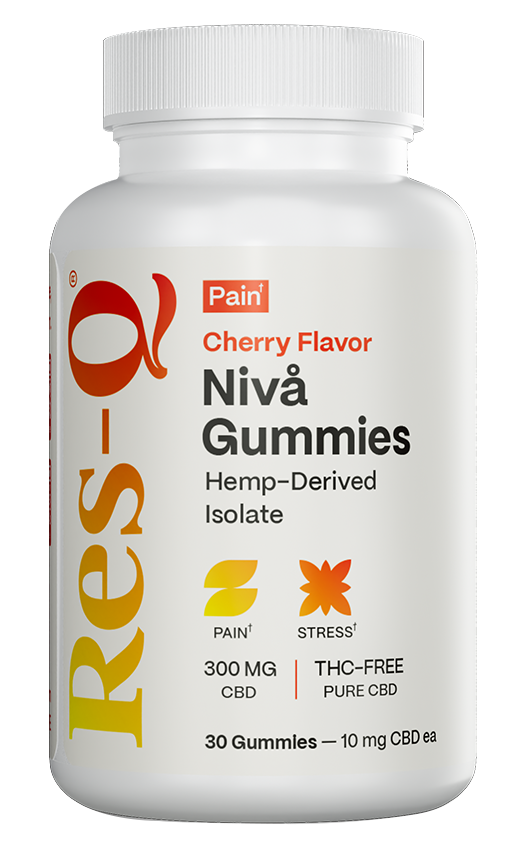
The CBD Your Body ACTUALLY ABSORBS
Most CBD passes right through you. This one doesn't — 440% better absorption, zero THC, made in the U.S.
See Why People Are SwitchingFrequently Asked Questions About Products Infused with CBD
Will CBD infused gummies make me high?
No. CBD is non-intoxicating. It does not produce the euphoric “high” associated with THC. Products infused with CBD derived from hemp contain 0.3% THC or less, which is not enough to produce psychoactive effects. You may feel relaxed or calmer, but you will not experience impairment.
How long does it take for CBD edibles to work?
Most CBD edibles, including CBD infused gummies and CBD infused desserts, take between 30 and 90 minutes to produce noticeable effects. This is because they must pass through your digestive system and liver before reaching your bloodstream. Nanoemulsified edibles may work faster — some users report effects within 15 to 20 minutes.
Can I use CBD pain cream and CBD edibles at the same time?
Yes. Topical CBD and oral CBD work through different pathways. CBD pain cream acts locally on cannabinoid receptors in the skin without entering the bloodstream significantly. Edibles deliver CBD systemically. Many people use both — a gummy or oil for overall support and a topical cream on specific areas of discomfort.
Is CBD safe for daily use?
The World Health Organization stated in a 2017 report that CBD is “generally well tolerated with a good safety profile.” Most healthy adults tolerate daily CBD use without significant side effects. Some people experience mild drowsiness, dry mouth, or digestive changes at higher doses. Long-term safety data is still being collected, but no serious adverse effects have been identified in existing research at standard consumer doses.
How should I store CBD products?
Keep CBD products in a cool, dark place away from direct sunlight and heat. CBD degrades with prolonged light and heat exposure. Most products have a shelf life of 12 to 24 months when stored properly. CBD infused gummies and desserts should be stored according to their food-type requirements — gummies in a sealed container at room temperature, perishable desserts in the refrigerator.
Making the Right Choice for Your Routine
The market for products infused with CBD is large, growing, and sometimes overwhelming. Gummies, desserts, pain creams, oils, capsules, beverages — the options are extensive. But the fundamentals are simple. Buy from brands that test their products independently. Start with a low dose and give it time. Pick a product format that fits your life. Pay attention to how your body responds and adjust from there.
If you have not tried CBD yet or you are looking for a more versatile product to build your routine around, consider starting with infused CBD oil. Oils offer the most flexibility — you can take them sublingually for faster absorption, add them to food or drinks, or adjust your dose by a single drop at a time. A high-quality, third-party-tested infused CBD oil gives you full control over how much you take and how you take it. Pick a reputable brand, check the COA, and start with the lowest recommended serving on the label. Give it a week of consistent use, then go from there.