

Is CBD an Antioxidant? Here Is What We Actually Know
Is CBD an antioxidant? The short answer is yes. And the U.S. government has known about it since at least 2003. That year, the Department of Health and Human Services was granted U.S. Patent 6,630,507, titled “Cannabinoids as antioxidants and neuroprotectants.” The patent specifically names cannabidiol — CBD — as a compound with significant antioxidant properties. That is not marketing language from a supplement brand. That is a federal patent based on peer-reviewed research.
But knowing CBD has antioxidant activity and understanding what that means for your body are two different things. There is a lot of noise around this topic. Brands throw the word “antioxidant” on labels like confetti. Wellness influencers talk about free radicals without explaining what they are. And most articles skim the surface without getting into the actual research or the mechanisms involved.
This article breaks it all down. We will cover what antioxidants do at the cellular level, walk through the published CBD antioxidant study data, compare CBD oil antioxidant capacity to well-known compounds like vitamin C and vitamin E, and give you the practical information you need to make informed decisions. No vague claims. Just the data and what it means.
Tired of guessing which CBD actually works?
Find What Works for Your Body
A less-than 60 second wellness match for adults exploring plant-based relief
What’s bothering you most right now?
Select the one that impacts your day the most
How long have you been dealing with this?
There's no wrong answer — this helps us tailor your match
How much does it affect your daily routine?
Be honest — this shapes your recommendation
What have you tried so far?
Knowing what hasn't worked helps us find what will
How familiar are you with CBD?
No judgment — everyone starts somewhere
What sounds easiest to add to your routine?
Think about what fits your lifestyle, not what sounds fancy
What matters most to you in a product?
Pick the one that would seal the deal for you
YOUR MATCH IS READY
We'll include your personalized match plus a first-timer's guide based on your answers.
Where should we send your recommendation?
🔒 No spam, ever. Your info is kept 100% secure.
If you'd rather not wait — based on your answers about your symptoms, we'd point you straight to our trusted partner.
Skip to My Match →What Does “Antioxidant” Actually Mean?
Before we go further, this needs to be clear. The word “antioxidant” gets used so loosely that it has almost lost its meaning. So here is the basic biology.
Your body produces molecules called free radicals. These are atoms or groups of atoms with an unpaired electron. They are unstable. To become stable, they steal electrons from nearby cells — your DNA, your proteins, your cell membranes. That theft causes damage. When it happens on a large enough scale, it is called oxidative stress.
Oxidative stress is not a theory. It is a measurable physiological condition linked to over 200 diseases, according to research published in the journal Pharmacological Reviews. Heart disease, Alzheimer’s, Parkinson’s, diabetes, cancer, chronic inflammation — oxidative stress plays a documented role in all of them.
An antioxidant is any molecule that can donate an electron to a free radical without becoming unstable itself. That donation neutralizes the free radical. Stops the chain reaction. Reduces the damage. Your body makes some antioxidants on its own — glutathione, superoxide dismutase, catalase. You also get them from food — vitamin C in citrus, vitamin E in nuts, polyphenols in berries and green tea.
The question is whether CBD belongs in that category. And the research says it does.
The Science Behind CBD and Antioxidant Activity
The foundational study came in 1998. Researchers Hampson, Grimaldi, Axelrod, and Wink published a paper in the Proceedings of the National Academy of Sciences (PNAS) demonstrating that both CBD and THC act as antioxidants. The study exposed rat cortical neurons to toxic levels of glutamate, which triggers massive free radical production. CBD reduced neurotoxicity. It did so independently of cannabinoid receptors — meaning the antioxidant effect was not about the endocannabinoid system. It was a direct chemical property of the CBD molecule itself.
That finding was significant enough that it formed part of the basis for U.S. Patent 6,630,507. The patent abstract states that cannabinoids are “found to have particular application as neuroprotectants, for example in limiting neurological damage following ischemic insults, such as stroke and trauma, or in the treatment of neurodegenerative diseases.” The mechanism cited? Antioxidant activity.
A 2019 review by Atalay, Jarocka-Karpowicz, and Skrzydlewska, published in the journal Antioxidants, pulled together two decades of data on this topic. Their conclusion was direct: CBD reduces oxidative conditions by modifying the levels and activity of both oxidants and antioxidants in the body. The review covered CBD’s effects on reactive oxygen species (ROS), lipid peroxidation, and protein oxidation — all key markers of oxidative stress.
How CBD Fights Free Radicals at the Molecular Level
CBD’s antioxidant capability comes from its chemical structure. The molecule contains phenolic hydroxyl groups. These groups are electron-rich. When a free radical comes into contact with CBD, the hydroxyl group donates a hydrogen atom — specifically, a proton plus an electron — to the radical. This neutralizes the radical without destabilizing the CBD molecule in a way that creates new chain reactions.
There is also a second mechanism at work. CBD has been shown to upregulate the body’s own antioxidant defenses. A 2011 study by Booz, published in Free Radical Biology and Medicine, found that CBD modulates the activity of superoxide dismutase (SOD) and increases glutathione levels. SOD is one of your body’s most powerful endogenous antioxidants. Glutathione is often called the “master antioxidant” because it recycles other antioxidants like vitamins C and E.
So CBD works on two fronts. It directly neutralizes free radicals through electron donation. And it boosts the systems your body already uses to manage oxidative stress. That dual mechanism is one reason researchers have shown continued interest in CBD antioxidant study work over the past two decades.
What Does the CBD Antioxidant Study Research Show?
Multiple studies across different research teams and institutions have confirmed CBD’s antioxidant properties. Here are some of the most relevant findings.
The Hampson et al. 1998 PNAS study remains the gold standard. It demonstrated that CBD was a more potent antioxidant than either alpha-tocopherol (vitamin E) or ascorbate (vitamin C) in a cyclic voltammetry assay. Cyclic voltammetry measures a compound’s oxidation potential — essentially, how readily it gives up electrons. CBD outperformed two of the most well-known dietary antioxidants in a controlled laboratory setting.
In 2014, Borges and colleagues published data in Neurochemistry International showing that CBD reduced oxidative damage in a mouse model of iron-overload. Iron-overload triggers severe oxidative stress in liver and brain tissue. CBD treatment lowered lipid peroxidation markers and restored glutathione levels toward baseline. The mice treated with CBD showed significantly less tissue damage.
A 2020 study by Atalay and team in Cells examined CBD’s effects on UV-irradiated human keratinocytes — skin cells. UV radiation is one of the most common sources of free radical damage in everyday life. CBD treatment reduced levels of malondialdehyde (MDA), a key biomarker for lipid peroxidation. It also modified the activity of nuclear factor erythroid 2-related factor 2 (Nrf2), a transcription factor that regulates the expression of antioxidant proteins.
Each of these studies measured different markers in different models. But the direction of the evidence is consistent. CBD reduces measurable signs of oxidative stress across multiple tissue types and damage models. That consistency across a CBD antioxidant study base spanning more than 20 years gives the finding a solid foundation.
CBD vs. Traditional Antioxidants
Comparing CBD to traditional antioxidants requires some nuance. In the 1998 PNAS study, CBD showed a higher oxidation potential than both vitamin C and vitamin E. That is a direct comparison of electron-donating capacity measured electrochemically. In that specific assay, CBD won.
But antioxidant behavior in a petri dish and antioxidant behavior inside a living body are different. Bioavailability matters. Vitamin C is water-soluble. It reaches the bloodstream quickly when you eat an orange. CBD is fat-soluble. Oral bioavailability for CBD ranges from about 6% to 19%, depending on the formulation and whether it is taken with food. That means a large portion of ingested CBD never reaches systemic circulation.
Does that make CBD less useful as an antioxidant than vitamin C? Not necessarily. CBD’s fat solubility means it concentrates in lipid-rich tissues — cell membranes, brain tissue, nerve sheaths. These are precisely the areas most vulnerable to lipid peroxidation, one of the most destructive forms of free radical damage. Vitamin C cannot easily access these areas because it is water-soluble.
Think of it this way. Vitamin C patrols the watery parts of your body — blood plasma, the fluid inside cells. CBD concentrates in the fatty parts — membranes, neural tissue, the protective myelin that wraps nerve fibers. They operate in different compartments. Both matter.
Looking For Something Pure & Potent?
If your current CBD isn't full-spectrum and U.S.-sourced, you're wasting money
Check Out This Full-Spectrum, American Made CBDCBD Oil Antioxidant Benefits in Everyday Life
The lab data is compelling. But what does it look like in practice? When someone takes CBD oil for antioxidant support, what should they realistically expect?
First, context. You will not “feel” antioxidant activity the way you feel pain relief or relaxation. Antioxidant defense is a cellular process. It happens at a scale you cannot perceive directly. What you might notice over time are the downstream effects of reduced oxidative stress — less chronic inflammation, better skin health, improved recovery from exercise, and potentially slower progression of age-related conditions.
A personal example. I started using a full-spectrum CBD oil about 18 months ago, primarily for sleep. Around the three-month mark, I noticed that the persistent redness on my cheeks and nose — which a dermatologist had attributed to low-grade inflammation — had calmed down noticeably. Was that the antioxidant effect specifically? I cannot prove it. But the timing aligned, and inflammation is one of the primary consequences of unchecked oxidative stress.
Athletes have shown interest in CBD oil antioxidant properties for post-workout recovery. Intense exercise generates a surge of free radicals in muscle tissue. A 2020 review in Sports Medicine noted that CBD’s anti-inflammatory and antioxidant properties could theoretically support recovery by reducing exercise-induced oxidative damage. Several professional athletic organizations have removed CBD from their banned substance lists, reflecting growing acceptance of its potential benefits.
Topical CBD products represent another avenue. When CBD oil is applied directly to the skin, it does not need to survive the digestive tract. It interacts with cannabinoid receptors and cells in the skin directly. The Atalay 2020 keratinocyte study mentioned earlier supports the idea that CBD oil antioxidant effects are relevant for skin health — particularly in counteracting UV-induced free radical damage.
How Oxidative Stress Affects Your Body Over Time
Understanding why antioxidants matter requires understanding what happens without them. Oxidative stress does not cause one sudden catastrophic event. It accumulates. Slowly. Over years and decades.
Every day, your mitochondria produce energy. That process generates free radicals as a byproduct. Breathing produces free radicals. Digesting food produces free radicals. Exposure to pollution, cigarette smoke, processed food, UV radiation, and chronic psychological stress all accelerate production.
When free radical production exceeds your body’s ability to neutralize them, the excess radicals start damaging cellular structures. DNA strands get nicked. Proteins get misfolded. Cell membranes lose integrity. The damage is cumulative.
Over time, this manifests as visible aging — wrinkles, age spots, thinning skin. Internally, it manifests as chronic disease. A 2017 meta-analysis in Oxidative Medicine and Cellular Longevity found elevated oxidative stress markers in patients with cardiovascular disease, type 2 diabetes, chronic kidney disease, and multiple neurodegenerative conditions.
The body’s endogenous antioxidant production also declines with age. Glutathione levels drop. SOD activity decreases. This means the gap between free radical production and antioxidant defense widens as you get older. Supplementing with exogenous antioxidants — from diet and potentially from compounds like CBD — becomes more relevant with each passing year.
Common Signs That Oxidative Stress May Be Elevated
No single symptom points definitively to oxidative stress. But clusters of symptoms together can suggest it is a factor. Persistent fatigue that does not resolve with sleep. Brain fog or difficulty concentrating. Joint pain and stiffness without clear injury. Frequent infections suggesting weakened immunity. Premature graying of hair. Skin that looks dull, thin, or ages faster than expected for your chronological age.
None of these prove oxidative stress on their own. Blood tests for markers like MDA, 8-hydroxy-2-deoxyguanosine (8-OHdG), or F2-isoprostanes can provide more specific data. A functional medicine practitioner can order these panels.
How to Choose a CBD Oil for Antioxidant Support
Not all CBD products are equal. Quality varies enormously across the industry. If you are considering CBD oil for its antioxidant properties specifically, here is what to look for.
Third-party lab testing is non-negotiable. Any reputable CBD company provides a Certificate of Analysis (COA) from an independent lab. The COA should confirm cannabinoid content matches what is on the label, and it should test for contaminants — heavy metals, pesticides, residual solvents, and microbial impurities. If a company does not provide a COA, skip them entirely.
Full-spectrum products are generally preferred over CBD isolate for antioxidant purposes. Full-spectrum extracts contain other cannabinoids (CBG, CBC, small amounts of THC below 0.3%), terpenes, and flavonoids. Many of these compounds also have antioxidant properties. A 2015 study by Gallily, Yekhtin, and Hanuš found that full-spectrum CBD extract had a broader dose-response curve than isolated CBD, suggesting enhanced biological activity — often referred to as the “entourage effect.”
Extraction method matters. CO2 extraction is the current industry standard for producing clean, potent CBD oil. Ethanol extraction is also acceptable. Avoid products made using butane or hexane extraction, which can leave toxic residues.
Dosage is individual. Research studies have used CBD doses ranging from 15 mg to 1,500 mg daily, depending on the condition being studied. For general antioxidant support, most practitioners suggest starting at 15–25 mg per day and adjusting based on response. Taking CBD oil with a meal that contains fat increases bioavailability significantly — one study in Epilepsia found that a high-fat meal increased CBD absorption by roughly four to five times compared to fasting.
Common Mistakes People Make With CBD and Antioxidants
The biggest mistake is treating CBD as a replacement for dietary antioxidants. It is not. Your body needs vitamin C, vitamin E, selenium, zinc, polyphenols, and dozens of other compounds from food. CBD is one tool in a larger toolkit. Relying on it alone while eating processed food and neglecting sleep would be like putting premium fuel in a car with no oil in the engine.
Another common mistake is buying based on price alone. The cheapest CBD oil on the market is cheap for a reason — poor-quality hemp, aggressive extraction methods, minimal testing. Low-quality CBD oil may contain oxidized compounds that actually increase free radical load instead of reducing it. Rancid carrier oils in poorly stored products have the same problem.
Inconsistency is the third issue. Antioxidant defense is an ongoing process. Taking CBD oil once or twice and expecting measurable change is not realistic. The studies showing positive outcomes typically involve consistent daily dosing over weeks or months. Oxidative stress accumulates over time, and the response to antioxidant support also develops over time.
Ignoring bioavailability is another mistake. Swallowing a CBD capsule on an empty stomach means most of it will be destroyed by first-pass metabolism in the liver. Taking that same capsule with a tablespoon of peanut butter or a handful of almonds dramatically changes how much CBD reaches your bloodstream. This is not a minor detail. It can mean the difference between 6% absorption and 25% absorption.
Frequently Asked Questions About CBD as an Antioxidant
Is CBD a stronger antioxidant than vitamin C?
In electrochemical assays measuring oxidation potential, CBD has shown a higher antioxidant capacity than vitamin C (ascorbate). The 1998 PNAS study by Hampson et al. demonstrated this directly. However, CBD and vitamin C work in different biological compartments. Vitamin C is water-soluble and operates in blood plasma and intracellular fluid. CBD is fat-soluble and concentrates in cell membranes and neural tissue. Both are valuable in their respective domains.
Does CBD oil have antioxidant properties when applied topically?
Yes. CBD oil applied to the skin interacts directly with local cells without needing to pass through the digestive system. Research on UV-irradiated keratinocytes has shown that CBD reduces lipid peroxidation markers and modulates Nrf2 pathways in skin cells. Topical CBD oil antioxidant applications are being studied for photoaging, inflammatory skin conditions, and general skin protection.
How long does it take for CBD’s antioxidant effects to show results?
Antioxidant activity at the cellular level begins as soon as CBD reaches target tissues. However, noticeable downstream effects — reduced inflammation, improved skin appearance, better recovery — typically take consistent daily use over several weeks to months. Most clinical studies evaluating CBD for oxidative stress-related conditions run for 4 to 12 weeks minimum.
Can you take too much CBD as an antioxidant?
CBD has a favorable safety profile according to a 2017 review by the World Health Organization. Doses up to 1,500 mg daily have been well-tolerated in human trials. However, very high doses can cause fatigue, changes in appetite, and gastrointestinal discomfort. For antioxidant support specifically, mega-dosing is unnecessary. Moderate daily doses of 15–50 mg are the common range used for general wellness purposes.
Is there a difference between full-spectrum CBD and CBD isolate for antioxidant purposes?
Full-spectrum CBD extracts contain additional cannabinoids, terpenes, and flavonoids — many of which possess their own antioxidant properties. The 2015 study by Gallily et al. suggested that whole-plant extracts have a broader therapeutic profile than isolated CBD. For antioxidant support, full-spectrum products are generally considered more effective due to the combined action of multiple antioxidant compounds working together.
Does cooking with CBD oil destroy its antioxidant properties?
High heat can degrade CBD. CBD begins to break down at temperatures above approximately 320°F (160°C). If you are adding CBD oil to food for antioxidant purposes, add it after cooking — drizzle it on a finished dish, blend it into a smoothie, or mix it into a salad dressing. Prolonged exposure to high heat reduces both cannabinoid content and antioxidant capacity.
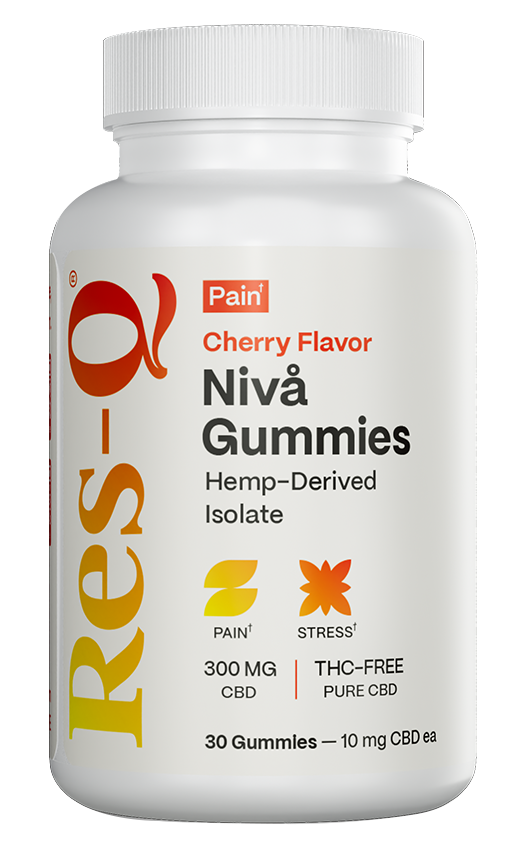
The CBD Your Body ACTUALLY ABSORBS
Most CBD passes right through you. This one doesn't — 440% better absorption, zero THC, made in the U.S.
See Why People Are SwitchingPutting It All Together
Is CBD an antioxidant? The evidence built over more than two decades says yes. From the 1998 PNAS study to the 2003 U.S. patent to the 2019 and 2020 reviews, the data is consistent. CBD neutralizes free radicals directly through its phenolic hydroxyl groups. It also boosts your body’s endogenous antioxidant systems — SOD and glutathione — adding a second layer of defense. CBD oil antioxidant properties have been demonstrated in neural tissue, liver tissue, and skin cells across both in vitro and animal models.
The practical takeaway is straightforward. CBD is a legitimate antioxidant compound with mechanisms that complement — not replace — dietary antioxidants like vitamins C and E. Its fat solubility gives it access to cell membranes and neural tissue where water-soluble antioxidants cannot reach effectively. Quality matters. Consistency matters. Bioavailability matters. Choose full-spectrum, third-party tested products, take them with dietary fat, and maintain daily use over time.
Read the rest of our articles and more useful info down below for deeper dives into CBD research, product comparisons, and practical guides for getting the most out of your wellness routine.