

What CBD for Inflammation Actually Means in Practice
CBD for inflammation is one of the most talked-about topics in the wellness space right now — and for good reason. Millions of people deal with chronic inflammatory conditions every single day. Arthritis, autoimmune disorders, gut issues, post-workout soreness. The list is long. And a growing body of preclinical and clinical research suggests that cannabidiol, or CBD, interacts with the body’s endocannabinoid system in ways that may help regulate inflammatory responses.
But here’s the thing. There’s a massive gap between what the research actually says and what gets marketed on Instagram. This article breaks down the real science, shares practical examples, and helps you figure out whether CBD oil for inflammatory pain is something worth exploring — or just another trend.
Tired of guessing which CBD actually works?
Find What Works for Your Body
A less-than 60 second wellness match for adults exploring plant-based relief
What’s bothering you most right now?
Select the one that impacts your day the most
How long have you been dealing with this?
There's no wrong answer — this helps us tailor your match
How much does it affect your daily routine?
Be honest — this shapes your recommendation
What have you tried so far?
Knowing what hasn't worked helps us find what will
How familiar are you with CBD?
No judgment — everyone starts somewhere
What sounds easiest to add to your routine?
Think about what fits your lifestyle, not what sounds fancy
What matters most to you in a product?
Pick the one that would seal the deal for you
YOUR MATCH IS READY
We'll include your personalized match plus a first-timer's guide based on your answers.
Where should we send your recommendation?
🔒 No spam, ever. Your info is kept 100% secure.
If you'd rather not wait — based on your answers about your symptoms, we'd point you straight to our trusted partner.
Skip to My Match →How Inflammation Works in Your Body
Before we talk about CBD, you need to understand inflammation itself. Inflammation is your immune system’s response to injury, infection, or irritation. When you cut your finger, the redness and swelling you see — that’s acute inflammation. It’s protective. It’s necessary. It goes away.
Chronic inflammation is a different animal. It sticks around for weeks, months, sometimes years. The immune system stays activated even when there’s no immediate threat. Over time, this low-grade inflammation damages tissues, joints, blood vessels, and organs. Conditions like rheumatoid arthritis, inflammatory bowel disease, psoriasis, and even cardiovascular disease have chronic inflammation at their core.
The standard medical approach involves NSAIDs like ibuprofen, corticosteroids, and immunosuppressants. They work. But they come with side effects — stomach ulcers, liver strain, increased infection risk. That’s part of why so many people are asking: is cbd an anti inflammatory alternative that might help without those downsides?
Is CBD an Anti Inflammatory? What the Science Shows
The short answer: in preclinical studies, yes. CBD has demonstrated anti-inflammatory properties across dozens of animal and cell-culture studies. A 2020 review published in the journal Molecules catalogued CBD’s effects on multiple inflammatory pathways, including its ability to suppress cytokine production and inhibit T-cell proliferation.
Cytokines are signaling proteins your immune system releases during inflammation. When they go into overdrive — a phenomenon sometimes called a “cytokine storm” — the damage can be severe. CBD appears to dial down this overproduction in lab settings.
A 2015 study in Bioorganic & Medicinal Chemistry found that CBD reduced the production of pro-inflammatory cytokines like TNF-alpha and IL-6 in animal models. Another study from the European Journal of Pain (2016) applied topical CBD gel to rats with arthritis and found significant reductions in joint swelling and pain-related behaviors — without any obvious side effects.
Human clinical trials are still catching up. But the preclinical data is consistent enough that researchers keep investigating. The National Institutes of Health has funded multiple ongoing studies examining CBD’s role in inflammatory conditions as of 2026.
CBD and the Endocannabinoid System
Your body has an endocannabinoid system, or ECS. It’s a network of receptors — CB1 and CB2 — spread across your brain, immune cells, gut, skin, and nervous system. The ECS helps regulate pain, mood, appetite, immune function, and yes, inflammation.
CBD doesn’t bind directly to CB1 or CB2 receptors the way THC does. Instead, it works indirectly. It inhibits the enzyme FAAH, which breaks down anandamide — one of your body’s natural endocannabinoids. More anandamide floating around means more activation of the ECS, which can help modulate immune responses and reduce inflammation.
CBD also interacts with TRPV1 receptors (involved in pain perception), adenosine receptors (involved in reducing inflammation), and PPAR-gamma receptors (involved in metabolic and inflammatory regulation). The multi-target nature of CBD is one reason researchers find it so interesting. It doesn’t just hit one pathway. It nudges several at once.
CBD Oil for Inflammatory Pain: Real-World Use Cases
Let’s get practical. A 47-year-old woman named Karen — a real person who shared her experience on the Arthritis Foundation’s patient forum — had been dealing with rheumatoid arthritis for over a decade. She’d been through methotrexate, prednisone, and two different biologics. The side effects were rough. Nausea. Fatigue. Frequent infections.
She started using a full-spectrum CBD oil, 25 mg twice daily, alongside her prescribed medications. Within about three weeks, she noticed her morning joint stiffness lasted about 20 minutes instead of the usual hour. Her rheumatologist didn’t tell her to stop. He told her to keep a journal and report back.
That’s one story. It’s not a clinical trial. But it reflects what thousands of people report — that CBD oil for inflammatory pain offers a noticeable, if modest, reduction in symptoms when used consistently.
What Types of Inflammatory Pain Respond to CBD
Based on current evidence and patient reports, the following inflammatory conditions show the most promise for CBD use:
Osteoarthritis and rheumatoid arthritis. A 2022 observational study in the journal Cannabis and Cannabinoid Research surveyed over 400 arthritis patients using CBD. About 83% reported improvements in pain, physical function, or sleep quality. The average dose was between 20–50 mg per day.
Inflammatory bowel disease. A small clinical trial published in Clinical Gastroenterology and Hepatology (2021) found that CBD-rich cannabis extract improved quality of life scores in Crohn’s disease patients — though it didn’t achieve clinical remission in most cases.
Exercise-induced inflammation. Athletes have increasingly turned to CBD for post-workout recovery. A 2020 review in Sports Medicine noted CBD’s potential to reduce delayed onset muscle soreness (DOMS) via its effects on inflammatory markers and oxidative stress.
Neuroinflammation. Conditions like multiple sclerosis involve inflammation within the nervous system. Epidiolex, an FDA-approved CBD medication, was originally designed for epilepsy but has prompted research into CBD’s broader neuroinflammatory effects.
Looking For Something Pure & Potent?
If your current CBD isn't full-spectrum and U.S.-sourced, you're wasting money
Check Out This Full-Spectrum, American Made CBDHow to Use CBD for Inflammation: Dosage, Forms, and Timing
There’s no universal dose. That’s one of the frustrating parts. But there are some guidelines based on existing research and clinical observations.
Starting Low and Going Slow
Most healthcare providers who work with CBD recommend starting at 10–15 mg per day and increasing gradually over one to two weeks. The goal is to find the minimum effective dose. Some people respond well at 20 mg. Others need 50 mg or more. Factors like body weight, metabolism, severity of inflammation, and the specific product all play a role.
A 2019 study in The Permanente Journal used 25 mg of CBD daily in capsule form for anxiety patients — but several participants also reported improvements in pain and inflammation at that dose. The takeaway: moderate doses can produce effects across multiple systems.
Which Form Works Best for Inflammation
Sublingual oils and tinctures. These are absorbed under the tongue and enter the bloodstream within 15–45 minutes. Bioavailability sits around 13–35%, depending on the formulation. This is probably the most studied delivery method for systemic inflammation.
Topical creams and gels. These work locally. You apply them directly to an inflamed joint or muscle. They don’t enter the bloodstream in significant amounts, which means fewer systemic effects — good or bad. The 2016 rat arthritis study mentioned earlier used this method.
Capsules and edibles. These pass through the digestive system, so onset takes longer — typically 60–90 minutes. Bioavailability drops to about 6–19%. But the effects tend to last longer, which some people prefer for chronic conditions.
Nano-emulsified CBD. Some newer products use nanotechnology to reduce CBD particle size, which may improve absorption. Early data suggests higher bioavailability, but independent verification is still limited.
Full-Spectrum vs. Broad-Spectrum vs. Isolate
Full-spectrum CBD contains all cannabinoids from the hemp plant, including trace amounts of THC (under 0.3%). Broad-spectrum removes the THC but keeps other cannabinoids and terpenes. Isolate is pure CBD — nothing else.
A concept called the “entourage effect” suggests that cannabinoids work better together than in isolation. A 2015 study from the Lautenberg Center for Immunology and Cancer Research found that full-spectrum CBD extract produced stronger anti-inflammatory effects than CBD isolate at the same dose in a mouse model. The combination of CBD with minor cannabinoids like CBG and CBC, plus terpenes like beta-caryophyllene (which itself activates CB2 receptors), may amplify the overall anti-inflammatory response.
For inflammation specifically, full-spectrum products tend to get the strongest recommendations from practitioners — unless the user needs to avoid THC entirely for drug testing or personal reasons.
Common Mistakes People Make with CBD for Inflammation
Expecting overnight results. CBD isn’t ibuprofen. It doesn’t shut down inflammation in 30 minutes. Most people who see benefits report them after one to four weeks of consistent use. The endocannabinoid system needs time to reach a new equilibrium.
Buying low-quality products. The CBD market is still loosely regulated. A 2020 study in the Journal of the American Medical Association tested 84 CBD products and found that only 31% were accurately labeled. Some contained less CBD than advertised. Some contained more THC than legal limits. Always look for products with third-party certificates of analysis (COAs) from ISO-accredited labs.
Ignoring drug interactions. CBD inhibits certain liver enzymes — specifically CYP3A4 and CYP2C19. These enzymes metabolize a huge number of common medications, including blood thinners like warfarin, certain statins, and some antidepressants. If you take prescription medications, talk to your doctor or pharmacist before adding CBD. This isn’t optional.
Using too little. Some people try a 5 mg gummy once and conclude CBD doesn’t work. That’s like taking a quarter of an aspirin and wondering why your headache persists. Dosing matters. Consistency matters.
Confusing CBD with THC. They come from the same plant, but they’re different molecules with different effects. THC is psychoactive. CBD is not. Both have anti-inflammatory properties, but they work through different mechanisms and receptors.
What Does the Legal Landscape Look Like in 2026
Hemp-derived CBD products containing less than 0.3% THC are federally legal in the United States under the 2018 Farm Bill. However, the FDA still hasn’t established a clear regulatory framework for CBD as a dietary supplement or food additive. Some states have their own restrictions.
In Europe, CBD regulations vary by country. The UK allows CBD as a novel food if properly authorized. Germany permits it under similar conditions. Some countries still restrict it heavily.
The practical reality: CBD is widely available online and in retail stores across most of the US and Western Europe. But “available” and “well-regulated” are not the same thing. Always verify that a product has been tested by an independent lab and that the company publishes those results publicly.
Does CBD Reduce Inflammation or Just Mask Pain
This is an important distinction. Pain relievers like acetaminophen block pain signals but don’t touch the underlying inflammation. Anti-inflammatories like ibuprofen actually reduce the inflammatory process itself.
CBD appears to do both — though the evidence is stronger for some pathways than others. In preclinical models, CBD reduces measurable markers of inflammation. TNF-alpha levels drop. IL-6 levels drop. NF-kB pathway activity decreases. Swelling goes down. These aren’t pain-masking effects. They represent actual modulation of the inflammatory cascade.
At the same time, CBD also influences pain perception through its effects on TRPV1 receptors and the serotonin system. So there may be a dual mechanism at play — reduced inflammation plus altered pain signaling.
A 2021 review in Frontiers in Pharmacology described CBD as having “multi-modal anti-inflammatory and analgesic properties,” meaning it works on both fronts simultaneously. That’s what makes it appealing to researchers. Most conventional drugs target one pathway. CBD touches several.
Who Should Be Cautious with CBD
Pregnant or breastfeeding individuals should avoid CBD. There isn’t enough safety data, and the FDA has explicitly warned against it.
People with liver conditions need to be careful. High doses of CBD (above 300 mg/day in clinical settings) have been associated with elevated liver enzymes in some studies. At typical consumer doses of 20–50 mg, this risk appears low — but it’s worth monitoring if you have pre-existing liver issues.
Anyone on immunosuppressive therapy should consult their specialist. If CBD modulates immune function, there’s a theoretical concern about interactions with drugs designed to suppress immune activity. The research here is thin, but caution is warranted.
Children and adolescents shouldn’t use over-the-counter CBD products. Epidiolex is FDA-approved for specific pediatric seizure disorders, but that’s a pharmaceutical-grade product administered under medical supervision. Random CBD gummies from a gas station are not the same thing.
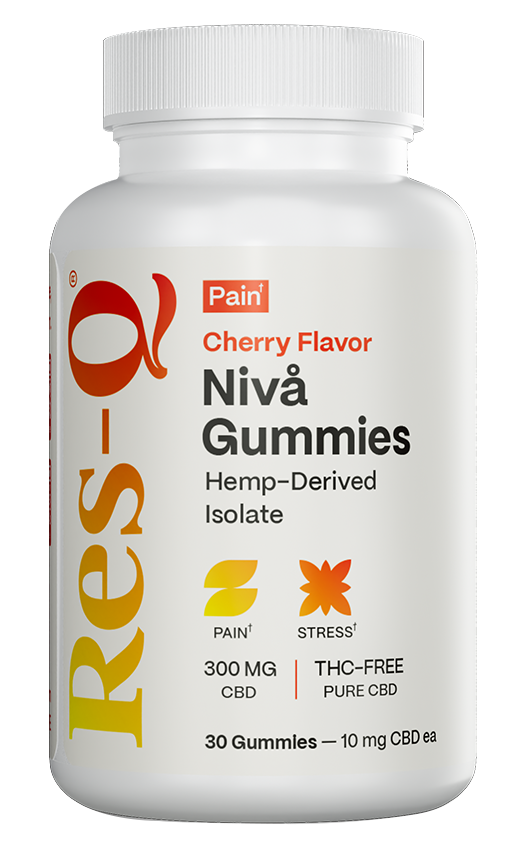
The CBD Your Body ACTUALLY ABSORBS
Most CBD passes right through you. This one doesn't — 440% better absorption, zero THC, made in the U.S.
See Why People Are SwitchingPutting It All Together
CBD for inflammation has genuine scientific support — primarily from preclinical research, with a growing number of human studies adding weight. It interacts with the endocannabinoid system, cytokine pathways, and pain receptors in ways that reduce measurable inflammatory markers. CBD oil for inflammatory pain has helped real people with real conditions, though individual results vary.
Is cbd an anti inflammatory in the pharmacological sense? The data says yes, at least partially. It won’t replace methotrexate for someone with severe rheumatoid arthritis. But as a complementary tool — especially for mild to moderate chronic inflammation — the evidence is encouraging.
Quality matters. Dosing matters. Consistency matters. And medical guidance matters, particularly if you’re already on other medications.
If you’re dealing with persistent inflammation and you’ve wondered whether CBD might help, start by talking to your healthcare provider. Then look for a reputable, third-party tested product. Begin with a low dose. Keep a journal. Give it three to four weeks. And pay attention — not just to pain levels, but to stiffness, swelling, sleep quality, and overall function. Those are the signals that tell you whether something is actually working beneath the surface.
Does cbd reduce inflammation or just pain? Based on the best available evidence, it does both — and that combination is exactly why researchers keep studying it.