

CBD Oil for Arthritis: What You Need to Know Before Trying It
Around 59 million adults in the United States have some form of arthritis. That number comes directly from the CDC. And a growing portion of those people are turning to CBD oil for arthritis as a way to manage chronic joint pain, stiffness, and inflammation — often after years of cycling through NSAIDs, corticosteroids, and prescriptions that stopped working or caused side effects they couldn’t tolerate.
This article breaks down what the current science says about CBD and arthritis, what types of CBD products exist, how to dose them, what to watch out for, and whether this option is worth your time and money. No hype. No vague promises. Just what’s actually known as of 2026.
Tired of guessing which CBD actually works?
Find What Works for Your Body
A less-than 60 second wellness match for adults exploring plant-based relief
What’s bothering you most right now?
Select the one that impacts your day the most
How long have you been dealing with this?
There's no wrong answer — this helps us tailor your match
How much does it affect your daily routine?
Be honest — this shapes your recommendation
What have you tried so far?
Knowing what hasn't worked helps us find what will
How familiar are you with CBD?
No judgment — everyone starts somewhere
What sounds easiest to add to your routine?
Think about what fits your lifestyle, not what sounds fancy
What matters most to you in a product?
Pick the one that would seal the deal for you
YOUR MATCH IS READY
We'll include your personalized match plus a first-timer's guide based on your answers.
Where should we send your recommendation?
🔒 No spam, ever. Your info is kept 100% secure.
If you'd rather not wait — based on your answers about your symptoms, we'd point you straight to our trusted partner.
Skip to My Match →What Is CBD Oil, Exactly?
CBD stands for cannabidiol. It’s one of over 100 cannabinoids found in the Cannabis sativa plant. Unlike THC (tetrahydrocannabinol), CBD does not produce a high. That distinction matters, because it’s the main reason CBD products became federally legal in the United States under the 2018 Farm Bill — as long as they contain less than 0.3% THC by dry weight.
CBD oil is typically extracted from hemp plants using CO2 extraction or ethanol extraction. The resulting oil is then diluted with a carrier oil like MCT (medium-chain triglyceride) oil or hemp seed oil. You can take it under your tongue, swallow it in a capsule, or apply it directly to your skin as a topical.
The quality between products varies enormously. That’s not a throwaway line. Two bottles sitting next to each other on a shelf can contain wildly different concentrations of CBD, different levels of contaminants, and different cannabinoid profiles. We’ll get into how to evaluate that further down.
How CBD Interacts with the Body
The Endocannabinoid System and Inflammation
Your body has an endocannabinoid system (ECS). It was discovered in the early 1990s by researchers studying THC. The ECS consists of three main components: endocannabinoids (compounds your body makes naturally), receptors (CB1 and CB2), and enzymes that break those compounds down.
CB1 receptors are concentrated in the brain and central nervous system. CB2 receptors are more prevalent in immune cells and peripheral tissues — including joints. When CBD enters your system, it doesn’t bind directly to CB2 receptors the way THC binds to CB1. Instead, CBD appears to modulate receptor activity indirectly and influence other pathways, including serotonin receptors and TRPV1 pain receptors.
For arthritis specifically, the CB2 receptor connection is the one that matters most. Activated CB2 receptors can suppress the release of pro-inflammatory cytokines — the chemical messengers responsible for driving inflammation in your joints. A 2020 review published in Cannabis and Cannabinoid Research noted that CBD’s anti-inflammatory effects operate through multiple mechanisms, including suppression of cytokine production and inhibition of T-cell proliferation.
Why That Matters for Joint Pain
Arthritis pain is driven by inflammation. In osteoarthritis, it’s the degradation of cartilage that triggers inflammatory responses in the joint lining. In rheumatoid arthritis, the immune system attacks the synovial membrane directly. Either way, inflammation is the engine. If CBD can meaningfully reduce inflammation through the ECS and related pathways, it has a plausible mechanism for reducing arthritis symptoms.
That’s the theory. Now let’s look at what the actual research says.
Does CBD Help with Arthritis? What the Research Shows
Preclinical Evidence (Animal Studies)
A frequently cited study from the European Journal of Pain (2016) applied a topical CBD gel to rats with induced arthritis. After four days, the researchers observed significant reductions in joint swelling and pain-related behaviors. The study used doses of 6.2 mg/day and 62.5 mg/day. Both doses reduced swelling, but the higher dose did not produce proportionally better results — which suggested a ceiling effect.
Another study from 2017 in the journal Pain found that local CBD administration blocked osteoarthritis pain in rats. It also prevented the development of joint neuropathy (nerve pain). The researchers specifically noted that CBD reduced the firing rate of joint nociceptors — the nerve cells responsible for sending pain signals to the brain.
These are animal studies. They don’t prove CBD works in humans. But they do establish biological plausibility, and they influenced the design of later human trials.
Human Clinical Evidence
Human data on cbd for arthritis is still limited but growing. A 2022 study published in the journal Inflammopharmacology surveyed 428 arthritis patients using CBD. Nearly 83% reported improvements in pain, 66% reported improved physical function, and around 60% said they were able to reduce other pain medications.
In 2024, the Arthritis Foundation published results from their own patient survey of over 2,600 respondents. Among those who had tried CBD, 79% reported they were currently using it. Over half said it helped with physical pain. Around 40% said it improved sleep. These are self-reported numbers — not the same as a randomized controlled trial — but the consistency of the reports across thousands of people carries weight.
A randomized, double-blind, placebo-controlled trial conducted by researchers at the University of Alberta (published in 2023) gave 100 patients with hand osteoarthritis either a CBD gel or a placebo for 12 weeks. The CBD group showed modest but statistically significant improvements in pain scores compared to placebo. The researchers noted the results were “clinically meaningful” for the subgroup of patients with moderate-to-severe baseline pain.
So does CBD help with arthritis? The honest answer: there is growing evidence that it does, particularly for pain and inflammation. But the evidence base is still not at the level of, say, methotrexate for rheumatoid arthritis. More large-scale, long-term trials are needed.
Best CBD for Arthritis: How to Choose the Right Product
Not every CBD product on the market is going to be useful for joint pain. The industry is still loosely regulated, and quality gaps are real. Here’s what to evaluate.
Full-Spectrum vs. Broad-Spectrum vs. CBD Isolate
Full-spectrum CBD contains CBD along with other cannabinoids (including up to 0.3% THC), terpenes, and flavonoids. The idea behind full-spectrum is the “entourage effect” — the theory that these compounds work better together than in isolation. A 2015 study from the Lautenberg Center for Immunology and Cancer Research in Israel supported this, showing that full-spectrum extracts produced stronger anti-inflammatory effects than CBD isolate at equivalent doses.
Broad-spectrum CBD includes the same range of compounds but with THC removed entirely. This is a reasonable middle ground for people who can’t or don’t want to consume any THC — including those subject to drug testing.
CBD isolate is pure CBD with nothing else. It’s the most predictable in terms of dosing, but it may not produce the same synergistic benefits. For arthritis specifically, many clinicians lean toward full-spectrum products because the combined anti-inflammatory action of multiple cannabinoids appears to outperform isolated CBD.
When people ask about the best CBD for arthritis, the answer almost always starts with spectrum type. Full-spectrum, from a reputable brand, tested by an independent lab. That’s the baseline.
Looking For Something Pure & Potent?
If your current CBD isn't full-spectrum and U.S.-sourced, you're wasting money
Check Out This Full-Spectrum, American Made CBDThird-Party Testing and Certificates of Analysis
A certificate of analysis (COA) is a document from an independent lab that verifies what’s in a CBD product. It should list the cannabinoid profile (how much CBD, THC, CBG, CBN, etc.), the presence or absence of heavy metals, pesticides, residual solvents, and microbial contaminants.
If a company doesn’t make their COA available — or it’s outdated, or it comes from an in-house lab — that’s a red flag. The FDA has repeatedly tested CBD products and found discrepancies between label claims and actual content. In a 2020 FDA analysis, nearly half the products tested contained less CBD than advertised. Some had virtually none.
Look for COAs from ISO 17025-accredited labs. Check the batch number on the COA matches the batch number on your product. These are small steps that save you from wasting money on something inert.
Topical vs. Oral: Which Delivery Method Is Better?
For localized joint pain — say, your knees or hands — topical CBD can deliver cannabinoids directly to the affected area. A topical cream, balm, or gel bypasses the digestive system entirely. You rub it into the skin over the joint, and CBD absorbs through the dermal layers to reach CB2 receptors in the underlying tissue.
For more widespread pain, or for people with multiple joints affected, oral CBD oil (sublingual tinctures or capsules) may be more practical. Sublingual administration — holding the oil under your tongue for 60 to 90 seconds — allows CBD to absorb through the mucous membrane and enter the bloodstream faster than swallowing it.
Many people with arthritis use both. A sublingual oil in the morning for systemic effects, and a topical applied directly to the worst joints throughout the day. That combined approach is common in patient communities and is supported by the logic of how different delivery methods work.
CBD Oil for Rheumatoid Arthritis vs. Osteoarthritis
These are two different diseases with overlapping symptoms. Osteoarthritis (OA) is a degenerative condition where cartilage breaks down over time. Rheumatoid arthritis (RA) is an autoimmune disease where the immune system attacks the joint lining. Both cause pain, swelling, and reduced range of motion. But the underlying mechanisms differ.
For osteoarthritis, CBD’s value lies primarily in its anti-inflammatory and analgesic properties. Reducing inflammation in the joint capsule and blunting pain signals from damaged cartilage surfaces — that’s the target. The rat studies mentioned earlier were modeled on OA specifically.
For rheumatoid arthritis, CBD’s immunomodulatory effects become more relevant. RA involves overactive T-cells and elevated TNF-alpha levels. CBD has been shown in preclinical research to suppress TNF-alpha production and modulate immune cell activity. A 2021 study in Frontiers in Pharmacology documented CBD’s ability to reduce the production of inflammatory markers in human synovial fibroblasts — the exact cells that become inflamed in RA.
If you’re exploring CBD oil for rheumatoid arthritis, it should not replace disease-modifying antirheumatic drugs (DMARDs) prescribed by a rheumatologist. But it may serve as a complementary approach for symptom management, especially for pain and sleep disruption that DMARDs don’t fully address.
Dosage Guidelines for CBD Oil and Arthritis
There is no universally agreed-upon dose of CBD for arthritis. Clinical trials have used doses ranging from 5 mg per day to over 600 mg per day, depending on the condition being treated and the delivery method.
For arthritis pain specifically, most clinicians who work with CBD recommend starting low and increasing gradually. A common starting point is 10 to 15 mg of CBD taken twice daily via sublingual oil. After one to two weeks, if there’s no meaningful improvement, increase by 5 to 10 mg per dose. Keep a simple log — date, dose, pain level on a 0–10 scale — so you can track what’s working.
Dr. Kevin Boehnke, a researcher at the University of Michigan’s Chronic Pain and Fatigue Research Center, has publicly discussed the challenge of CBD dosing. He’s noted that individual variation is enormous. Body weight, metabolism, the severity of inflammation, and the quality of the product all affect how much CBD a person needs.
For topicals, dosing is less precise. Apply a generous amount to the affected joint. Rub it in thoroughly. Reapply every four to six hours as needed. Most topical products list the total CBD per container, not per application, so you’ll need to estimate based on how much product you use per dose.
Potential Side Effects and Drug Interactions
CBD is generally well-tolerated. The World Health Organization published a report in 2018 stating that CBD exhibits “no effects indicative of any abuse or dependence potential” and that it has a “good safety profile.” That said, side effects do occur.
The most commonly reported side effects include:
— Dry mouth
— Drowsiness or fatigue
— Changes in appetite (usually decreased)
— Diarrhea (typically at higher doses)
— Minor changes in liver enzyme levels
The liver enzyme issue is the one that warrants the most attention. CBD is metabolized by the cytochrome P450 enzyme system in the liver — the same system that processes a long list of prescription medications. This means CBD can interact with drugs like warfarin, certain statins, some anti-seizure medications, and some immunosuppressants commonly used in RA treatment.
If you take any prescription medications, talk to your doctor before adding CBD oil. This is not a generic disclaimer. It’s a real pharmacological concern. A 2020 case report in the Annals of Internal Medicine described a patient whose warfarin levels became dangerously elevated after starting CBD oil. The interaction was clinically significant.
Real Users: What People with Arthritis Report
Anecdotal evidence is not clinical proof. But it adds texture to the picture.
Linda, a 64-year-old retired nurse from Ohio, described her experience with CBD oil on an arthritis patient forum. She has osteoarthritis in both knees and her lower back. After three weeks of using a full-spectrum CBD tincture (25 mg twice daily), she reported a noticeable reduction in morning stiffness. “I went from needing twenty minutes to feel like I could walk in the morning to about five,” she wrote. “It’s not a miracle. But it’s the first thing that’s helped in two years that didn’t upset my stomach.”
James, a 58-year-old mechanic in Texas diagnosed with rheumatoid arthritis, tried CBD topical cream on his hands after a coworker recommended it. He applied it three times a day for six weeks. His assessment: “The swelling in my knuckles went down. Not all the way. But enough that I could grip a wrench without wanting to quit by lunch.”
These stories are consistent with what larger surveys show. The majority of arthritis patients who try CBD report moderate improvements. Not cures. Not dramatic reversals. Moderate, meaningful reductions in pain and stiffness that improve daily functioning.
Common Mistakes People Make with CBD for Arthritis
Based on patient reports, clinician interviews, and industry analysis, these are the most frequent errors:
Starting with too high a dose. More is not always better. The rat study mentioned earlier showed a ceiling effect. Some human users report that moderate doses work better for them than large ones. Start low. Titrate up.
Buying based on price alone. The cheapest CBD oil on the market is cheap for a reason. It may contain less CBD than labeled, or it may be contaminated. Spending an extra $15–$30 on a reputable, third-party tested product is a basic cost-of-entry for getting something that actually works.
Expecting immediate results. CBD oil for arthritis is not ibuprofen. Some people feel effects within days. For others, it takes two to four weeks of consistent use before changes become noticeable. Don’t abandon it after three days.
Ignoring drug interactions. Already covered above, but it bears repeating. If you take prescription medications — especially blood thinners, immunosuppressants, or drugs processed by the liver — consult a pharmacist or physician before starting CBD.
Using only topical when systemic inflammation is the issue. If you have RA or widespread OA, a topical cream on one joint is probably not going to address the broader inflammatory picture. Consider oral CBD as the foundation, with topicals for targeted relief.
Legal Status of CBD Oil in 2026
CBD derived from hemp (containing less than 0.3% THC) remains federally legal in the United States under the 2018 Farm Bill. However, state laws vary. Some states have specific restrictions on CBD in food products. A small number of states require CBD products to be sold only through licensed dispensaries.
The FDA still has not approved any over-the-counter CBD product for arthritis or any other condition. The only FDA-approved CBD medication is Epidiolex (cannabidiol oral solution), which is approved for certain types of epilepsy. This regulatory gap means the quality control burden falls largely on the consumer.
Check your state’s current regulations before purchasing. And if you travel, be aware that CBD laws differ by country. Carrying CBD oil into a country where it’s prohibited can result in confiscation or legal consequences.
Frequently Asked Questions About CBD Oil for Arthritis
Does CBD oil reduce inflammation in arthritic joints?
Preclinical studies indicate that CBD reduces inflammation by suppressing pro-inflammatory cytokines and modulating immune cell activity. Human surveys report improvements in pain and physical function, though large-scale randomized controlled trials are still ongoing.
How long does it take for CBD oil to work for arthritis?
Most users report noticing effects within one to four weeks of consistent daily use. Some feel mild relief within the first few days. Topical CBD may produce localized effects within 15 to 45 minutes of application, though systemic effects from oral CBD take longer to build.
Can I use CBD oil alongside my arthritis medication?
CBD can interact with certain medications, particularly those metabolized by the cytochrome P450 liver enzyme system. This includes warfarin, methotrexate, and some statins. Consult your prescribing physician or pharmacist before combining CBD with any prescription drug.
What is the best type of CBD for arthritis pain?
Full-spectrum CBD oil is generally recommended because it contains multiple cannabinoids and terpenes that may enhance anti-inflammatory effects through the entourage effect. For people who must avoid THC, broad-spectrum CBD is the next best option.
Is CBD oil safe for long-term use?
Current evidence suggests CBD has a favorable long-term safety profile. The World Health Organization has stated that CBD is generally well-tolerated with a good safety profile. However, long-term human studies specifically focused on arthritis populations are still limited. Regular monitoring of liver enzymes is recommended for anyone taking CBD at higher doses alongside other medications.
Moving Forward with CBD Oil for Arthritis
The evidence supporting CBD oil for arthritis is not yet definitive, but it is substantial and growing. Preclinical data demonstrates clear anti-inflammatory and analgesic mechanisms. Human surveys consistently show that the majority of arthritis patients who try CBD experience meaningful improvements in pain, stiffness, and daily function. Clinical trials are catching up, with results that lean positive — especially for moderate-to-severe pain.
If you’ve been managing arthritis pain with conventional treatments and haven’t found adequate relief, CBD oil may be worth adding to your regimen. Start with a reputable, full-spectrum, third-party tested product. Begin at a low dose and increase gradually. Keep a log. Talk to your doctor, especially if you take other medications.
For those dealing specifically with autoimmune joint disease, CBD oil for rheumatoid arthritis may offer complementary relief alongside your existing treatment plan. The immunomodulatory properties of CBD make it a particularly interesting option for RA patients who struggle with pain and sleep disruption despite being on DMARDs.
You don’t have to overhaul your entire treatment approach. Adding one well-chosen CBD product — oral, topical, or both — and tracking its effects over four to six weeks gives you enough information to make an informed decision about whether it belongs in your long-term pain management strategy.
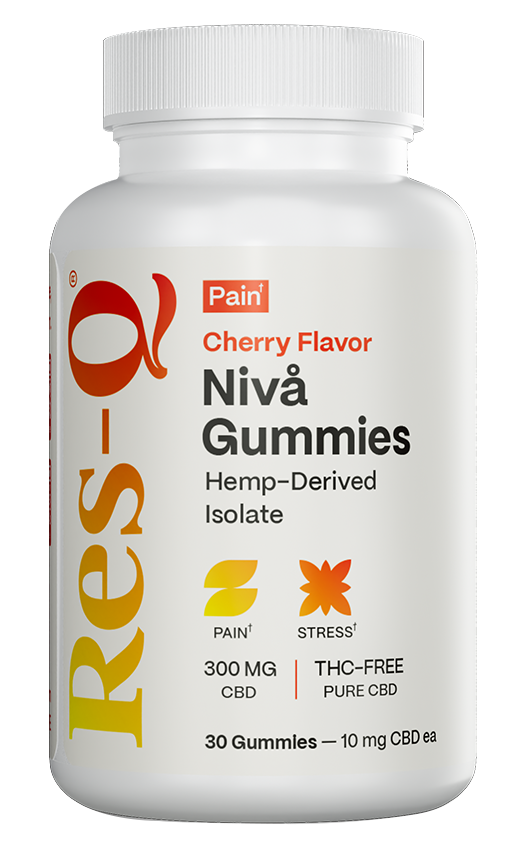
The CBD Your Body ACTUALLY ABSORBS
Most CBD passes right through you. This one doesn't — 440% better absorption, zero THC, made in the U.S.
See Why People Are SwitchingYour next step: research reputable CBD brands that publish independent lab results, pick a product that matches your needs, and give it a consistent trial period. Track your pain levels daily. Let the data guide your decision.