

CBD Potency Levels Matter More Than You Think
Most people grab a bottle of CBD off a shelf, glance at the label, and assume higher milligrams means stronger effects. That is not how CBD potency levels work. Potency depends on concentration per serving, the form of CBD you choose, how your body absorbs it, and whether the product has been sitting in a warehouse for fourteen months. Understanding potency is the difference between wasting money and actually feeling something.
A friend of mine — let’s call her Jess — spent nearly $200 on a 3000mg CBD tincture. She took it for three weeks and felt nothing. Turns out the bottle was 60mL. That meant each 1mL dropper only delivered about 50mg. She thought she was taking something potent. She was taking a moderate dose spread thin. The total milligrams on a label are almost meaningless without doing the math on concentration per dose.
Tired of guessing which CBD actually works?
Find What Works for Your Body
A less-than 60 second wellness match for adults exploring plant-based relief
What’s bothering you most right now?
Select the one that impacts your day the most
How long have you been dealing with this?
There's no wrong answer — this helps us tailor your match
How much does it affect your daily routine?
Be honest — this shapes your recommendation
What have you tried so far?
Knowing what hasn't worked helps us find what will
How familiar are you with CBD?
No judgment — everyone starts somewhere
What sounds easiest to add to your routine?
Think about what fits your lifestyle, not what sounds fancy
What matters most to you in a product?
Pick the one that would seal the deal for you
YOUR MATCH IS READY
We'll include your personalized match plus a first-timer's guide based on your answers.
Where should we send your recommendation?
🔒 No spam, ever. Your info is kept 100% secure.
If you'd rather not wait — based on your answers about your symptoms, we'd point you straight to our trusted partner.
Skip to My Match →What CBD Potency Levels Actually Mean
CBD potency levels refer to the concentration of cannabidiol in a given product per serving. Not per bottle. Not per package. Per serving. A 1000mg bottle that holds 30 servings delivers roughly 33mg per dose. A 500mg bottle with 10 servings delivers 50mg per dose. The second bottle is more potent on a per-serving basis, even though it contains less total CBD.
This trips people up constantly. Product labels highlight the total milligram count because bigger numbers sell better. But what you need to pay attention to is the milligrams per milliliter for oils, milligrams per gummy for edibles, or milligrams per capsule for softgels.
Here is a rough breakdown of how CBD potency levels are typically categorized across the industry:
Low Potency: 5mg to 15mg Per Serving
This range works for people who are brand new to CBD or who weigh under 130 pounds. Some folks use low-potency products for mild daily stress or as a gentle sleep nudge. You will find this range in most gas station gummies and entry-level brands. It is also common in CBD-infused beverages, which tend to have low bioavailability on top of low concentration.
Medium Potency: 15mg to 50mg Per Serving
The majority of regular CBD users land here. This is where most clinical observations and user-reported benefits start to show up more consistently. Medium-potency products include standard tinctures, capsules, and higher-end gummies. If you have used CBD before and want noticeable effects for things like muscle soreness or trouble winding down at night, this is a reasonable starting range.
High Potency: 50mg to 100mg Per Serving
High-potency CBD products are aimed at experienced users, people with higher body weight, or those dealing with more persistent discomfort. Potent CBD at this level often comes in concentrated tinctures, RSO-style syringes, or high-dose capsules. You need to be more deliberate with dosing here. Going from 25mg to 75mg in one jump is not advisable. Titrate up.
Ultra-High Potency: 100mg+ Per Serving
Products in this range are niche. They include CBD concentrates, isolate powders measured by the scoop, and some specialty tinctures marketed toward athletes or people managing chronic issues. Not everyone needs this tier, and frankly, there is limited peer-reviewed research on daily doses above 100mg for general wellness. The FDA-approved drug Epidiolex uses doses as high as 10mg per kilogram of body weight for epilepsy — that can exceed 600mg per day for an average adult. But that is a pharmaceutical product under medical supervision. Different situation entirely.
What Is the Most Potent Form of CBD
People ask this question a lot: what is the most potent form of CBD? The answer depends on whether you mean concentration or bioavailability. They are not the same thing.
In terms of raw concentration, CBD isolate powder is the most potent form. It is typically 99% pure cannabidiol. One gram of isolate contains roughly 990mg of CBD. No other cannabinoids, no terpenes, no plant material. Just crystalline CBD. You can measure it with a milligram scale and add it to food, drinks, or sublingual oil. For sheer milligram-per-gram potency, nothing beats isolate.
But concentration alone does not determine how much CBD your body actually uses. Bioavailability matters. When you swallow a CBD capsule, your digestive system and liver metabolize a significant portion before it reaches your bloodstream. Oral bioavailability for CBD ranges from about 6% to 19% according to published pharmacokinetic data. That means if you swallow 100mg, your body might only use 6 to 19mg of it.
Sublingual tinctures bypass some of that first-pass metabolism. You hold the oil under your tongue for 60 to 90 seconds, and the CBD absorbs through the mucous membranes directly into your bloodstream. Bioavailability estimates for sublingual delivery range from 13% to 35%. Better than swallowing a capsule.
Inhaled CBD — through vaping or smoking hemp flower — has the highest bioavailability. Estimates go as high as 31% to 56%. The CBD enters your lungs and hits your bloodstream almost immediately. The trade-off is duration. Inhaled CBD effects tend to fade faster, usually within one to two hours, compared to four to six hours for oral products.
So what is the most potent form of CBD in practice? It depends on what you are optimizing for. Fastest onset and highest absorption: inhaled. Most precise and concentrated: isolate powder. Best balance of absorption and duration: sublingual tincture. There is no single winner.
Looking For Something Pure & Potent?
If your current CBD isn't full-spectrum and U.S.-sourced, you're wasting money
Check Out This Full-Spectrum, American Made CBDDoes CBD Lose Its Potency Over Time
Yes. Unambiguously, yes. Does CBD lose its potency over time? It does, and faster than most people realize.
CBD degrades when exposed to light, heat, and oxygen. A 2020 study published in the journal Cannabis and Cannabinoid Research found that cannabinoids, including CBD, begin to break down under prolonged UV exposure and elevated temperatures. The degradation is gradual but measurable. After about one year of proper storage — cool, dark, sealed — most CBD products retain the bulk of their potency. After two years, even well-stored products start to show meaningful drops in cannabinoid concentration.
Improper storage accelerates this. Leaving a tincture on a windowsill, in a hot car, or in a bathroom cabinet where heat and humidity fluctuate is a fast track to a weaker product. The carrier oil can also go rancid, which introduces off flavors and potentially harmful oxidation byproducts.
Here are practical storage tips that actually help preserve CBD potency levels:
Store tinctures upright in a cool, dark place. A kitchen pantry or a dresser drawer works. Keep gummies sealed in their original container, away from direct sunlight. If you buy CBD in bulk — say, a large jar of isolate — consider splitting it into smaller portions and storing the extras in airtight containers in the freezer. Freezing does not damage CBD and significantly slows degradation.
Check expiration dates. Reputable brands include them. If a product does not have one, that is a red flag about the manufacturer’s quality control. A bottle with no expiration date might have been sitting in a distribution center for an unknown period before it reached you.
How to Calculate the CBD Potency You Actually Need
There is no universal dosing chart. Anyone who gives you one is oversimplifying. But there are frameworks that work reasonably well for most people.
Start with body weight. A commonly referenced starting guideline is 1mg to 6mg of CBD per 10 pounds of body weight. So a 180-pound person might begin with 18mg to 108mg. That range is wide on purpose. You start low and work up.
A guy I know — works in construction, about 210 pounds — started at 25mg of a full-spectrum tincture before bed. Felt a mild relaxation but nothing dramatic. He moved to 50mg after a week. Noticeable improvement in how quickly he fell asleep. Stayed there. His wife, who weighs about 140 pounds, found her sweet spot at 30mg of the same product. Different bodies, different responses.
The type of CBD extract also plays a role. Full-spectrum products contain CBD plus other cannabinoids like CBG, CBN, and trace amounts of THC (under 0.3%). These compounds work together in what researchers call the entourage effect. Some evidence suggests full-spectrum extracts may produce stronger effects at lower doses compared to isolate. Broad-spectrum products sit in the middle — multiple cannabinoids but with THC removed.
If you are comparing products, always normalize to milligrams per serving. Write it down if you need to. Track your dose, the time you took it, and how you felt two hours later. Boring? Yes. Effective? Absolutely.
Common Mistakes People Make With Potent CBD Products
The first mistake is assuming more is always better. Taking 200mg of CBD when 40mg would have done the job does not double the benefit. CBD has a biphasic effect profile. At certain doses it promotes calmness. At much higher doses some users report feeling more alert or even slightly jittery. The dose-response curve is not linear.
The second mistake is ignoring the carrier. CBD oil tinctures use a carrier oil — MCT oil, hemp seed oil, olive oil — that affects absorption. MCT oil is the most common and tends to support better absorption due to medium-chain fatty acid content. A potent CBD tincture in a low-quality carrier oil may underperform a slightly less concentrated tincture in a high-quality one.
Third: not reading the Certificate of Analysis. Every legitimate CBD product should have a COA from a third-party lab. This document tells you the actual cannabinoid content, not just what the label claims. It also screens for heavy metals, pesticides, residual solvents, and microbial contamination. If a company does not provide a COA or makes it difficult to find, move on. There are too many reputable options on the market to gamble.
Fourth: switching products too frequently. Your body needs time to build a consistent level of cannabinoids. Jumping from brand to brand every week makes it nearly impossible to evaluate what is working. Pick a product, use it for at least two to three weeks at a consistent dose, and then assess.
Why CBD Potency Levels Vary So Much Between Brands
Hemp is an agricultural product. The CBD content of the raw plant depends on the cultivar, growing conditions, soil quality, harvest timing, and extraction method. Two brands can start with the same cultivar and end up with meaningfully different cannabinoid profiles based on how they process the plant material.
CO2 extraction is considered the gold standard. It uses pressurized carbon dioxide to pull cannabinoids from the plant without introducing harsh chemical solvents. The result is a clean extract with a well-preserved cannabinoid and terpene profile. Ethanol extraction is also common and effective but can pull more chlorophyll, which affects taste. Hydrocarbon extraction using butane or propane is efficient but requires rigorous purging to remove solvent residues.
After extraction, the crude oil goes through winterization and distillation to remove waxes, lipids, and unwanted compounds. The level of refinement determines whether you end up with a full-spectrum distillate, a broad-spectrum distillate, or an isolate. Each step affects the final potency and cannabinoid ratio.
Then there is formulation. How the brand combines the extract with carrier oils, flavoring, and other ingredients determines the final concentration per serving. Some brands dilute more aggressively to hit a lower price point. Others prioritize potency and charge accordingly. Neither approach is inherently wrong. You just need to know what you are buying.
Potent CBD and Drug Testing
This matters more than people realize. Full-spectrum CBD products legally contain up to 0.3% THC. At low doses that trace amount is unlikely to trigger a standard urine drug test. But at high doses — say 100mg or more of full-spectrum CBD daily — the cumulative THC intake can potentially reach detectable levels.
A 2019 study from Johns Hopkins Medicine found that even low concentrations of THC in hemp products could cause positive results on certain immunoassay-based drug screens. The participants who consumed full-spectrum hemp products with 0.2% to 0.3% THC had detectable THC metabolites in urine within days.
If you are subject to drug testing, broad-spectrum or isolate-based products are the safer choice. They should contain zero THC, though you still want to verify this through the COA. Lab-tested broad-spectrum products from reputable manufacturers consistently show non-detectable THC levels.
How the CBD Market Has Changed in 2026
The CBD industry looks different than it did three or four years ago. The companies that survived the initial hype cycle and subsequent shakeout tend to be the ones that invested in quality, transparency, and third-party testing. Fly-by-night operations that were selling mislabeled products with inflated potency claims have largely been weeded out — though not entirely.
Regulations are tighter. More states have adopted specific labeling requirements for CBD products, including mandatory per-serving potency disclosures. The FDA has continued to issue warning letters to companies making unsupported health claims. This is a good thing for consumers. Clearer labels and stricter enforcement mean you are more likely to get what you are paying for.
Novel delivery formats have expanded. Nanoemulsion technology, which breaks CBD into smaller particles for faster absorption, has moved from a niche selling point to a mainstream feature in many liquid products. Water-soluble CBD powders have improved. Transdermal patches designed for sustained release over 8 to 12 hours are gaining traction among users who want consistent CBD potency levels throughout the day without redosing.
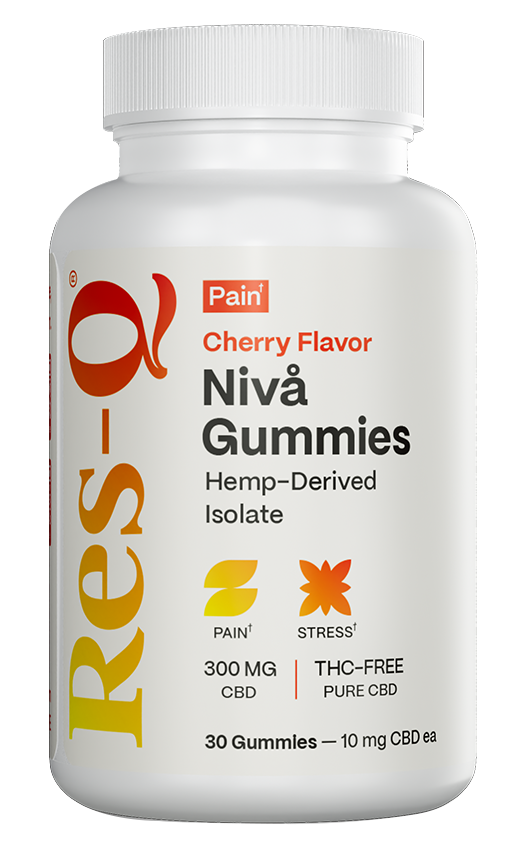
The CBD Your Body ACTUALLY ABSORBS
Most CBD passes right through you. This one doesn't — 440% better absorption, zero THC, made in the U.S.
See Why People Are SwitchingFinding the Right CBD Potency for You
Understanding CBD potency levels is not complicated once you strip away the marketing noise. Know the milligrams per serving, not per bottle. Understand how different forms affect absorption. Store your products properly so they do not degrade. Read the COA. Track your doses.
Whether you are exploring potent CBD for the first time or reassessing what you have been using, the key is informed experimentation. Start low, go slow, and pay attention to how your body responds. The right potency exists for you — it just takes a bit of patience and some basic math to find it.
Explore CBD potency levels further and find the right strength that matches your goals. The difference between a product that works and one that does not often comes down to understanding exactly what you are putting into your body — and how much of it actually reaches your system.