

What You Need to Know About CBD Shipping Right Now
CBD shipping is one of those things that sounds simple until you actually try to do it. You buy a product. You want to send it somewhere. Should be easy, right? Not always. Federal law says one thing. State law says another. Carriers each have their own rules. And if you get it wrong, your package gets seized or returned — or worse.
Since the 2018 Farm Bill passed, hemp-derived CBD with less than 0.3% THC has been legal at the federal level. That opened the door for CBD shipping across the country. But “legal at the federal level” doesn’t mean every state, every carrier, and every situation is clear-cut. There are real rules you need to follow. There are documents you need to have ready. And there are mistakes that cost people time, money, and product every single day.
This guide covers all of it. Whether you’re a small business owner shipping CBD orders, a consumer sending a gift, or just someone trying to figure out what’s allowed — this is the breakdown.
Tired of guessing which CBD actually works?
Find What Works for Your Body
A less-than 60 second wellness match for adults exploring plant-based relief
What’s bothering you most right now?
Select the one that impacts your day the most
How long have you been dealing with this?
There's no wrong answer — this helps us tailor your match
How much does it affect your daily routine?
Be honest — this shapes your recommendation
What have you tried so far?
Knowing what hasn't worked helps us find what will
How familiar are you with CBD?
No judgment — everyone starts somewhere
What sounds easiest to add to your routine?
Think about what fits your lifestyle, not what sounds fancy
What matters most to you in a product?
Pick the one that would seal the deal for you
YOUR MATCH IS READY
We'll include your personalized match plus a first-timer's guide based on your answers.
Where should we send your recommendation?
🔒 No spam, ever. Your info is kept 100% secure.
If you'd rather not wait — based on your answers about your symptoms, we'd point you straight to our trusted partner.
Skip to My Match →Is It Illegal to Ship CBD Across State Lines
This is probably the most common question people ask. And the short answer is: no, it is not illegal to ship CBD across state lines — as long as the product meets federal requirements. That means it has to be derived from hemp, not marijuana. And it must contain no more than 0.3% THC by dry weight.
The 2018 Farm Bill (officially the Agriculture Improvement Act of 2018) removed hemp from the Controlled Substances Act. That single change made it federally legal to grow, process, sell, and ship hemp-derived CBD products. Before that, CBD occupied a legal gray area that made shipping risky for everyone involved.
But here’s where it gets tricky. Federal legality doesn’t override state law in every situation. Some states have placed additional restrictions on certain CBD product types. For example, as of 2026, states like Idaho have historically maintained stricter THC thresholds. Louisiana has required specific retail licensing for CBD sales. And some states have placed limits on ingestible CBD products while allowing topicals.
So when someone asks “is it illegal to ship CBD across state lines,” the real answer is: it depends on what you’re shipping, where you’re shipping it from, and where it’s going. You need to check both the origin state and the destination state’s current laws before you pack anything.
The Federal vs. State Law Gap
Think of it like alcohol regulations. Alcohol is federally legal. But you can’t ship wine to every state without restrictions. Some states are dry counties. Some require permits for shipment. CBD works in a similar way.
The USDA’s final rule on hemp production, updated in January 2021, set national standards for hemp cultivation and testing. But it left room for states to implement their own programs. That means enforcement varies. A CBD product that ships freely from Colorado to California might hit a wall going into a state with tighter rules.
The safest approach? Always check the destination state’s department of agriculture or attorney general’s office for the latest CBD regulations before shipping. Laws change. What was restricted last year might be open now, and vice versa.
Can You Ship CBD in the Mail
Yes. You can ship CBD in the mail. But not without following specific rules depending on which carrier you use. USPS, UPS, and FedEx each have different policies, and they’ve all updated their guidelines multiple times since 2019.
USPS (United States Postal Service)
USPS published internal guidelines in 2019 that allow the mailing of hemp-derived CBD products. However, the sender must be able to provide documentation proving the product is compliant. That means having a Certificate of Analysis (COA) from a third-party lab showing the THC content is at or below 0.3%.
USPS can inspect packages. If a postal inspector has reason to believe a package contains a controlled substance, they can open it. Having proper documentation protects you in that scenario. Without it, your package could be detained and you could face questions you don’t want to answer.
One important detail: USPS operates under federal law exclusively. So as long as your CBD product is federally compliant, USPS is generally the most straightforward option for domestic CBD shipping.
UPS
UPS updated its policy to accept hemp-derived CBD shipments. But UPS requires shippers to enter into a specific agreement and provide compliance documentation. That typically includes a copy of the COA, proof that the hemp was grown under a properly licensed program, and confirmation that the product meets the 0.3% THC threshold.
UPS also reserves the right to refuse shipments at their discretion. If you’re a business shipping in bulk through UPS, you’ll want to work directly with their compliance team to set up your account properly. Individual one-off shipments are less common through UPS for CBD.
FedEx
FedEx has a similar stance. They allow hemp-derived CBD shipments but require compliance with all applicable laws. FedEx’s terms of service include provisions that let them refuse or return shipments that don’t meet their internal guidelines.
In practice, FedEx tends to be slightly more cautious. Some CBD businesses have reported shipments being held or returned by FedEx even with proper documentation. The general recommendation is to have all your paperwork ready and clearly labeled on the outside of the package. A proactive approach saves headaches.
Private Carriers and Regional Options
Beyond the big three, several regional and specialty carriers have emerged that specifically cater to CBD and hemp businesses. Companies like Easyship and ShipBob have built CBD-friendly logistics programs. These can be especially useful for e-commerce brands that need reliable, consistent CBD shipping without the back-and-forth of navigating major carrier policies.
Looking For Something Pure & Potent?
If your current CBD isn't full-spectrum and U.S.-sourced, you're wasting money
Check Out This Full-Spectrum, American Made CBDHow to Ship CBD Products Legally: Step by Step
Whether you’re sending a single bottle to a friend or fulfilling hundreds of orders a week, the process for legal CBD shipping follows the same basic framework.
Step 1: Verify Your Product Is Compliant
Before you ship anything, confirm your CBD product is derived from hemp and contains no more than 0.3% THC. This isn’t something you can guess at or take a manufacturer’s word for. You need a Certificate of Analysis from an accredited, independent third-party laboratory.
The COA should show the cannabinoid profile of the product, including the exact THC concentration. It should also list the lab’s name, accreditation, the date of testing, and the batch number that matches your product. COAs that are outdated or don’t match the specific batch you’re shipping won’t hold up under scrutiny.
Step 2: Check Origin and Destination Laws
Look up the CBD laws in both your state and the recipient’s state. Pay attention to product type restrictions. Some states treat CBD edibles differently than CBD topicals or tinctures. Some have age restrictions for purchase. Some require specific labeling.
A few states to watch closely as of 2026: Mississippi has updated its CBD framework but still has specific labeling mandates. South Dakota went through multiple legal battles over hemp legality before settling its current rules. Always verify with the most recent state-level guidance.
Step 3: Package and Label Correctly
Proper packaging matters more than most people realize. Your CBD product should be sealed, clearly labeled with its contents, and ideally include a copy of the COA inside the package. The exterior of the package should not have anything that could be confused with marijuana branding or imagery.
For liquids like tinctures, use leak-proof containers and cushioning material. For edibles, ensure they’re sealed in food-safe packaging. For vape cartridges, check carrier-specific rules — some carriers have restrictions on shipping vape products regardless of what’s in them due to the PACT Act (Prevent All Cigarette Trafficking Act), which was amended in 2021 to include vaping products.
Step 4: Choose Your Carrier and Ship
Pick the carrier that works best for your situation. USPS for simplicity on smaller shipments. UPS or FedEx for business accounts with volume. Specialty logistics providers for ongoing e-commerce fulfillment.
Keep copies of all shipping receipts, tracking numbers, and compliance documents. If a shipment is ever questioned, having a paper trail is your best defense.
CBD Free Shipping: What It Means for Buyers and Sellers
If you’ve browsed any CBD online store, you’ve probably seen “cbd free shipping” plastered across the homepage. It’s become a standard marketing tool in the industry. But what does it actually mean for both sides of the transaction?
For Consumers
CBD free shipping usually means the retailer absorbs the cost of shipping into their pricing or profit margin. For the buyer, it means no extra charge at checkout. Most CBD retailers offer free shipping on orders over a certain threshold — commonly $50 or $75. Some offer it on all orders regardless of size.
This matters because CBD products aren’t cheap. A quality full-spectrum CBD tincture runs anywhere from $30 to $120 depending on potency and brand. Adding $8 to $15 in shipping on top of that can push customers toward competitors. Free shipping removes that friction.
For Sellers
Offering cbd free shipping is a calculated business decision. The cost of shipping a small CBD product domestically through USPS First Class ranges from about $4 to $8. Priority Mail bumps that up to $8 to $15. For businesses shipping hundreds or thousands of packages per month, those costs add up fast.
Many CBD brands build shipping costs into their product pricing. A tincture that costs $12 to produce and $6 to ship might be priced at $45 with “free shipping” rather than $39 plus $6 shipping. The psychology works. Consumers consistently prefer a higher product price with free shipping over a lower product price with a visible shipping fee. This has been documented in multiple e-commerce studies, including research published by the Baymard Institute.
Subscription Models and Free Shipping
A growing trend in 2026 is CBD subscription services that bundle free shipping as a perk. Customers sign up for monthly deliveries of their preferred CBD products — tinctures, gummies, topicals — and get free shipping on every order. This model benefits sellers with predictable revenue and buyers with convenience and savings.
Brands like Charlotte’s Web and Lazarus Naturals have used subscription models with free shipping tiers for years. It’s become table stakes in the direct-to-consumer CBD market.
Common Mistakes People Make When Shipping CBD
Mistakes happen. But some of them are avoidable if you know what to watch for.
Shipping Without a COA
This is the number one mistake. People assume that because CBD is “legal,” they don’t need to prove it. Wrong. If your package is inspected and you can’t show a valid COA, you have no documentation to prove your product isn’t marijuana. That puts you in a bad position legally.
Ignoring State Laws
Shipping CBD from Oregon to a state that has restrictions on ingestible CBD without checking? That’s a problem waiting to happen. Federal legality gives you a baseline, but state-level compliance is your responsibility.
Using Non-Compliant Packaging
Some people ship CBD in unmarked bags or containers that look suspicious. Others use packaging with cannabis leaf imagery that triggers inspections. Clear, professional, compliant labeling protects you and your shipment.
Shipping CBD Vape Products Without PACT Act Compliance
The PACT Act amendments in 2021 brought vaping products — including CBD vape cartridges — under stricter shipping regulations. USPS banned the mailing of most vaping products entirely. UPS and FedEx have also restricted vape shipments. If you’re shipping CBD vape products, you need to use a carrier that allows it and follow their exact protocols. Many CBD businesses have moved to adult-signature-required delivery services for vape products.
Not Insuring High-Value Shipments
CBD products can be expensive. A shipment of 50 units of premium CBD oil could easily be worth $2,000 or more at retail. Shipping without insurance means you’re eating the full loss if the package is lost, stolen, or damaged. Most carriers offer insurance options. Use them for anything over a few hundred dollars in value.
Documentation Checklist for CBD Shipping
Keep these on hand for every shipment:
— Third-party Certificate of Analysis (COA) matching the product batch
— Proof of hemp origin (from a USDA-licensed or state-licensed grower/processor)
— Product labels showing CBD content, THC content, ingredients, and manufacturer info
— Carrier compliance agreement (if required, especially for UPS and FedEx business accounts)
— Shipping receipts and tracking information
— State compliance documentation for both origin and destination states
Keeping a digital folder organized by batch number and shipment date makes this manageable even at scale. If an issue arises three months after a shipment, you want to be able to pull the relevant documents in minutes, not days.
International CBD Shipping: A Different Situation Entirely
Domestic CBD shipping has its complexities. International CBD shipping multiplies them. Every country has its own laws on cannabinoids, and many of them are far more restrictive than the United States.
In the European Union, most countries allow CBD products with less than 0.2% THC (note: lower than the U.S. threshold of 0.3%). But specific regulations vary by member state. France fought a legal battle over CBD that went to the European Court of Justice before loosening some restrictions. Germany allows CBD but has strict rules about health claims and product classification.
In Canada, CBD is regulated under the Cannabis Act, which means it’s treated similarly to marijuana for import/export purposes. You cannot legally mail CBD from the U.S. to Canada without proper import licenses.
Countries like Japan, South Korea, and most of Southeast Asia have extremely strict anti-cannabis laws. Shipping CBD to these countries — even hemp-derived CBD — can result in your package being seized at customs and potential legal consequences for the recipient.
The bottom line for international CBD shipping: don’t assume. Research the destination country’s specific laws on CBD and hemp products. Consult with a customs broker if you’re shipping commercially. The stakes are higher internationally, and mistakes are harder to fix.
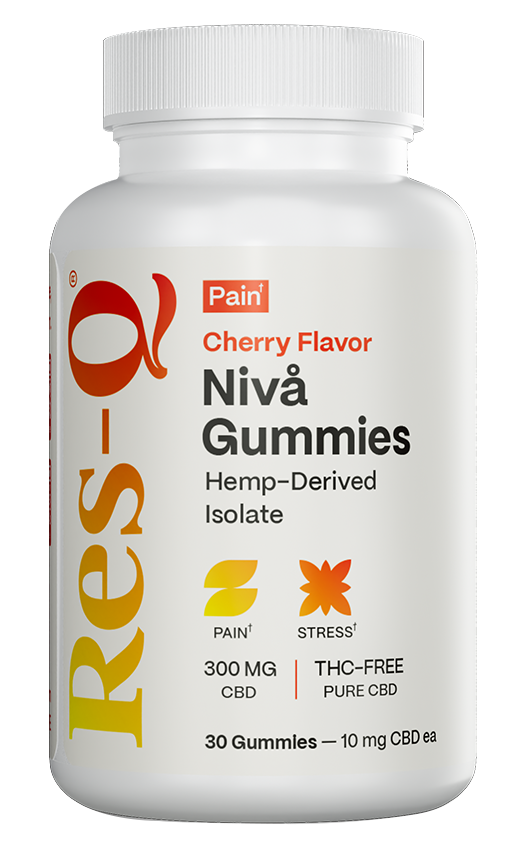
The CBD Your Body ACTUALLY ABSORBS
Most CBD passes right through you. This one doesn't — 440% better absorption, zero THC, made in the U.S.
See Why People Are SwitchingHow the CBD Shipping Landscape Has Changed Since 2018
It’s worth stepping back and looking at how far things have come. Before the 2018 Farm Bill, CBD shipping was essentially a gamble. Packages were routinely seized. Law enforcement couldn’t easily distinguish hemp-derived CBD from marijuana-derived products. Banks refused to process payments for CBD businesses, which made e-commerce nearly impossible.
Between 2019 and 2022, carrier policies caught up with federal law. USPS, UPS, and FedEx all published guidelines. Payment processors like Square and PayPal began accepting CBD merchants (with conditions). Third-party logistics companies started building CBD-specific fulfillment programs.
By 2024 and 2025, the infrastructure matured. Lab testing became more standardized. State regulations, while still uneven, became more predictable. Consumer confidence in ordering CBD online grew significantly — Brightfield Group estimated the U.S. CBD market at over $7 billion in annual sales by 2025, with online sales accounting for a substantial and growing share.
In 2026, CBD shipping is more streamlined than ever. But it still requires diligence. Laws continue to evolve, especially as Congress considers broader cannabis reform legislation that could further impact how CBD is regulated, shipped, and sold.
Tips for CBD Businesses Scaling Their Shipping Operations
Invest in a Third-Party Logistics Partner (3PL)
Once you’re shipping more than 50 to 100 orders per week, handling fulfillment in-house becomes a bottleneck. A 3PL that specializes in CBD — or at least accepts CBD products — can handle warehousing, picking, packing, and shipping. They’ll also manage compliance documentation at the shipment level, which frees you up to focus on product development and marketing.
Automate Compliance Checks
Several software platforms now offer automated state-law compliance checks for CBD shipments. These tools cross-reference the destination zip code against a database of state and local CBD regulations and flag potential issues before the label is printed. It’s not foolproof — you still need to verify — but it catches obvious problems early.
Offer Multiple Shipping Speeds
Consumers expect options. Standard shipping (5 to 7 business days), expedited (2 to 3 days), and overnight should all be available if possible. Many CBD customers are ordering products they use daily — tinctures, capsules, topicals — and running out creates urgency. Meeting that urgency with faster shipping options increases customer satisfaction and repeat purchases.
Frequently Asked Questions About CBD Shipping
Can you ship CBD to all 50 states?
You can ship federally compliant hemp-derived CBD to most states. However, a handful of states have additional restrictions on certain product types. Always verify the destination state’s current CBD laws before shipping.
Do I need special packaging to ship CBD?
There’s no federally mandated special packaging, but your product must be clearly labeled with its contents, THC percentage, and manufacturer information. Proper packaging also includes leak-proof containers for liquids and cushioning to prevent damage during transit.
Can you ship CBD in the mail internationally?
International CBD shipping is possible but heavily regulated. Each country has its own laws on CBD and hemp products. Many countries prohibit or restrict CBD imports entirely. Research the destination country’s specific regulations and consider working with a customs broker for commercial shipments.
What happens if my CBD shipment is seized?
If a carrier or law enforcement seizes your CBD shipment, having a valid COA and compliance documentation is critical. In most cases, you can reclaim compliant products by providing proof that they meet federal and state standards. Without documentation, recovery is much harder and you may lose the product entirely.
Is CBD shipping more expensive than regular shipping?
The physical shipping cost for CBD is generally the same as any product of similar size and weight. The additional costs come from compliance — lab testing, documentation, insurance, and potentially using specialty carriers or adult-signature delivery for certain products like vape cartridges.
Making CBD Shipping Work for You
CBD shipping in 2026 is manageable. The legal framework exists. The carrier policies are published. The tools and logistics partners are available. What separates businesses and individuals who ship CBD successfully from those who run into problems is preparation and attention to detail.
Keep your COAs current. Know your state laws. Package and label correctly. Choose the right carrier for your needs. Document everything. That’s the formula.
And if you’re planning to travel with CBD rather than ship it, you might be wondering — can you bring CBD on a cruise ship? That’s a question with its own set of rules, depending on the cruise line, the ports of call, and whether the ship passes through international waters. It’s worth researching before you pack your CBD products in your luggage, because cruise lines like Royal Caribbean and Carnival have explicit policies on cannabinoid products that may differ from what you expect on land.
Whether you’re shipping CBD from your kitchen table or from a warehouse, the foundation is the same. Know the rules. Follow them. Keep your paperwork tight. The CBD industry has come a long way in a short time, and the shipping side of the business has kept pace — as long as you do your part to stay compliant.