
CBD Oil and Schizophrenia: What We Actually Know Right Now
If you or someone you care about lives with schizophrenia, you’ve probably run into the question: does CBD oil help schizophrenia? It comes up in forums, doctor’s offices, and late-night search sessions. The short answer is that early clinical evidence looks promising, but we’re not at the finish line yet. CBD — cannabidiol — is a non-psychoactive compound found in the cannabis plant. It doesn’t get you high. And a handful of controlled human trials suggest it may reduce certain psychotic symptoms with fewer side effects than traditional antipsychotics.
That’s worth paying attention to. But it’s also worth understanding exactly what was studied, how it was studied, and where the gaps are. This article breaks down the clinical data, the proposed brain mechanisms, the risks, and the real-world experiences that shape this conversation.
Tired of guessing which CBD actually works?
Find What Works for Your Body
A less-than 60 second wellness match for adults exploring plant-based relief
What’s bothering you most right now?
Select the one that impacts your day the most
How long have you been dealing with this?
There's no wrong answer — this helps us tailor your match
How much does it affect your daily routine?
Be honest — this shapes your recommendation
What have you tried so far?
Knowing what hasn't worked helps us find what will
How familiar are you with CBD?
No judgment — everyone starts somewhere
What sounds easiest to add to your routine?
Think about what fits your lifestyle, not what sounds fancy
What matters most to you in a product?
Pick the one that would seal the deal for you
YOUR MATCH IS READY
We'll include your personalized match plus a first-timer's guide based on your answers.
Where should we send your recommendation?
🔒 No spam, ever. Your info is kept 100% secure.
If you'd rather not wait — based on your answers about your symptoms, we'd point you straight to our trusted partner.
Skip to My Match →What the Clinical Research Says About CBD and Schizophrenia
The relationship between CBD and schizophrenia has been explored in peer-reviewed trials — not just animal models or anecdotal reports. Two studies in particular form the backbone of the current evidence base. Both were randomized, double-blind, and placebo-controlled. That matters because it means neither the patients nor the researchers knew who was getting CBD and who wasn’t.
The Leweke Trial — 2012
Published in Translational Psychiatry, this study was led by Dr. F. Markus Leweke and colleagues at the University of Cologne in Germany. It enrolled 42 patients with acute schizophrenia or schizophreniform psychosis. Half received CBD at 800 mg per day. The other half received amisulpride, a standard antipsychotic commonly prescribed in Europe.
After four weeks, both groups showed significant improvement in psychotic symptoms as measured by the PANSS (Positive and Negative Syndrome Scale) and the BPRS (Brief Psychiatric Rating Scale). CBD performed comparably to amisulpride. That alone is striking. But the side-effect profile told an even more compelling story.
Patients on amisulpride experienced weight gain, elevated prolactin levels (which can cause hormonal problems), and movement-related side effects. Patients on CBD did not. They also had elevated blood levels of anandamide — a naturally occurring endocannabinoid — and those higher anandamide levels correlated with greater symptom improvement.
That’s a big deal. It suggests CBD may work through a distinct biological pathway, one that enhances the body’s own endocannabinoid signaling rather than simply blocking dopamine receptors the way most antipsychotics do.
The McGuire Trial — 2018
Published in the American Journal of Psychiatry, this study was conducted by Dr. Philip McGuire at King’s College London. It was larger: 88 patients with schizophrenia who were already on antipsychotic medication. Half received 1000 mg of CBD daily as an add-on treatment. The other half received a placebo, also as an add-on.
After six weeks, the CBD group showed a statistically significant reduction in positive psychotic symptoms — hallucinations, delusions, disorganized thinking. Their clinicians were also more likely to rate them as “improved” compared to the placebo group. Side effects were mild and comparable between the two groups.
The McGuire trial didn’t test CBD as a standalone replacement for antipsychotics. It tested CBD as something you add on top of existing medication. That’s an important distinction. It means the current strongest evidence supports CBD as a supplement to conventional treatment, not a substitute for it.
How CBD Might Work in the Brain
Understanding how CBD could affect psychotic symptoms requires a quick look at brain chemistry. Not a deep dive — just enough to see why researchers find this compelling.
The Endocannabinoid System and Anandamide
Your brain produces its own cannabinoids. They’re called endocannabinoids. One of the most studied is anandamide, sometimes called the “bliss molecule.” Anandamide binds to CB1 receptors throughout the brain and helps regulate mood, perception, and cognition.
In people with schizophrenia, research has found elevated anandamide levels in cerebrospinal fluid. This may seem counterintuitive — more of a calming molecule should be good, right? Researchers believe the elevation is actually a compensatory response. The brain is producing more anandamide to try to counteract the dysfunction driving psychotic symptoms.
CBD inhibits an enzyme called FAAH (fatty acid amide hydrolase). FAAH is responsible for breaking down anandamide. When FAAH is inhibited, anandamide sticks around longer in the synapse. More anandamide. More of that natural buffering effect. The Leweke study specifically measured this: patients on CBD had higher anandamide levels, and those levels predicted symptom improvement.
CBD vs. THC — A Distinction That Can’t Be Overstated
THC — tetrahydrocannabinol — is the compound in cannabis that gets you high. It is also strongly associated with increased psychosis risk, especially in adolescents and people with genetic vulnerability to schizophrenia. A 2019 study published in The Lancet Psychiatry found that daily use of high-potency cannabis (THC content above 10%) was associated with a fivefold increase in the odds of a first psychotic episode in certain European cities.
CBD does the opposite. It appears to counteract some of THC’s psychosis-inducing effects. In experimental models, pre-treatment with CBD reduced the paranoia and cognitive disruption caused by THC administration. This is one of the reasons researchers became interested in CBD for schizophrenia in the first place.
So when someone asks does CBD oil help schizophrenia, part of the answer depends entirely on what’s in that oil. Pure CBD isolate or broad-spectrum products with no THC are what the clinical trials used. Full-spectrum products containing THC could make things worse. That distinction is critical.
Is CBD Good for Schizophrenia? What Clinicians Actually Say
Most psychiatrists will tell you the data is encouraging but insufficient to change clinical practice. And they’re right to be cautious. Two trials, even well-designed ones, are not enough to rewrite treatment guidelines. The sample sizes were small — 42 patients in one, 88 in the other. Long-term safety data is limited. And schizophrenia is a complex, heterogeneous illness that presents differently across individuals.
Dr. McGuire himself, in interviews following his 2018 publication, emphasized that CBD should not be used as a replacement for antipsychotic medication. He described it as a potential adjunct — something to add alongside existing treatment, possibly improving outcomes or allowing lower doses of drugs with harsh side effects.
The National Institute for Health and Care Excellence (NICE) in the UK has not yet included CBD in its schizophrenia treatment guidelines. Neither has the American Psychiatric Association. The FDA has approved one CBD-based medication — Epidiolex — but only for two rare forms of epilepsy (Dravet syndrome and Lennox-Gastaut syndrome), not for any psychiatric condition.
So is CBD good for schizophrenia? Based on clinical trial data: possibly, as an adjunct, under medical supervision. Based on regulatory approval: not yet. Based on theoretical mechanism: plausible and supported by biological evidence. Those three answers exist simultaneously, and none of them cancels out the others.
Looking For Something Pure & Potent?
If your current CBD isn't full-spectrum and U.S.-sourced, you're wasting money
Check Out This Full-Spectrum, American Made CBDTreating Schizophrenia With CBD: What the Process Actually Looked Like in Trials
If you’re curious about treating schizophrenia with CBD, it helps to know exactly what the participants in those trials experienced. This wasn’t someone picking up a tincture from a gas station. The protocols were controlled, specific, and medically supervised.
Dosages Used in Clinical Settings
The Leweke trial used 800 mg of CBD per day, divided into four doses of 200 mg. The McGuire trial used 1000 mg per day, also divided. These dosages are significantly higher than what most commercial CBD products suggest. A typical over-the-counter CBD oil might recommend 25–50 mg per day. The clinical doses were 16 to 40 times higher.
That raises practical questions. Pharmaceutical-grade CBD at those doses is expensive. It’s also difficult to replicate with consumer products because of inconsistencies in potency, purity, and bioavailability. A 2017 study published in JAMA found that nearly 70% of CBD products sold online were mislabeled — some contained significantly more or less CBD than advertised, and some contained THC despite labeling claims to the contrary.
The Form of CBD That Was Tested
Both major trials used purified CBD in capsule form. Not gummies. Not vape cartridges. Not sublingual tinctures. Capsules with a known, verified amount of pharmaceutical-grade cannabidiol. This matters because the route of administration affects absorption. Oral CBD has relatively low bioavailability — somewhere between 6% and 19% depending on the study and whether it’s taken with food. Taking CBD with a high-fat meal can significantly increase absorption.
This is one of the complications of translating trial results into real-world use. The CBD products available to consumers are not the same formulations tested in clinical research. Anyone considering this path needs to understand that gap.
Common Mistakes People Make When Exploring CBD for Schizophrenia
Based on patient reports, forum discussions, and clinician observations, certain patterns of misuse come up repeatedly. These aren’t hypothetical. They reflect real decisions people make, sometimes with serious consequences.
Stopping Prescribed Antipsychotic Medication
This is the most dangerous mistake. Some people read about CBD and schizophrenia and conclude they can replace their medication. That’s not what the research supports. The McGuire trial specifically tested CBD as an addition to existing antipsychotics, not a replacement. Abruptly stopping antipsychotic medication can trigger rebound psychosis, hospitalization, and in severe cases, self-harm or harm to others.
A woman named Rachel — whose story was shared in a 2020 feature by VICE — described how her brother stopped taking olanzapine after reading about CBD online. Within three weeks, he was experiencing command hallucinations again. He was hospitalized for eleven days. She later said the CBD discussion wasn’t the problem. The problem was treating it like an either/or decision instead of a both/and conversation with his psychiatrist.
Using Products That Contain THC
Full-spectrum CBD products contain trace amounts of THC — typically under 0.3% by dry weight, which is the legal limit in many jurisdictions. For most people, that amount is negligible. For someone with schizophrenia or a psychosis-spectrum disorder, even small amounts of THC may be counterproductive. The research on THC and psychosis is robust and consistent: THC increases risk. Mixing it into a treatment approach for a condition it can worsen is a problem.
Broad-spectrum CBD or CBD isolate products are the safer options for this population. And even those should be third-party tested with certificates of analysis (COAs) available for review.
Underdosing and Expecting Results
Taking 25 mg of CBD from a commercial tincture and expecting antipsychotic effects isn’t supported by the data. The effective doses in trials were 800–1000 mg per day. There’s no evidence that low doses produce meaningful changes in psychotic symptoms. Some people try CBD at consumer-level doses, notice no effect, and dismiss the entire concept. That’s an understandable conclusion based on incomplete information.
What People Who’ve Tried CBD for Psychotic Symptoms Report
Anecdotal reports are not clinical evidence. But they add texture to the conversation, and they reflect what real people experience outside controlled environments.
On forums like Reddit’s r/schizophrenia and r/CBD, you can find posts from people who describe reduced anxiety and improved sleep after adding CBD to their regimen. Some report a mild calming effect that they attribute to CBD, though they also acknowledge it could be placebo. A recurring theme is that CBD “takes the edge off” without the sedation or cognitive dulling they associate with their antipsychotic medication.
Others report no effect at all. A user named “ThrowawayPsych22” described taking 300 mg of CBD daily for two months with no noticeable change in hallucinations, delusions, or overall functioning. They continued their prescribed medication throughout and eventually stopped the CBD because of cost.
One case that clinicians have referenced in conference presentations involves a 27-year-old male with treatment-resistant schizophrenia who participated in an open-label CBD study. After eight weeks on 600 mg per day, his PANSS score dropped by 18%. His auditory hallucinations didn’t disappear, but they became less commanding — he described them as “quieter” and “easier to ignore.” His sleep improved, and his weight stabilized after months of steady gain on clozapine.
These stories are illustrative, not conclusive. They show that responses to CBD vary widely across individuals, which is exactly what you’d expect with a heterogeneous condition like schizophrenia.
Risks, Side Effects, and What Could Go Wrong
CBD is generally well-tolerated. That’s consistent across the schizophrenia trials and the broader CBD research literature. But “well-tolerated” doesn’t mean “risk-free.”
Reported side effects in clinical trials include diarrhea, fatigue, changes in appetite, and changes in weight. At high doses, CBD can also affect liver enzymes — specifically, it can elevate ALT and AST levels, which are markers of liver stress. The Epidiolex prescribing information includes a warning about hepatotoxicity, especially at doses above 10 mg/kg/day or when combined with valproate (a seizure medication).
Drug interactions are another concern. CBD is metabolized by the cytochrome P450 enzyme system in the liver — specifically CYP3A4 and CYP2C19. Many antipsychotic medications are metabolized by the same enzymes. That means CBD could increase or decrease the blood levels of drugs like clozapine, risperidone, or haloperidol, potentially causing unexpected side effects or reducing the effectiveness of those medications.
Anyone with schizophrenia who is considering CBD needs to have this conversation with their prescribing psychiatrist. Not a general practitioner. Not a naturopath. A psychiatrist who understands the pharmacokinetics of antipsychotic medications and can monitor for interactions.
Does CBD Oil Help Schizophrenia? The Honest Summary
Two well-designed clinical trials show that CBD — at pharmaceutical-grade doses of 800 to 1000 mg per day — can reduce positive psychotic symptoms in people with schizophrenia. The mechanism appears to involve enhancement of the endocannabinoid system, specifically by increasing anandamide levels through FAAH inhibition. Side effects in trials were mild and significantly less burdensome than those of conventional antipsychotics.
But the evidence base is still thin. Sample sizes are small. Long-term data is lacking. No regulatory body has approved CBD for schizophrenia. Consumer CBD products are inconsistent in quality and potency, and the doses used in research are far beyond what most products deliver.
So does CBD oil help schizophrenia? The truthful answer is: it might, for some people, as part of a supervised treatment plan, using verified high-dose formulations. It is not a cure. It is not a replacement for antipsychotic medication. And it’s not something to experiment with alone.
The most productive thing anyone can do right now is follow the ongoing research. Multiple trials are underway or in planning stages across the US, UK, Brazil, and Australia. These larger, longer studies will either confirm or challenge the early findings.
If this topic matters to you — if you’re living with schizophrenia or supporting someone who is — look into current CBD trials for schizophrenia. ClinicalTrials.gov lists active and recruiting studies. Some offer access to pharmaceutical-grade CBD at no cost to participants. Participating in a trial means proper dosing, medical oversight, and contributing to the evidence that will eventually determine whether CBD becomes a standard part of schizophrenia care.
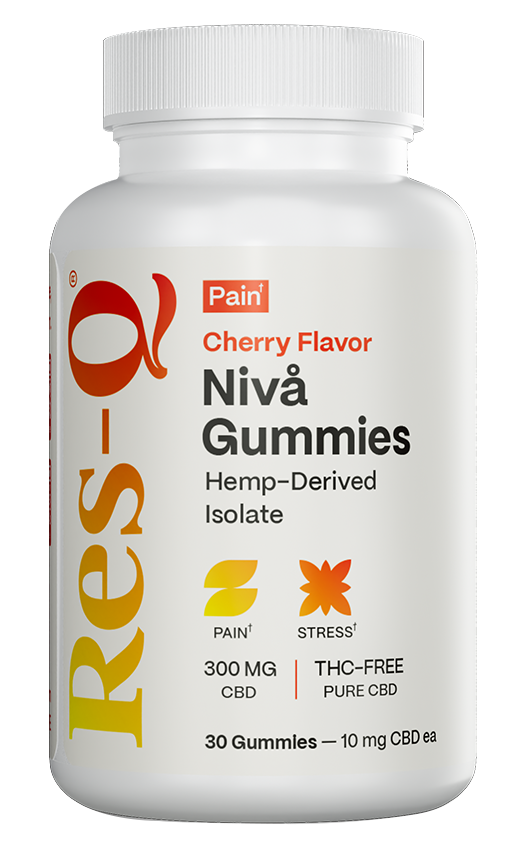
The CBD Your Body ACTUALLY ABSORBS
Most CBD passes right through you. This one doesn't — 440% better absorption, zero THC, made in the U.S.
See Why People Are SwitchingFrequently Asked Questions About CBD and Schizophrenia
Can CBD cure schizophrenia?
No. There is no known cure for schizophrenia. CBD has shown potential to reduce certain symptoms — particularly positive symptoms like hallucinations and delusions — in clinical trials. But it is not a cure, and no researcher has claimed it to be one.
What dose of CBD was used in schizophrenia trials?
The two major trials used 800 mg per day (Leweke, 2012) and 1000 mg per day (McGuire, 2018). These are far higher than typical consumer doses of 25–50 mg per day.
Is it safe to use CBD with antipsychotic medication?
CBD can interact with antipsychotic medications through the cytochrome P450 liver enzyme system. This can alter drug levels in the blood. It should only be combined with antipsychotics under direct psychiatric supervision with appropriate monitoring.
Does THC make schizophrenia worse?
Yes. Multiple large-scale studies have linked THC use — especially high-potency, daily use — with increased risk of psychotic episodes and worsening of existing schizophrenia symptoms. CBD and THC have opposite effects on psychosis risk.
Where can I find CBD clinical trials for schizophrenia?
ClinicalTrials.gov is the most comprehensive database. Search for “cannabidiol schizophrenia” to find active, recruiting, and completed studies. Some trials provide pharmaceutical-grade CBD at no cost and include full medical supervision.
Is CBD oil the same as medical marijuana?
No. CBD oil derived from hemp contains little to no THC (under 0.3%). Medical marijuana typically contains significant levels of THC alongside other cannabinoids. For schizophrenia research, only purified CBD with no THC has been studied and shown potential benefit.