

What We Actually Know About CBD and Broken Bones
Is CBD good for broken bones? It sounds like a stretch. But there is a growing body of preclinical research that suggests cannabinoids — specifically cannabidiol (CBD) — may play a real, measurable role in how bones heal after a fracture. Not in a miracle-cure way. In a biochemistry way. And the distinction matters if you are someone sitting in a cast right now, wondering whether a tincture under your tongue could speed things up.
This article walks through the published science, the practical realities, and the honest limitations of what we know in 2026 about CBD, bone fractures, and recovery. No hype. No overselling. Just the data and what it might mean for you.
Tired of guessing which CBD actually works?
Find What Works for Your Body
A less-than 60 second wellness match for adults exploring plant-based relief
What’s bothering you most right now?
Select the one that impacts your day the most
How long have you been dealing with this?
There's no wrong answer — this helps us tailor your match
How much does it affect your daily routine?
Be honest — this shapes your recommendation
What have you tried so far?
Knowing what hasn't worked helps us find what will
How familiar are you with CBD?
No judgment — everyone starts somewhere
What sounds easiest to add to your routine?
Think about what fits your lifestyle, not what sounds fancy
What matters most to you in a product?
Pick the one that would seal the deal for you
YOUR MATCH IS READY
We'll include your personalized match plus a first-timer's guide based on your answers.
Where should we send your recommendation?
🔒 No spam, ever. Your info is kept 100% secure.
If you'd rather not wait — based on your answers about your symptoms, we'd point you straight to our trusted partner.
Skip to My Match →The Study That Started the Conversation
In 2015, researchers at Tel Aviv University and Hebrew University published a study in the Journal of Bone and Mineral Research that changed how scientists thought about cannabinoids and bone regeneration. The team, led by Dr. Yankel Gabet, fractured the femurs (thighbones) of rats and then treated them with either CBD alone, THC alone, or a combination of both.
The results were specific. CBD alone enhanced the healing of mid-femoral fractures after just eight weeks. The healed bones were stronger and harder to break again. The maximum load the bones could withstand before re-fracturing increased significantly in the CBD-treated group compared to the control group.
THC did not add any measurable benefit when combined with CBD. CBD worked on its own.
Dr. Gabet noted that the clinical potential was clear — that CBD makes bones stronger during healing and enhances the maturation of the collagenous matrix. That matrix is essentially the scaffolding your body builds first before it mineralizes and hardens into new bone tissue.
This single study has been cited hundreds of times since. It remains the most referenced piece of evidence when anyone asks whether CBD promotes bone growth in a fracture context.
How Bones Actually Heal — And Where CBD Might Fit
Bone healing is not one process. It is a sequence of overlapping biological phases, each with different cellular demands.
Phase One: Inflammation (Days 1–7)
When a bone breaks, blood vessels inside the bone rupture. A blood clot — called a fracture hematoma — forms around the break. Inflammatory cells rush in. This inflammation is necessary. It recruits stem cells and signals the body to begin repair.
CBD is a known modulator of the inflammatory response. It does not eliminate inflammation the way NSAIDs do. Instead, it interacts with CB2 receptors found on immune cells and osteoblasts (bone-building cells) to regulate the intensity and duration of the inflammatory response. Too much inflammation delays healing. CBD may keep it in the productive zone.
Phase Two: Soft Callus Formation (Weeks 1–3)
Cartilage and soft tissue begin bridging the fracture gap. Collagen fibers form a flexible callus. This is the phase Dr. Gabet’s study highlighted — CBD appeared to enhance the maturation of this collagenous matrix, making it denser and more organized before mineralization began.
Phase Three: Hard Callus Formation (Weeks 3–12)
Osteoblasts deposit calcium and phosphate onto the soft callus, converting it into woven bone. This woven bone is not as strong as the original, but it stabilizes the fracture. The endocannabinoid system has receptors (CB1 and CB2) located directly on osteoblasts and osteoclasts — the cells responsible for building and breaking down bone, respectively.
Research published in the British Journal of Pharmacology has shown that CB2 receptor stimulation promotes osteoblast activity. CBD’s indirect interaction with CB2 receptors may support this process without the psychoactive effects associated with THC.
Phase Four: Remodeling (Months to Years)
Woven bone gradually gets replaced by stronger lamellar bone. Osteoclasts remove excess bone. Osteoblasts lay down organized bone along lines of mechanical stress. This can take months or even years. The balance between osteoclast and osteoblast activity determines whether the bone ends up as strong — or stronger — than before the fracture.
CBD may influence this balance. A 2009 study in the Annals of the New York Academy of Sciences found that the endocannabinoid system plays a regulatory role in bone mass and bone cell function. Disrupting this system led to age-related bone loss in animal models.
Does CBD Promote Bone Growth Beyond Fracture Repair?
This question comes up often, especially among people dealing with osteoporosis or age-related bone density loss. The answer is more complicated than the fracture data.
In the fracture context, yes — the evidence from animal studies supports the idea that CBD promotes bone growth during the healing cascade. The collagen matrix matures faster. The mineralization process appears more robust. The resulting bone tissue shows increased mechanical strength.
For general bone density in non-fractured bones, the picture is less clear. A 2020 review in Frontiers in Endocrinology examined multiple cannabinoid compounds and their effects on bone metabolism. The authors concluded that while the endocannabinoid system is deeply involved in bone homeostasis, isolating CBD’s specific role in maintaining or increasing bone density outside of fracture repair still requires human clinical trials.
No one has run those large-scale human trials yet. Not because the science is not promising — it is. Funding and regulatory hurdles have slowed things down considerably.
The Endocannabinoid System and Your Skeleton
Your body already produces its own cannabinoids. Anandamide and 2-AG are the two primary endocannabinoids, and they bind to CB1 and CB2 receptors throughout your body, including in bone tissue.
CB1 receptors are concentrated in the brain and central nervous system but also appear on osteoclasts. CB2 receptors are more abundant on osteoblasts and osteocytes (mature bone cells embedded in the bone matrix). When CB2 receptors are activated, osteoblast proliferation increases. When CB2 receptor function is blocked in animal models, bone density decreases.
CBD does not bind directly to CB2 receptors the way THC does. Instead, it modulates how those receptors respond to the body’s own endocannabinoids. Think of it as adjusting the volume rather than playing a different song. This modulatory effect is why CBD’s impact tends to be subtler but also why it may carry fewer risks of overstimulation.
A 2011 paper in the journal Bone examined CB2 knockout mice — mice genetically engineered to lack CB2 receptors entirely. These mice developed accelerated age-related bone loss resembling human osteoporosis. Their trabecular bone (the spongy interior bone that gives bones their shock-absorbing capacity) deteriorated significantly faster than in normal mice.
Looking For Something Pure & Potent?
If your current CBD isn't full-spectrum and U.S.-sourced, you're wasting money
Check Out This Full-Spectrum, American Made CBDWhat People Are Actually Using: Best CBD for Bone Healing
Searching for the best CBD for bone healing brings up a flood of products. Tinctures, capsules, topicals, gummies. Not all of them are equivalent, and some are irrelevant for bone healing specifically.
Full-Spectrum vs. Isolate
The Tel Aviv study used pure CBD isolate. That matters. It means the bone-strengthening effects were attributable to CBD itself, not to a cocktail of cannabinoids working together.
However, full-spectrum CBD products contain trace amounts of other cannabinoids, terpenes, and flavonoids that may provide complementary anti-inflammatory benefits. A 2018 study from the Lautenberg Center for Immunology and Cancer Research found that whole-plant cannabis extracts produced more pronounced anti-inflammatory effects than isolated compounds at certain doses.
For someone focused specifically on bone healing, a high-quality CBD isolate or broad-spectrum product with verified third-party lab results is the most evidence-aligned choice. Full-spectrum is not wrong — there is just less direct evidence tying the “entourage effect” to bone repair specifically.
Delivery Method
Topical CBD applied over a fracture site has limited evidence for bone healing. CBD needs to reach the fracture hematoma and surrounding cells through the bloodstream. Oral tinctures, capsules, or sublingual oils are more likely to deliver systemic concentrations.
Sublingual administration (under the tongue, held for 60–90 seconds before swallowing) offers faster absorption and higher bioavailability than capsules that pass through the digestive system. Bioavailability estimates for sublingual CBD range from 13% to 35%, compared to 6% to 19% for oral capsules, according to a 2017 review in Frontiers in Pharmacology.
Dosing
There is no established clinical dose for CBD in bone healing because the human trials have not been completed. The rat study used approximately 5 mg/kg of body weight. Scaling that directly to humans is not straightforward — metabolic rates differ between species.
Most adults using CBD for general wellness take between 25 mg and 50 mg per day. Some orthopedic-focused practitioners have anecdotally recommended 40–80 mg daily for fracture patients, split into two doses. This is not a formal medical guideline. It is practitioner experience shared at conferences like the 2024 International Cannabinoid Research Society meeting in Banff.
Real Stories From Real People
A woman named Karen, 58, from Portland, Oregon, broke her wrist slipping on ice in January 2025. Her orthopedic surgeon set the distal radius fracture and put her in a cast. Karen had been using a 1500 mg full-spectrum CBD tincture for arthritis pain for two years prior.
She continued taking 40 mg twice daily throughout her recovery. At her six-week follow-up X-ray, her surgeon noted the callus formation was “ahead of schedule.” He did not attribute it to CBD specifically — he said genetics and nutrition play roles too. But Karen’s bone density scan three months later showed no loss in the fractured wrist, which her doctor said was uncommon for a postmenopausal woman with that type of fracture.
Anecdotes like Karen’s are not proof. They are data points without controls. But they are consistent with what the preclinical research predicts.
A 34-year-old recreational rock climber named David, based in Boulder, Colorado, fractured his fifth metatarsal (the outer foot bone) during a bouldering session in 2025. He started using a CBD isolate tincture — 50 mg daily — alongside his prescribed calcium and vitamin D supplementation. His podiatrist cleared him for light activity at seven weeks instead of the expected ten. David credits the CBD, his doctor credits compliance with the recovery protocol, and the truth probably involves both.
What About Drug Interactions and Safety?
CBD is processed by the liver’s cytochrome P450 enzyme system — the same system that metabolizes many common medications. If you are taking blood thinners (warfarin), certain antibiotics, or anti-seizure medications, CBD can alter how those drugs are metabolized, potentially increasing or decreasing their blood concentrations.
For bone fracture patients specifically, this matters most if you are on prescription pain medication post-fracture. CBD can increase the sedative effects of opioids and benzodiazepines. It can also interfere with certain anti-inflammatory drugs.
A 2022 review in the Journal of Clinical Medicine catalogued 139 potential drug-CBD interactions. The severity ranged from negligible to clinically significant. The takeaway is simple: tell your doctor if you are using CBD during fracture recovery. Not because CBD is dangerous. Because the interaction profile with other medications requires monitoring.
Side effects of CBD itself at standard doses (under 100 mg/day) are generally mild. The most commonly reported include dry mouth, mild drowsiness, reduced appetite, and occasional diarrhea. These are documented in the World Health Organization’s 2018 Critical Review Report on CBD, which concluded that CBD has a “good safety profile” and is “generally well tolerated.”
Cannabinoids and Bone Regeneration: The Bigger Research Picture
The conversation about cannabinoids and bone regeneration extends beyond CBD alone. Researchers are investigating several cannabinoid compounds and their effects on bone tissue.
CBG (Cannabigerol)
CBG is sometimes called the “mother cannabinoid” because it is the chemical precursor from which other cannabinoids are synthesized in the cannabis plant. Preliminary research from a 2022 Italian study published in Molecules found that CBG stimulated osteoblastic differentiation in human mesenchymal stem cells. Translation: it encouraged stem cells to become bone-building cells.
THCV (Tetrahydrocannabivarin)
THCV has shown affinity for CB2 receptors and may influence bone resorption rates. A 2016 study in Cell Metabolism found that THCV-treated mice showed reduced bone loss markers. The research is early-stage. No fracture-specific data exists for THCV yet.
Beta-Caryophyllene
This terpene, found in black pepper, cloves, and cannabis, acts as a selective CB2 receptor agonist. A 2019 study in the Journal of Cellular Biochemistry found that beta-caryophyllene promoted osteoblast mineralization in vitro. Some full-spectrum CBD products contain meaningful amounts of this terpene, which may contribute to bone-related benefits through CB2 pathway activation.
What the Critics and Skeptics Say
Not everyone in orthopedic medicine is convinced. And the objections are worth hearing because they are grounded in legitimate methodological concerns.
The biggest criticism: the landmark fracture study was conducted on rats, not humans. Rat bone metabolism differs from human bone metabolism in several ways. Rats have open growth plates throughout their lives, meaning their bones are always in a semi-active growth state. Human adult bones are more metabolically stable. Effects observed in rats may not translate proportionally.
Second, the study used pharmaceutical-grade CBD at controlled doses delivered under laboratory conditions. Over-the-counter CBD products vary enormously in potency, purity, and consistency. A 2020 analysis published in JAMA found that only 31% of commercially available CBD products contained the amount of CBD stated on the label. Some contained significantly more. Others contained less. A few contained detectable levels of THC despite being labeled as THC-free.
Third, no randomized controlled trial (RCT) in humans has been completed as of early 2026. Several are in progress — including a trial registered with ClinicalTrials.gov examining oral CBD supplementation in tibial fracture patients — but results have not yet been published.
These are fair criticisms. They do not invalidate the preclinical findings. They contextualize them. The rat data is promising. The mechanistic pathways make biological sense. But promising and proven are different words.
Practical Guidance If You Want to Try CBD During Bone Recovery
Given the current state of the evidence, here is a straightforward framework.
First, do not replace any prescribed treatment. CBD is a potential adjunct, not a substitute for proper medical care, immobilization, calcium, vitamin D, and physical therapy.
Second, choose a product with a current Certificate of Analysis (COA) from an accredited third-party lab. The COA should verify CBD content, confirm THC levels below 0.3% (the federal legal limit in the U.S.), and test for heavy metals, pesticides, and residual solvents. If a company does not publish their COA, do not buy from them.
Third, start with a low dose — 20 to 25 mg of CBD daily — and observe how your body responds over one week before increasing. Sublingual tinctures give you the most control over dosing precision.
Fourth, maintain a log. Track your dose, timing, any side effects, and your fracture recovery milestones. If you bring this log to your follow-up appointments, your orthopedic provider has something concrete to evaluate rather than vague impressions.
Fifth, be patient. Bone healing takes time regardless of supplementation. A typical fracture takes six to twelve weeks to show solid union on X-ray. CBD is not going to cut that timeline in half. If the preclinical data holds in humans, it may improve the quality and strength of the healed bone and potentially shave days or weeks off certain healing phases.
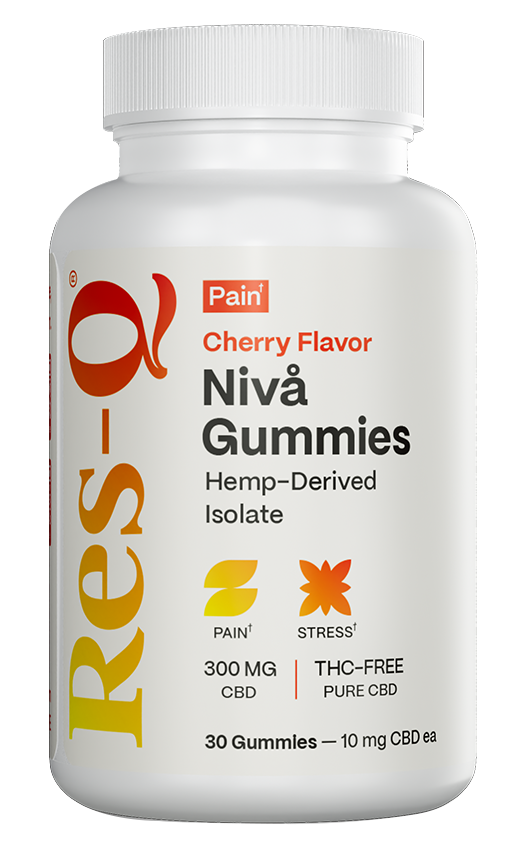
The CBD Your Body ACTUALLY ABSORBS
Most CBD passes right through you. This one doesn't — 440% better absorption, zero THC, made in the U.S.
See Why People Are SwitchingWhere the Research Goes From Here
Multiple research groups are pursuing human trials. The University of São Paulo has an ongoing investigation into CBD’s effects on alveolar bone healing after dental extraction. A team at the University of Edinburgh is examining cannabinoid receptor expression in osteoporotic bone tissue to determine whether targeted CB2 agonists could serve as a new class of osteoporosis treatment.
The National Institutes of Health (NIH) allocated $140 million to cannabinoid research in fiscal year 2025, a substantial increase from previous years. Bone-specific applications remain a small fraction of that funding, but the allocation is growing as preliminary data continues to accumulate.
Within the next three to five years, we will likely have human fracture data. That will either confirm the rat findings, reveal that the effect is smaller in humans, or uncover variables — age, fracture type, dosing protocols — that determine who benefits most.
Final Thoughts on CBD and Broken Bones
Is CBD good for broken bones? The preclinical evidence says it might be — and the biological mechanism is plausible. CBD interacts with a receptor system that directly governs bone cell activity. It enhanced fracture healing in the most rigorous animal study conducted to date. It has a well-documented safety profile at standard doses.
It is not a magic fix. It will not replace a cast or surgical hardware. But as a supplemental strategy during bone recovery, the risk-to-potential-benefit ratio is favorable for most adults who are not on contraindicated medications.
If you are recovering from a fracture and considering adding CBD to your routine, talk with your treating physician, source a reputable product, and track your results. The science is catching up to the interest. In the meantime, the decision is yours to make with informed caution.
Consider trying CBD for broken bones as part of a well-rounded recovery plan — alongside proper nutrition, medical follow-up, and patience with the process. Your bones are rebuilding themselves right now, cell by cell, layer by layer, and giving them every reasonable advantage is worth the effort.